


Physical therapy technology is reshaping the way clinicians assess, monitor, and support their patients. While clinical expertise remains at the core of rehabilitation, modern tools now provide objective data that helps professionals make more informed decisions throughout the recovery process.
From connected dynamometers and force plates to motion sensors, surface EMG, artificial intelligence, and remote monitoring platforms, these innovations allow clinicians to quantify strength, analyze movement, track progress, and personalize treatment plans.
In this article, we explore 7 technologies that are transforming modern physical therapy and helping rehabilitation professionals deliver more objective, data-driven care.
CONTENTS
1- Why Technology Is Playing an Increasing Role in Physical Therapy
2- Connected Dynamometers for Measuring Muscle Strength
3- Force Plates for Assessing Functional Performance
4- Motion Sensors for Objective Movement Assessment
5- Surface Electromyography (EMG)
6- Artificial Intelligence in Rehabilitation
7- Tele-Rehabilitation and Remote Patient Monitoring
8- Connected Ecosystems That Centralize Clinical Data
9- FAQ: Physical Therapy Technology
10- Conclusion
1- Why Technology Is Playing an Increasing Role in Physical Therapy
Modern physical therapy increasingly relies on objective data to complement clinical observation and support decision-making. Today’s patients expect more accurate assessments, personalized care, and greater visibility into their progress throughout rehabilitation.
At the same time, the growing adoption of Evidence-Based Practice is encouraging clinicians to integrate tools that can measure, monitor, and compare outcomes over time. Thanks to advances in technology, it is now possible to quantify key metrics such as muscle strength, balance, joint range of motion, and movement quality.
These innovations not only improve patient monitoring but also enhance communication, engagement, and objectivity throughout the rehabilitation process.
💡 Looking for more insights? Explore our dedicated article on the top physical therapy trends shaping rehabilitation in 2026.
2- Connected Dynamometers for Measuring Muscle Strength
Muscle strength assessment plays a central role in physical therapy, whether following an injury, surgery, or as part of athletic performance monitoring. However, manual testing methods can sometimes lack sensitivity when it comes to detecting small deficits or accurately tracking progress over time.
Connected dynamometers provide objective and reliable measurements of muscle strength. By collecting precise data, they help clinicians identify asymmetries, monitor rehabilitation progress, and make more informed decisions regarding return-to-activity or return-to-sport readiness.
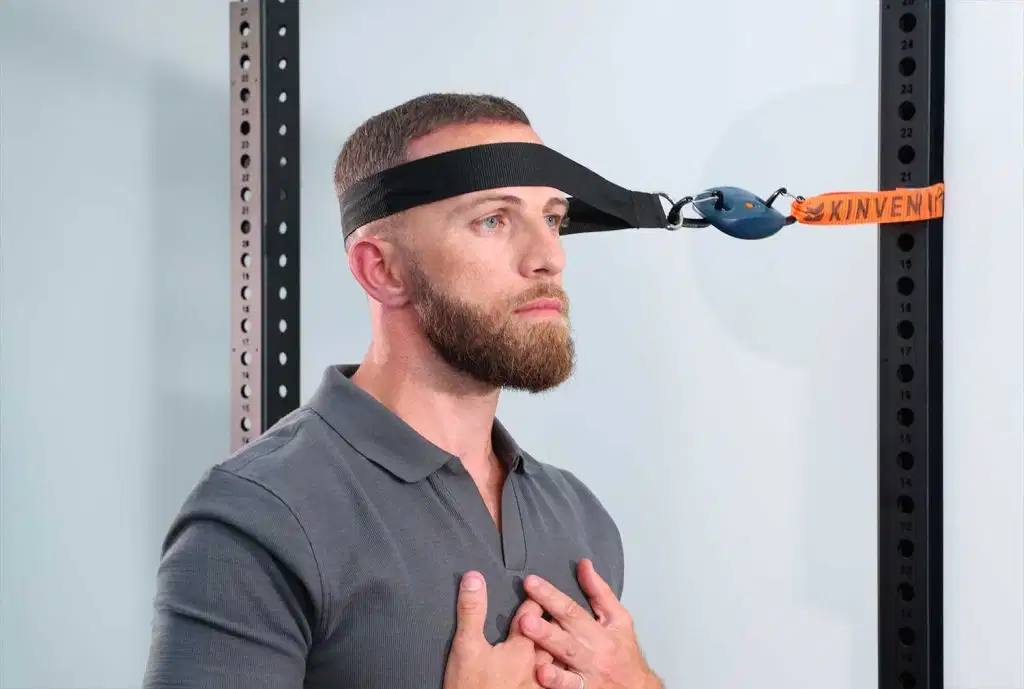
Beyond assessment, objective strength data can also improve patient engagement by making progress visible and measurable. Patients gain a clearer understanding of their recovery, while clinicians can use quantifiable results to support treatment decisions and goal setting.
Solutions such as Kinvent’s connected dynamometers, including K-Pull, K-Push, and K-Grip, allow rehabilitation and performance professionals to capture reliable strength data instantly and monitor progress over time through a centralized platform.
3- Force Plates for Assessing Functional Performance
Force plates have become essential tools for evaluating functional performance in both rehabilitation and sports settings. They provide precise measurements of the forces generated during movement, offering insights that are often impossible to detect through observation alone.
Assessments such as the Countermovement Jump (CMJ), Drop Jump, Single-Leg Balance, and Sit-to-Stand tests provide valuable information about force production, stability, asymmetries, and movement strategies. These metrics help clinicians and performance professionals better understand how an individual moves and responds to physical demands.
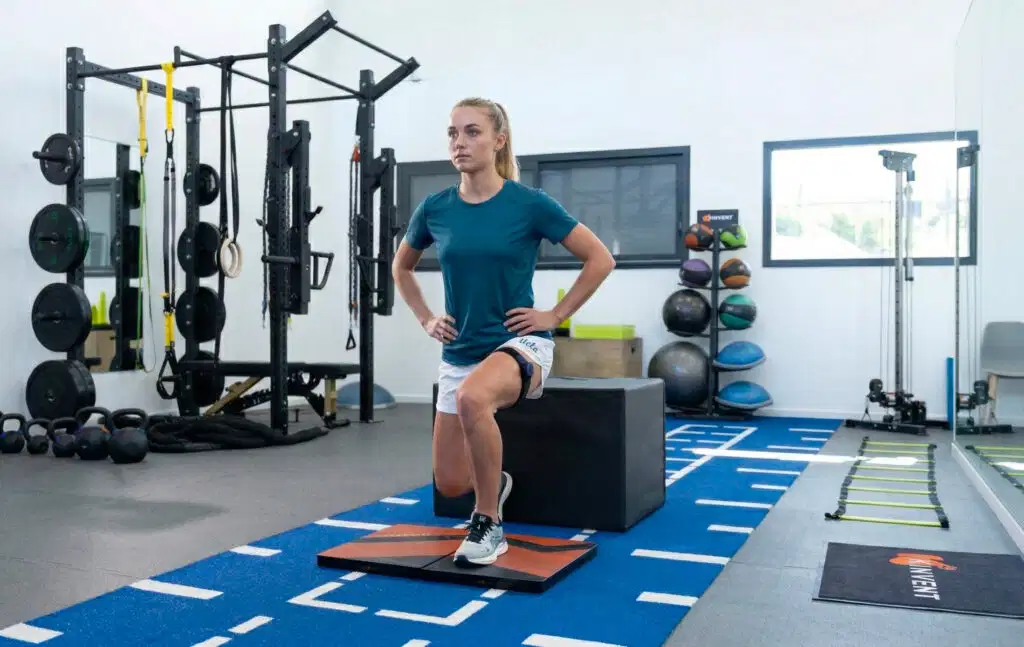
Advanced 3D force plates take this analysis a step further by measuring forces across three dimensions: vertical, anterior-posterior, and medial-lateral. This allows for a more comprehensive evaluation of balance, movement control, compensatory strategies, and functional performance during rehabilitation or athletic activities.
By tracking these objective metrics over time, professionals can monitor progress, identify persistent deficits, and make more informed return-to-sport or return-to-function decisions. Solutions such as Kinvent’s K-Force Plates and 3D Deltas make advanced force plate analysis accessible in clinics, performance centers, and on the field.
4- Motion Sensors for Objective Movement Assessment
Motion sensors make it possible to measure a wide range of functional parameters with a level of precision that is difficult to achieve through visual observation alone. They provide clinicians and performance professionals with objective data to assess patients and athletes, monitor progress, and support decision-making throughout rehabilitation and training.
Digital Goniometers for Joint Range of Motion Assessment
Assessing joint range of motion is a key component of rehabilitation following injury, surgery, or musculoskeletal disorders. Digital goniometers enable clinicians to measure movement quickly, accurately, and consistently, making it easier to compare results across multiple testing sessions.
However, their value extends beyond simply measuring a maximum range of motion. By capturing data throughout the entire movement, these tools provide valuable insights into how the movement is performed. The resulting movement curves can reveal information about movement smoothness, execution speed, rhythm, compensatory strategies, and changes in velocity during the task.
In some cases, these insights are even more meaningful than a single range-of-motion value. Two patients may demonstrate similar joint mobility while exhibiting very different movement profiles, reflecting deficits in motor control, movement confidence, or persistent functional limitations.
Modern digital assessment tools also incorporate visual and auditory biofeedback, allowing patients to see their movement in real time and work toward predefined targets. This approach enhances patient engagement, supports motor learning, and makes rehabilitation exercises more interactive and motivating.
Solutions such as Kinvent’s K-Move allow clinicians to digitalize range-of-motion assessments while gaining a deeper understanding of movement quality, providing objective data that complements clinical evaluation and helps track progress over time.
Inertial and Hybrid (UWB) Sensors for Speed and Power Assessment
Inertial and hybrid Ultra-Wideband (UWB) sensors go far beyond basic movement analysis. They can also be used to assess key performance metrics such as speed, acceleration, deceleration, power output, and training load.
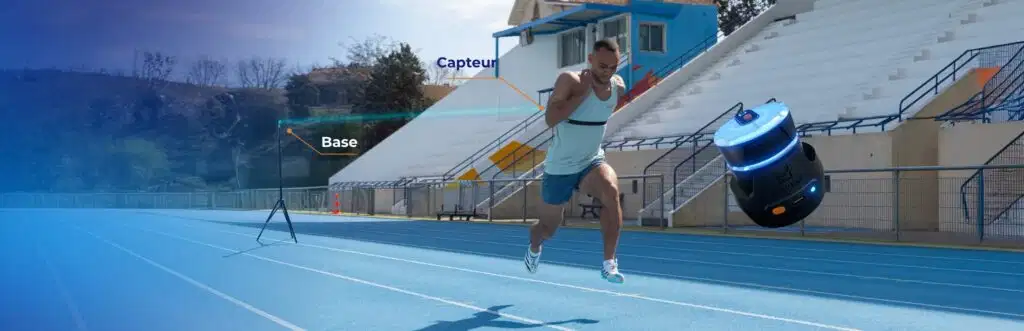
In sports performance settings, these technologies are widely used for sprint analysis, return-to-sport monitoring, and Velocity-Based Training (VBT). By measuring movement velocity, practitioners can prescribe and adjust training loads more accurately while monitoring fatigue and neuromuscular adaptations.
Solutions such as Kinvent’s K-Power bring these advanced assessments directly to the field and the weight room. Practitioners can monitor sprint performance, analyze change-of-direction abilities, and implement VBT protocols using objective, real-time data.
5- Surface Electromyography (EMG)
Surface electromyography (EMG) is a technology used to analyze the electrical activity of muscles during movement or exercise. Once primarily confined to research laboratories, EMG is now becoming increasingly accessible to rehabilitation and performance professionals.
EMG provides valuable insights that complement strength and movement assessments by helping clinicians better understand how muscles are recruited during specific tasks. It can be used to identify muscle activation deficits, analyze compensatory movement strategies, and monitor neuromuscular adaptations throughout a rehabilitation program.
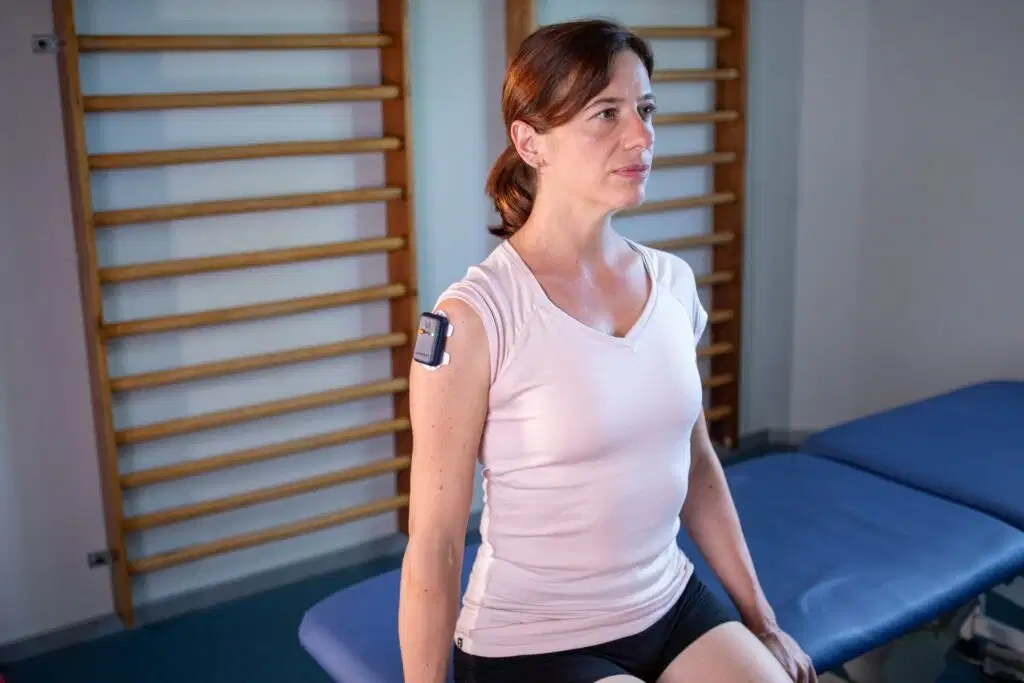
In sports performance, EMG is also used to compare exercises, optimize muscle recruitment, and gain a deeper understanding of fatigue mechanisms. In rehabilitation settings, it can serve as a biofeedback tool, helping patients improve their ability to activate specific muscle groups and regain neuromuscular control.
By combining EMG data with other objective measurements such as strength, range of motion, and force plate assessments, practitioners can build a more comprehensive picture of an individual’s functional status and recovery progress.
Connected solutions such as Kinvent’s K-Myo allow professionals to collect, visualize, and analyze EMG data in real time, providing deeper insights into the neuromuscular function of both patients and athletes.
6- Artificial Intelligence in Rehabilitation
Artificial intelligence (AI) is increasingly emerging as a valuable decision-support tool in healthcare and rehabilitation. Rather than replacing clinical expertise, its purpose is to help professionals make better use of the data they collect every day.
AI can rapidly analyze large volumes of information, identify patterns, generate automated summaries, and assist with the interpretation of assessment results. These capabilities help clinicians save time while maintaining a comprehensive view of a patient’s progress throughout the rehabilitation process.
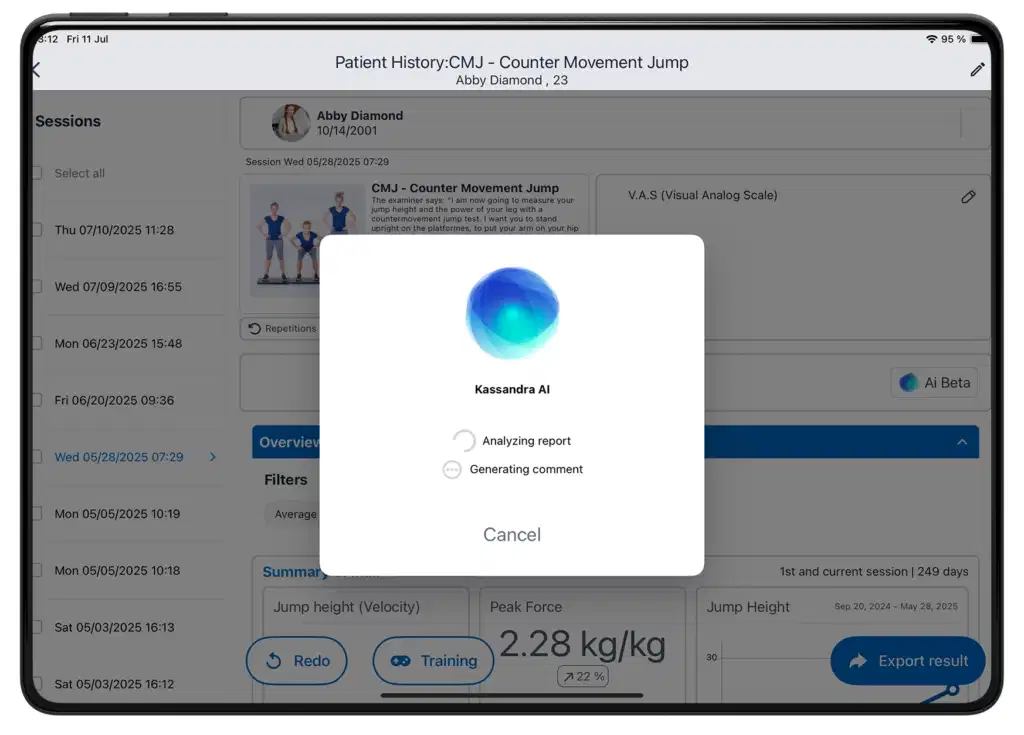
AI can also support more personalized rehabilitation programs by leveraging data collected across multiple sessions. By identifying trends and highlighting meaningful changes over time, it enables practitioners to make more informed decisions and tailor interventions to each individual’s needs.
As rehabilitation technologies continue to evolve, AI is expected to play an increasingly important role in supporting evidence-based, data-driven practice.
At Kinvent, Kassandra AI reflects this evolution by providing automated assessment commentary, protocol recommendations, and intelligent assistance directly within the Kinvent ecosystem.
7- Tele-Rehabilitation and Remote Patient Monitoring
Patient care does not stop when a clinic visit ends. Today, tele-rehabilitation and remote patient monitoring tools enable clinicians to support patients between sessions and maintain engagement throughout the rehabilitation journey.
Mobile applications, personalized exercise programs, patient-reported outcome measures, and automated reminders help strengthen communication between clinicians and patients. This approach can improve adherence to treatment plans while allowing practitioners to identify potential challenges or declines in motivation more quickly.
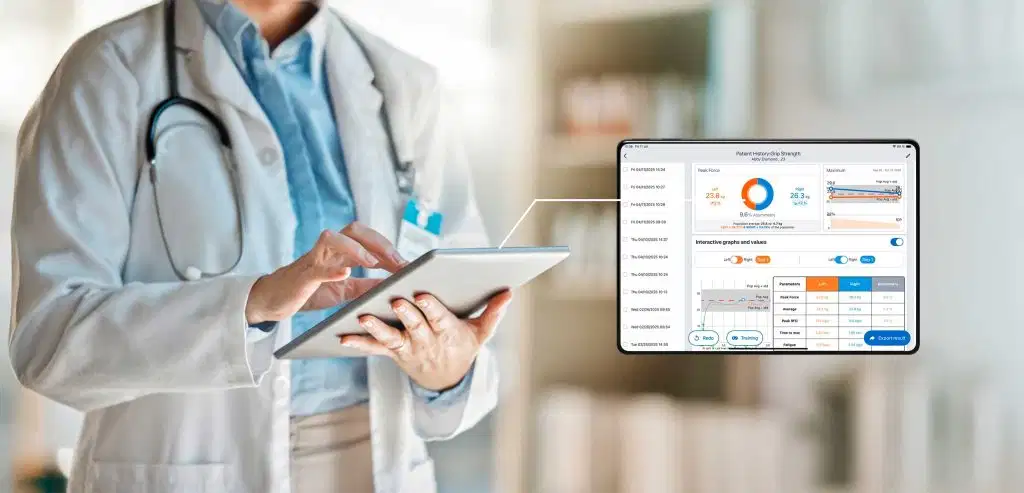
Remote monitoring is particularly valuable for home-based rehabilitation, return-to-sport programs, and patients with limited access to in-person care. It also encourages greater patient autonomy by actively involving individuals in their own recovery process.
Platforms such as MyKinvent make it possible to create personalized rehabilitation programs, track exercise completion, monitor patient progress, and maintain ongoing communication outside the clinic. By extending care beyond face-to-face appointments, clinicians can support long-term engagement and improve continuity of care.
8- Connected Ecosystems That Centralize Clinical Data
One of the most significant developments in recent years is not the emergence of a single new technology, but the ability to connect multiple technologies within a unified ecosystem. Muscle strength, balance, movement, muscle activity, and sports performance data can now be collected, analyzed, and managed from a single platform.
This centralization simplifies long-term patient and athlete monitoring by providing access to all assessments through one interface. Clinicians and performance professionals can compare results over time, identify progress or persistent deficits more efficiently, and make decisions based on a comprehensive view rather than isolated data points.
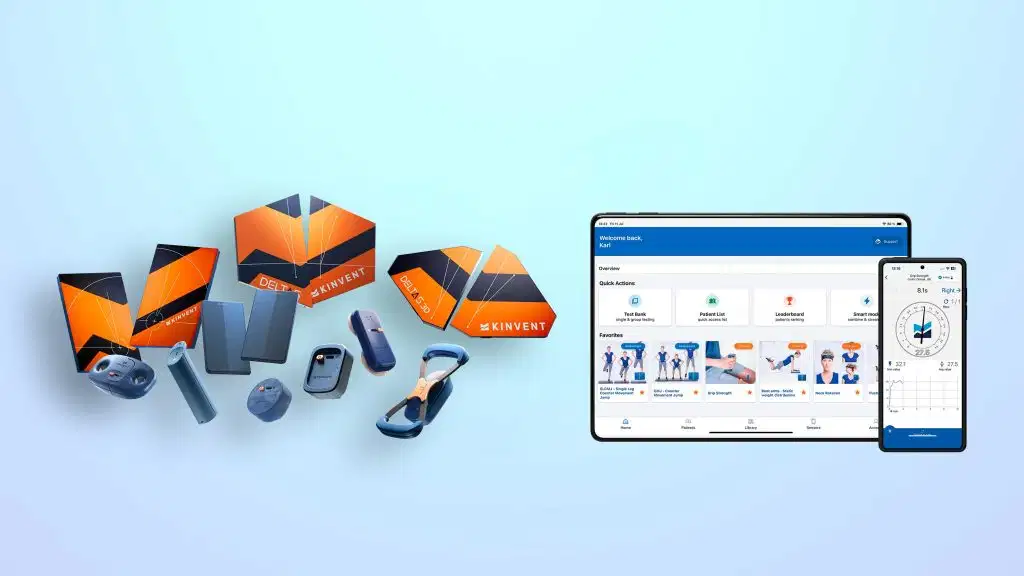
For multidisciplinary teams, this approach also strengthens collaboration between physical therapists, strength and conditioning coaches, sports physicians, and sports scientists. By sharing objective data, all stakeholders can work from the same information, improving communication and ensuring greater consistency throughout the rehabilitation or performance pathway.
Connected ecosystems also help engage patients more actively in their recovery. By visualizing their progress through objective measurements, patients gain a clearer understanding of their rehabilitation journey and are often more motivated to stay committed to their treatment plans.
Kinvent exemplifies this trend through its connected ecosystem, bringing together multiple assessment and monitoring technologies within a single platform. This unified approach streamlines data collection, analysis, reporting, and clinical decision-making, helping professionals make better use of objective data every day.
9- FAQ: Physical Therapy Technology
What technologies are most commonly used in physical therapy today?
Some of the most widely used technologies in physical therapy include connected dynamometers, force plates, digital goniometers, inertial sensors, surface electromyography (EMG), and remote patient monitoring platforms. These tools help clinicians perform more objective assessments and track patient progress with greater accuracy.
Why use technology in physical therapy?
Technology complements clinical expertise by providing objective, measurable data. It can improve assessments, monitor rehabilitation progress, enhance patient communication, and support more informed clinical decision-making throughout the recovery process.
Are force plates only useful in elite sports?
No. While force plates are widely used in sports performance, they are also valuable in physical therapy clinics for assessing balance, functional capacity, asymmetries, and return-to-activity readiness following injury or surgery.
What are the benefits of surface electromyography (EMG)?
EMG helps clinicians analyze muscle activation during movement and exercise. It can be used to better understand muscle recruitment patterns, identify compensatory strategies, and provide biofeedback during rehabilitation.
How is artificial intelligence used in rehabilitation?
Artificial intelligence can help analyze assessment data, generate automated summaries, identify trends, and support clinical decision-making. It serves as a decision-support tool that complements, rather than replaces, clinical expertise.
Can tele-rehabilitation replace in-person treatment?
Tele-rehabilitation is not intended to fully replace in-person care, but it can be an effective complement. It helps maintain continuity between appointments, improve adherence to exercise programs, and encourage greater patient autonomy.
How do I choose the right technology for my clinic?
The best solution depends on your clinical goals, patient population, and practice environment. In general, it is advisable to choose technologies that are easy to use, supported by scientific evidence, and capable of integrating into a connected ecosystem that centralizes assessment and monitoring data.
10- Conclusion
Physical therapy technology is transforming the way clinicians assess, monitor, and support their patients. Connected dynamometers, force plates, motion sensors, EMG, artificial intelligence, and tele-rehabilitation platforms all provide new opportunities to bring greater objectivity to assessments and deliver more personalized care.
While these tools do not replace clinical expertise, they complement observation with reliable, measurable data. This approach supports more informed decision-making, improved progress tracking, and stronger communication between clinicians and patients.
As the profession continues to embrace data-driven practice, connected technologies are becoming valuable allies for physical therapists, sports scientists, strength and conditioning coaches, and rehabilitation professionals seeking to optimize assessments and improve outcomes.


