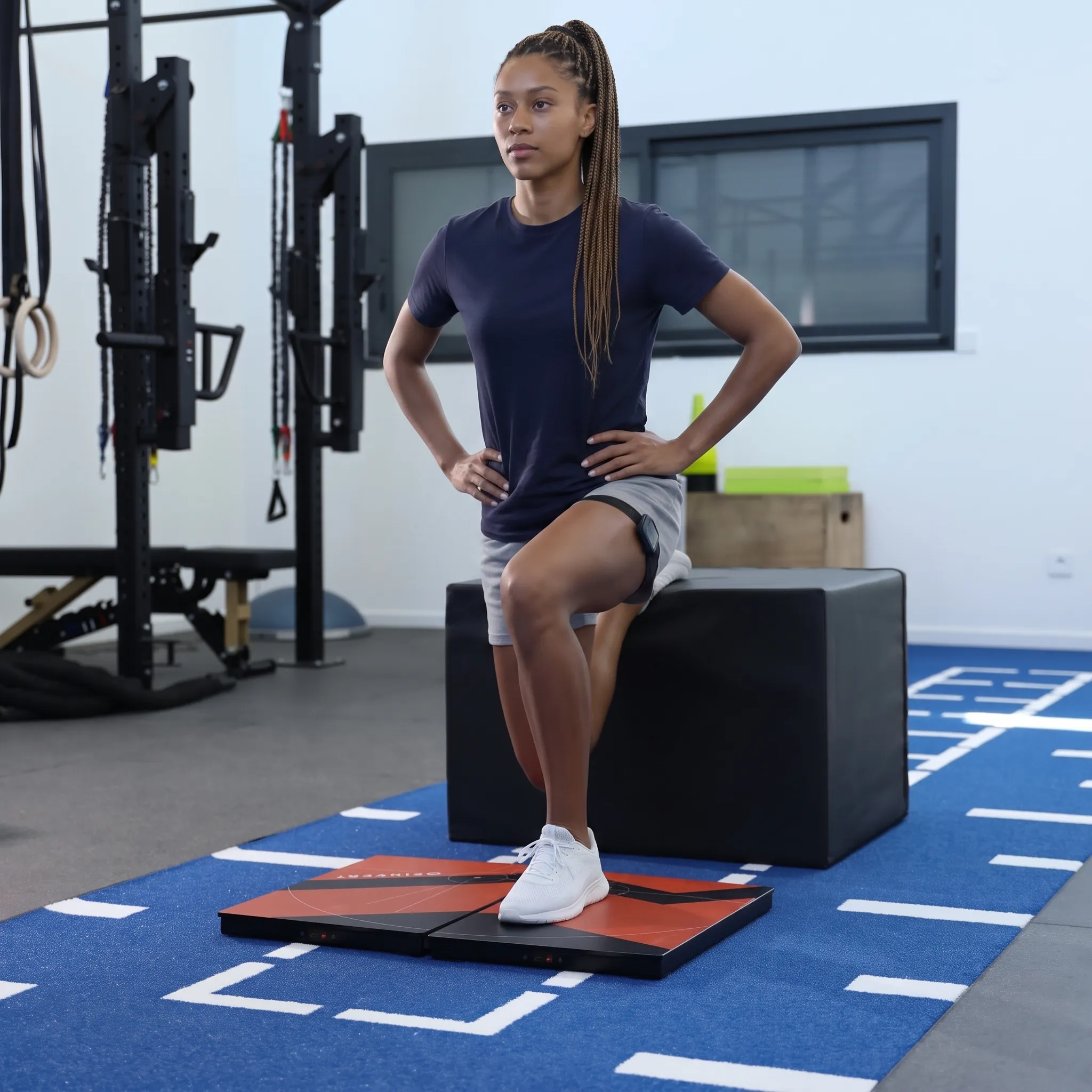
young woman using the box to do a single squat on the K-Deltas force plates from Kinvent

Data-Driven Physical Therapy: Reducing Reinjury Risk, Driving Improved Health Outcomes, Boosting Business

When a patient completes a course of physical therapy, the goal is for them to return to their sport or life safely and fully healed. Unfortunately, under-rehabilitation is the norm – and reinjury is common. For example, reports have shown that between 9% and 29% of post-primary anterior cruciate ligament reconstruction (ACLR) patients reinjure their ACL after rehabilitation.

According to Dr. Adam Ruszkowski, a physical therapist, orthopedic clinical specialist, performance consultant, and the founder of AR Physical Therapy (ARPT), reinjury isn’t just a physical phenomenon – it’s also a “mental catastrophe.” 

Over his 16 years as a physical therapist, Dr. Ruszkowski has seen the havoc recurring injury and persistent pain can wreak on patients’ psyches. And, as an endurance athlete himself, he understands how under-rehabilitation can lead to a crushing cycle of pain and self-doubt that keeps people from enjoying the activities they love. 

In 2022, Dr. Ruszkowski committed to breaking the cycle and transformed ARPT into a clinic driven by technology and quantitative data.

The Problem: Subjectivity & Under-Rehabilitation Increase the Risk of Reinjury

Most of the physical therapy clinics Dr. Ruszkowski has seen over his nearly two decades in the field are stuck in a “transactional” form of care, where patients are treated according to established protocols and prescribed time frames that lack individualization and objective measurement. This approach fails to consider a patient’s needs, anatomy, psychology, and goals, or address their key limiting factors. This often leads to suboptimal outcomes. 

Most providers rely on qualitative data and a patient’s self-reporting (about how they feel and how much pain they are in) to guide care plans and use imprecise tests to treat patients. This lack of objectivity can keep the underlying deficits most associated with a higher risk of reinjury hidden. 

“Physical therapists and strength and conditioning coaches are supposed to be movement experts,” Dr. Ruszkowski said. “But we’re not really measuring movement very well. Subjective assessment dominates in most clinics.”

One such assessment is manual muscle testing (MMT): A bread-and-butter technique nearly every physical therapist is taught. During a manual muscle test, a provider uses their hands to evaluate muscle strength and assign a grade from zero (no muscle contraction) to five (normal). These tests are based on feel and guesswork and yield unreliable results that vary widely from test to test and practitioner to practitioner.  

“Manual muscle testing is not very good at telling us how strong an individual is,” Dr. Ruszkowski said. “We can’t make meaningful decisions with it. We can’t use it to quantify meaningful improvement and decide if a patient is ready to return to activity or return to sport.” 

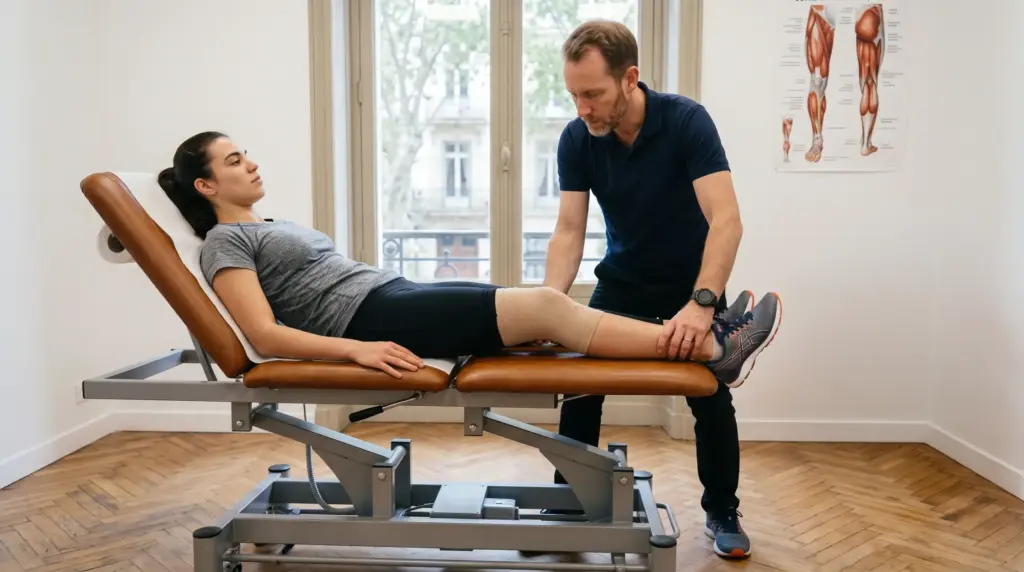
A patient doing a test for ACL with her physiotherapist in the rehab center

To combat the imprecision of MMT, some clinics use traditional handheld dynamometry. But, while dynamometry is a reliable and valid strength measurement, Dr. Ruszkowski says that it still requires consistent and standardized testing positions to ensure data accuracy. Further, interpreting the data requires skill and experience.

Because most PTs don’t have hard data to validate a patient’s readiness to return to sport or life, they rely on how patients report feeling. The prevailing thought is that reduced pain equals progress: If a patient says they feel better or “good enough” and they’ve been in treatment for what the PT deems an appropriate amount of time (or have used up the number of appointments covered by insurance), they are discharged. The arbitrary nature of this process means many patients are cleared even though deficits remain.

Incomplete rehabilitation elevates the risk of reinjury, so premature discharge can be costly – both financially and psychologically. When a patient experiences a flare in pain or has to undergo another surgery, they might blame themselves or start to doubt the effectiveness of physical therapy altogether.

“One of the most dangerous things we can say to somebody is, ‘Hey, you look good. I think you should go back,’ without having defensible data, this is a liability that I am not willing to take, and I feel that it is a disservice to the patient.” Dr. Ruszkowski said.

The Solution: A Data-Driven Approach to Physical Therapy

Data – both quantitative and qualitative – is central to Dr. Ruszkowski’s philosophy of care. The numerical data he relies on can only be gathered through technology.      

“Technology allows us to measure muscular strength and [gives us] kinematic data so we can really have a clear picture of the way somebody moves, how they organize their movement, as well as how they produce force,” Dr. Ruszkowski said.

The information gleaned from technology can help patients avoid the “mental catastrophe” of reinjury. In fact, the risk of a secondary ACL injury can be reduced by 50 to 60% when providers use technology to measure limitations and specify targets, according to Dr. Ruszkowski.

Finding the right technology for ARPT was a journey. After trialing other vendors, Dr. Ruszkowski settled on a solution: Kinvent. “I’ve come to the conclusion that the ecosystem that fits best in my clinic is the Kinvent system,” he said. “It’s encompassed in one application, and I can track data over time.”

Dr. Ruszkowski uses several sensors in the Kinvent ecosystem, which includes dynamometers, force plates, motion sensors, and a neuromuscular sensor. All sensors connect to the Kinvent App, a hub where users can run tests, create care plans, track progress over time, and view, export, and share data with patients and other members of their care team. In his daily practice, he relies heavily on the K-Deltas Force Plates and K-Myo EMG.

K-Deltas

“I use Kinvent force plates every day… for baseline measurements, biofeedback, and training. They give me force outputs, [show me] how athletes produce and transmit force in their bodies, and how well they slow their bodies down. They allow us to make meaningful decisions on how people are progressing back to sport and life.”
Dr. Ruszkowski

Applications:

  • Post-surgical rehab benchmarks
  • Active aging (e.g., sit-to-stand power)
  • Benchmarks for general orthopedic clients
  • Validate return-to-sport decisions

K-Myo

“The K-Myo brings a neurocognitive element into the mix. We can prescribe movement, but we have to know that we’re actually making a difference and turning the muscles on in the way we think we’re turning the muscles on. It challenges our individual bias and validates or invalidates what I’m doing so I can improve my treatments and outcomes.”
Dr. Ruszkowski

Used to measure:

  • Arthrogenic muscle inhibition
  • Muscle activation
  • Motor unit firing rate
  • Muscle co-activation

Use Case 1

Who: A marathon runner with right calf pain

The problem: A marathon runner experienced “raging discomfort” whenever he ran over about six miles. He suspected he had Achilles tendonitis.

The diagnostic procedure: Dr. Ruszkowski had the patient perform countermovement jump (CMJ) tests on the K-Deltas.

What the data showed: Data from the CMJ tests was sent to the Kinvent App and plotted on a graph broken into five phases: unweighing, braking, propulsion, flight, and landing. The data revealed a capacity problem in the patient’s right calf and reduced ankle range of motion. These deficits led to a compensation pattern and, ultimately, the “raging discomfort” the runner felt as he accumulated miles.

The forecast: Now that Dr. Ruszkowski has a clear picture of his patient’s running mechanics, he can develop a custom treatment plan based on granular data.

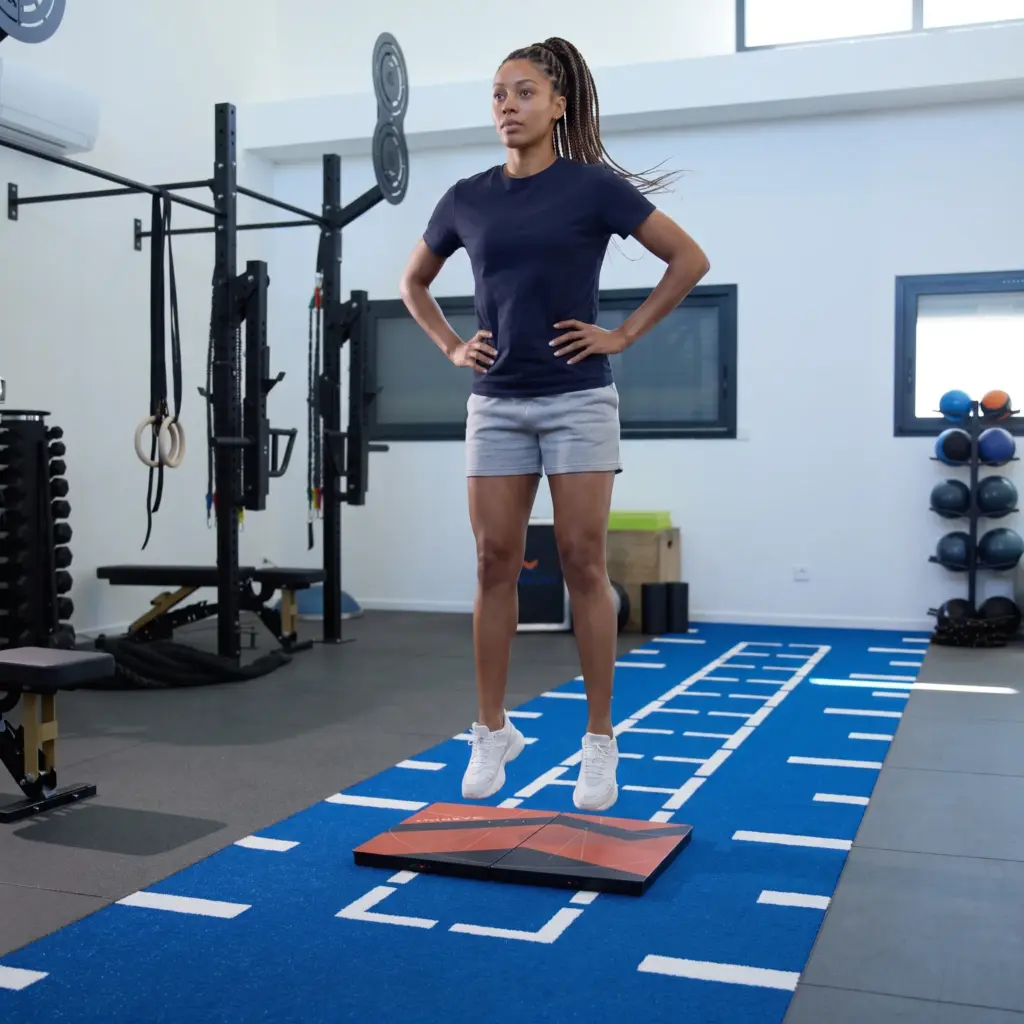
young woman doing a CMJ on K-Deltas force plate from KINVENT

Use Case 2

Who: A basketball player recovering from an ACL and lateral meniscus repair 

The problem: A basketball player’s coach was eager to get his athlete back on a running program after an ACL and lateral meniscus repair. He sent him to Dr. Ruszkowski a month after surgery to validate his readiness to return to activity. 

The diagnostic procedure: Dr. Ruszkowski ran CMJ asymmetry tests using the K-Deltas.

What the data showed: The initial assessment found the patient had a 53.7% braking asymmetry and was putting unnecessary load on his patellofemoral joint.  

The outcome: The data proved to Dr. Ruszkowski (and the athletic trainer) that the athlete wasn’t yet strong enough to run without the risk of reinjury. After four weeks of directed training, the athlete reduced his braking asymmetry to 22.3% and safely returned to running. 

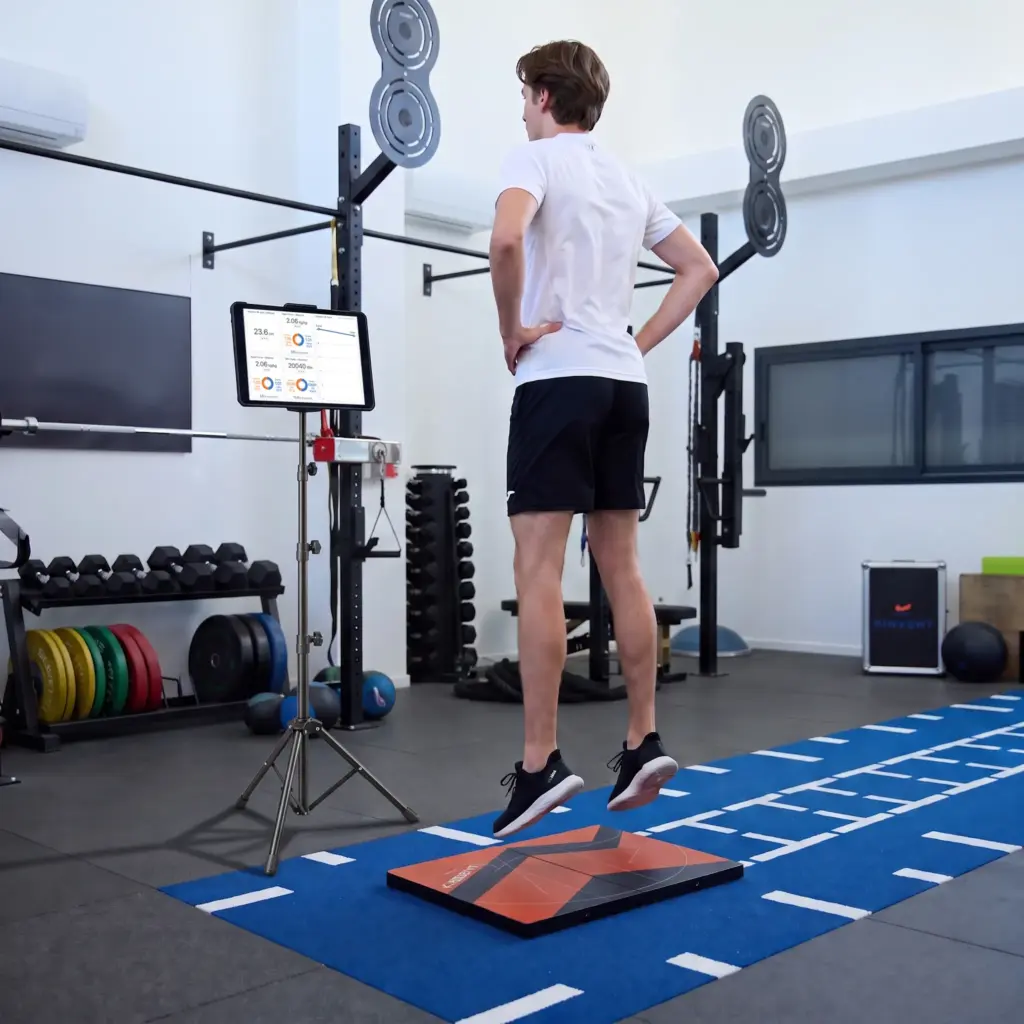
a young basketball player doing a counter mouvement jum test on the K-Deltas force plates from Kinvent In a rehab center

Use Case 3

Who: An 80-year old with severe spinal stenosis and a history of vertigo

The problem: The patient experienced severe pain in his left leg while walking and was at risk of falling.

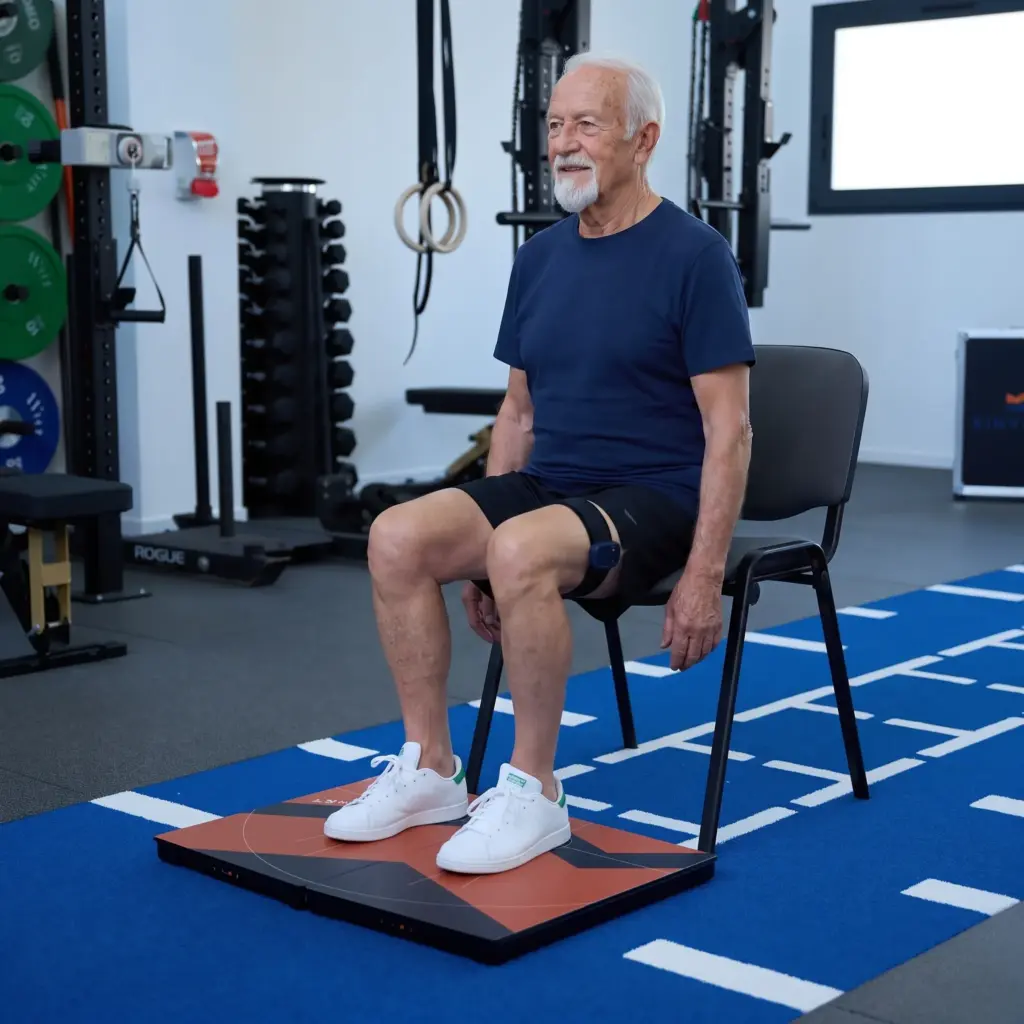
The diagnostic procedure: Dr. Ruszkowski had the patient perform 30-second sit-to-stand tests on the K-Deltas with the K-Move strapped to his right thigh to collect additional data. He also ran single-leg balance and Romberg tests to predict the patient’s fall risk.

What the data showed: The initial assessment showed the patient had 18.5% asymmetry between his right and left sides, distributed his weight to his heels, and had significant medio-lateral sway.

The outcome: After two months of rehab, the patient reduced his right/left asymmetry to 4.6%. Dr. Ruszkowski submitted the data to Medicare to get the patient additional sessions, which were easily approved because he proved clinical rationale.

an 80 years old man doing a sit-to-stand test using the K-Deltas and a K-move from Kinvent

The Results: Data Is Good for Patients, Good for PTs, Good for Business

Once Dr. Ruszkowski embraced technology, his entire approach to care shifted. The data empowered him to make rehab, training, and discharge decisions based on individual benchmarks – not arbitrary timelines and self-reporting. “If I can demonstrate that someone is making meaningful progress, but they’re not quite ready to return to sport, I can document that,” he said.

Over the past four years, health outcomes – and business – have skyrocketed at ARPT.

Data is good for Patients

Dr. Ruszkowski’s patients only return to sport or life when the data says they are ready, not when they report feeling “good enough.” Because of this, their risk of reinjury is reduced. 

Kinvent has also helped Dr. Ruszkowski cultivate stronger, more trusting relationships with his patients. “It allows me to have better communications with my patients through the app,” he said. “[It’s] interactive, both on my end and their end, because it goes right to their cell phone.”

The data also helps keep patients engaged in the process. With Kinvent’s graphing and reporting functionality, the patient “knows they are making progress,” Dr. Ruszkowski said. “And you know you know they’re getting the best treatment you can provide.”  

Data is good for PTs

Objective data has given Dr. Ruszkowski greater confidence in his decisions. Numbers validate whether his methodology is effective and help him adjust his approach quickly if the patient is plateauing.

“Data reduces our false confidence,” he said. “It allows us to know how somebody is progressing through their treatment. We can track trends and apply context to how people are moving and the improvements they’re making.”

As a result, Dr. Ruszkowski has an easier time justifying his decisions to patients – and insurance providers. Now, instead of haggling with insurers, he submits the data along with his notes to get additional sessions covered.

“We spend less time on the phone dealing with insurance companies,” he said. “We can have better, more meaningful conversations with doctors and patients, and allow them to stay in treatment when it matters most.”

With Kinvent, Dr. Ruszkowski doesn’t just save time negotiating with insurance companies.  He also spends significantly less time setting up and running tests because protocols are built into the Kinvent App. “It’s definitely economical,” he said.

Data is good for Business

“The reward for good work is more work,” Dr. Ruszkowski said. “If you’re providing quality data and quality interventions, you’re going to get more referrals from doctors and patients.”

It’s something Dr. Ruszkowski has seen in his own practice. Since he fully integrated objective assessments into ARPT in 2022, his business grew 40% year-on-year.  

Dr. Ruszkowski predicts that, as biofeedback technology continues to become more accessible, PTs will recognize that quantitative data is a powerful tool they can leverage to help their patients and grow their businesses. In the meantime, he encourages his peers to experiment with a more data-driven approach to care.

“We should shift to having baseline measurements that are tangible, pure, objective data,” Dr. Ruszkowski said. “Then we can move into transformational care, where people can fully return to the activities they love and not come back for similar issues.”


Open Close
kassandra logo

Kassandra

AI Agent