


Rehab after total knee replacement should not be limited to following a fixed post-operative timeline. While total knee replacement can significantly reduce pain related to advanced osteoarthritis, recovery remains highly variable from one patient to another.
This is why modern rehabilitation increasingly relies on objective and measurable criteria: range of motion, muscle strength, loading symmetry, balance, gait quality, functional tests, and patient-reported outcome measures.
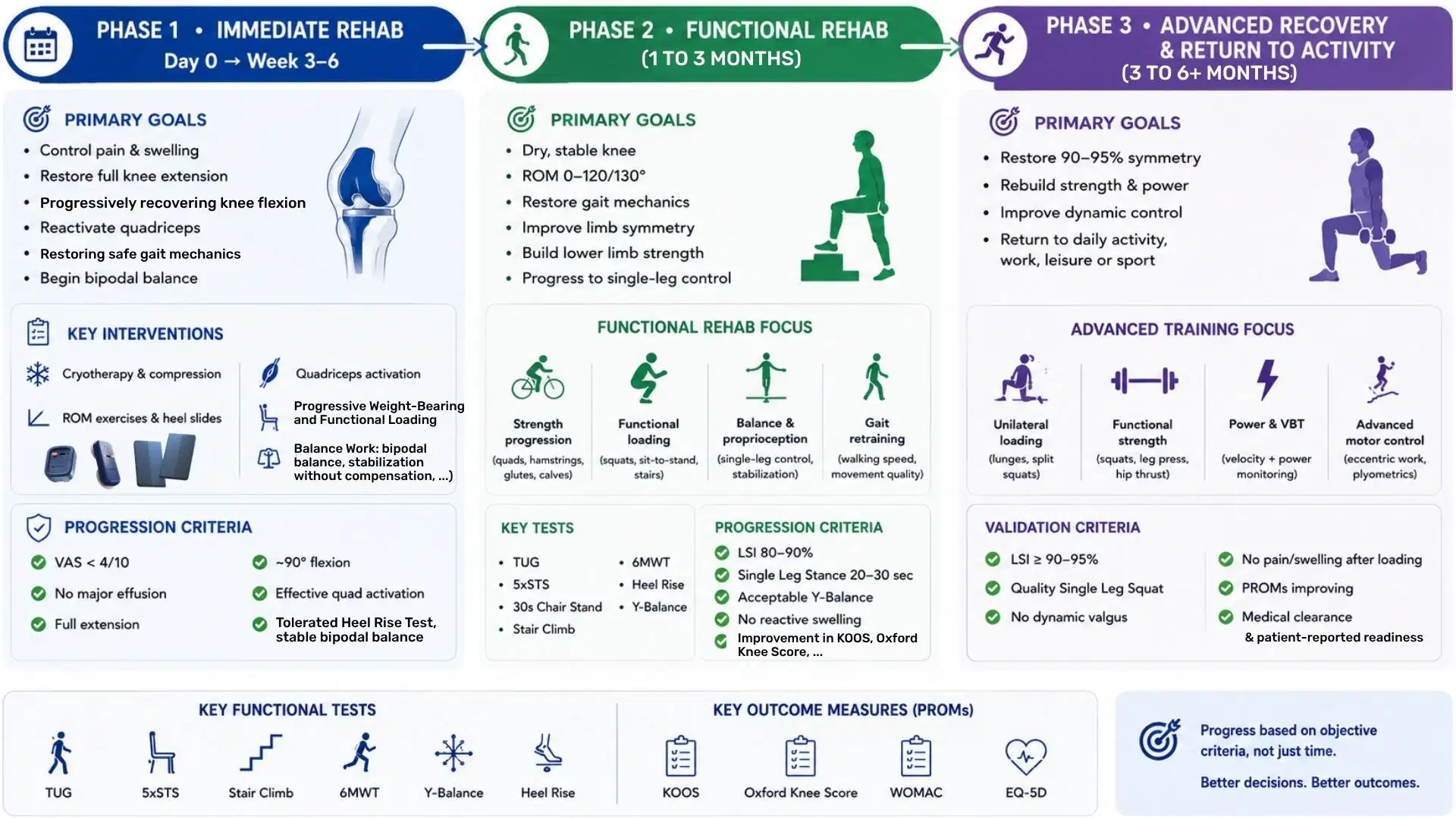
In this article, we will explore which criteria to monitor after total knee replacement, how to structure the rehab phase by phase using an evidence-based criteria approach, which functional tests can help objectify progress, and how connected tools can support clinicians in making rehabilitation more personalized and safer.
CONTENTS
1- Why Rehab Should Go Beyond a Time-Based Protocol
2- Phase 1: Immediate Rehab After Total Knee Replacement (Day 0 to 3–6 Weeks)
3- Phase 2: Functional Rehab After Total Knee Replacement (1 to 3 Months)
4- Phase 3: Return to Activity and Advanced Functional Recovery (3 to 6+ Months)
5- How Connected Tools Can Improve Rehab After Total Knee Replacement
6- FAQ: Rehab After Total Knee Replacement
7- References
1- Why Rehab Should Go Beyond a Time-Based Protocol
Although total knee replacement is effective in reducing pain, functional recovery can vary significantly. Studies show that up to 30% of patients may still experience persistent functional limitations, while quadriceps strength deficits can reach 40–60% in the first months. Loading asymmetries and gait impairments may also persist beyond 6 months.
This highlights a key clinical reality: we are not rehabilitating a prosthesis, but a patient, with their own capacities, deficits, and goals.
Time since surgery alone is not enough to reflect true recovery. Two patients at the same post-operative stage may show very different profiles in terms of strength, symmetry, and motor control.
This is why modern rehab after total knee replacement is moving toward an approach based on objective indicators such as mobility, muscle strength, balance, gait quality, and weight distribution; now measurable through connected tools such as dynamometers, force plates, surface EMG, and velocity-based training systems.
2- Phase 1: Immediate Rehab After Total Knee Replacement (Day 0 to 3–6 Weeks)
The first weeks after total knee replacement are critical. At this stage, the goal is not performance, but restoring the essential functions required for safe recovery: pain control, mobility restoration, muscle activation, and progressive return to weight-bearing.
Phase 1 Goals
Clinical priorities include:
- controlling pain, swelling, and joint effusion
- preventing joint stiffness
- restoring full knee extension, a key priority in the early phase
- progressively recovering knee flexion
- reactivating the quadriceps and limiting arthrogenic muscle inhibition
- restoring safe gait mechanics, with assistive devices if needed
- initiating progressive weight transfer onto the operated limb
- reducing compensatory strategies from the hip, ankle, or contralateral limb
- maintaining general lower limb muscle activation, particularly hip stabilizers and calf musculature
- introducing early bipodal balance work
Clinical Interventions
Rehabilitation may include:
Pain and Inflammation Management
Depending on the patient profile:
- frequent cryotherapy
- compression or compression stockings
- gentle drainage techniques or light pressotherapy
- limb elevation
- calf pump activation
- toe mobility exercises
- self-massage when tolerated
The goal is to achieve a knee that is calm enough to tolerate active progression.
Restoring Range of Motion
Early mobility work primarily focuses on preventing flexion contracture and progressively restoring knee motion.
This may include:
- gentle patellar mobilizations
- assisted active flexion and extension exercises
- self-mobilization with a ball, sliders, or heel slides
- progressive flexion work based on tolerance
A connected tool such as K-Move can help objectively monitor range of motion while providing immediate visual biofeedback to guide exercises and improve patient engagement.
Early Muscle Activation
Quadriceps reactivation is a major priority after total knee replacement, particularly due to the arthrogenic muscle inhibition commonly seen after surgery.
Interventions may include:
- isometric contractions
- co-contractions
- straight leg raises
- active knee locking/extension control
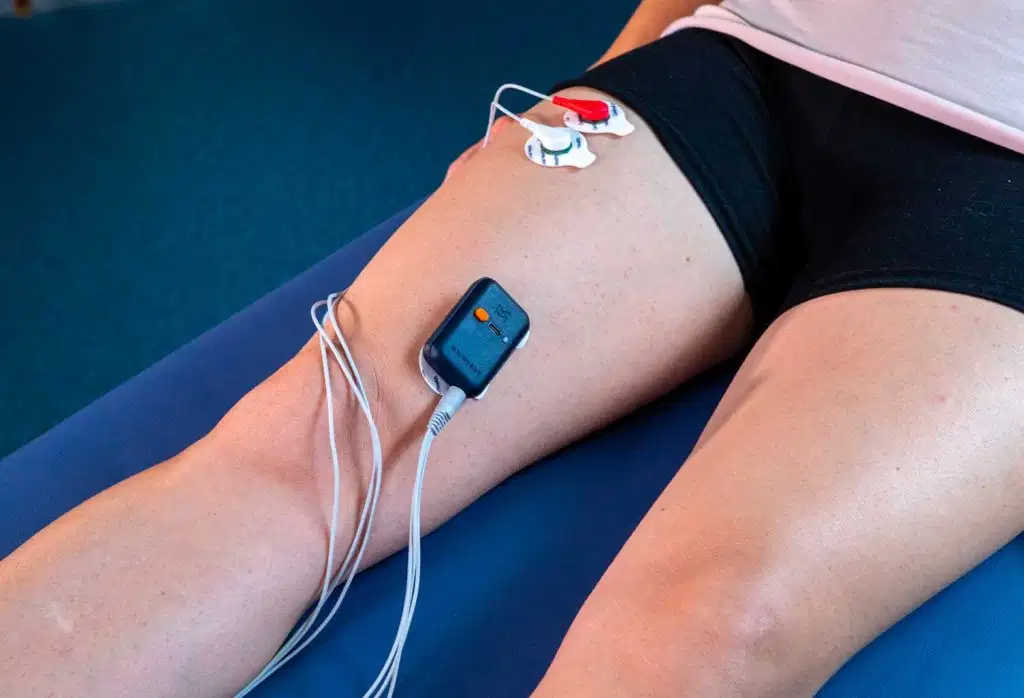
Using EMG biofeedback, such as K-Myo, can help objectively assess muscle activation and improve motor engagement.
Progressive Weight-Bearing and Functional Loading
Functional reintegration starts early.
This may include:
- gait retraining with walking aids
- correction of compensatory strategies
- progressive weight transfer
- assisted sit-to-stand work
- early partial squats, depending on compensation patterns
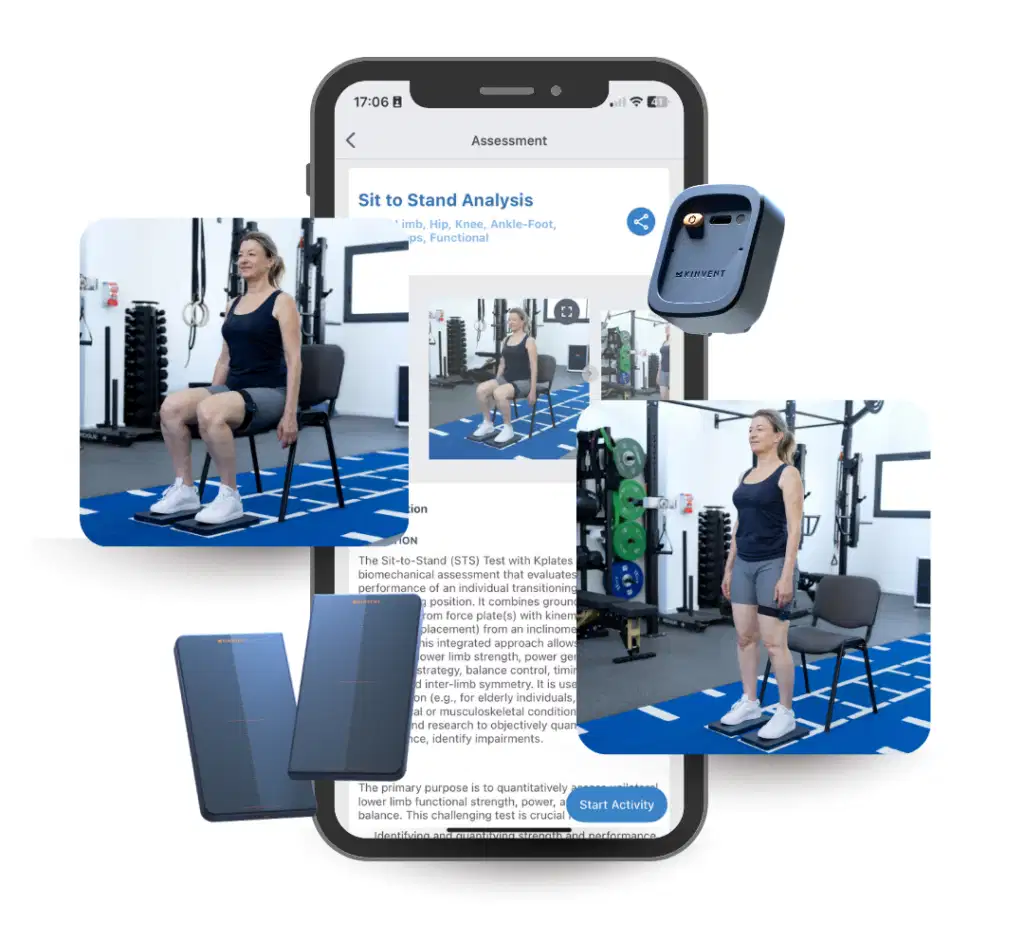
Force plates can be particularly useful in this phase to visualize weight distribution and identify asymmetries from the start.
Balance Work
Even in the early post-operative phase, simple postural work can be introduced:
- bipodal balance
- stabilization without compensation
- standing posture control
Criteria to Progress to Phase 2
Progression should not depend solely on time since surgery, but on clearly validated functional milestones.
Examples include:
Pain / Inflammation
- VAS < 4/10
- no major joint effusion
- good tolerance to weight-bearing
Mobility
- full knee extension
- knee flexion approaching or exceeding 90°
Muscle Activation
- effective quadriceps activation
- active extension control
Function
- safe ambulation
- tolerated Heel Rise Test
- bridge performance with limited compensation
- elevated sit-to-stand or ¼ to ½ squat with moderate asymmetry
Postural Control
- stable bipodal balance
- acceptable weight transfer onto the operated limb
This first phase lays the foundation for the entire recovery process. Without sufficient mobility, effective muscle activation, and controlled loading, progression toward more advanced strengthening remains limited.
3- Phase 2: Functional Rehab After Total Knee Replacement (1 to 3 Months)
Once the acute phase has passed, the goal is no longer simply recovery, but rebuilding function. This transition phase focuses on restoring full mobility, progressively rebuilding muscular capacity, and normalizing everyday movement patterns.
Phase 2 Goals
Clinical priorities include:
- achieving a dry, stable, non-inflammatory knee
- restoring functional range of motion, ideally between 0° and 120–130°, depending on the patient profile
- progressively strengthening the quadriceps as well as the entire lower limb kinetic chain
- progressing from isometric work to concentric, then eccentric loading
- improving loading symmetry and motor control
- restoring smoother, more efficient gait mechanics
- rebuilding confidence in daily functional movements
- progressing from bipodal to stronger single-leg control
Strengthening and Functional Loading
Strength work should go beyond the quadriceps alone. This phase also targets:
- hamstrings
- glutes
- calf complex
- adductors
- hip stabilizers
Functional progression may include:
- cycling or ergometer work
- squats
- sit-to-stand progressions
- weight transfer drills
- stair ascent and descent
- bridges
- Heel Rise progression/calf strengthening
- closed-chain exercises
Dynamometry becomes especially valuable at this stage to objectively quantify strength recovery and track asymmetries using the Limb Symmetry Index (LSI).
Meanwhile, force plates provide more precise insight into weight distribution, eccentric control, and potential deficits in stability or dynamic valgus.
Range of motion can continue to be monitored with K-Move, while K-Power may support gait speed and movement performance analysis.
Gait, Balance, and Proprioception
Functional recovery also requires restoring efficient locomotion and postural control.
This phase may include:
- gait retraining
- walking speed monitoring
- in-place skipping drills
- single-leg balance work
- progressive proprioception
- dynamic stabilization exercises
The goal is to progressively reduce compensations and improve confidence on the operated limb.
Criteria to Progress to Phase 3
Progression should be based on objective criteria.
Mobility
- full knee extension
- knee flexion ≥110–120°
Strength
- satisfactory muscular recovery
- quadriceps/hamstring/glute (particularly glute medius) LSI ≥80–90%
Balance
- Single Leg Stance ≥20–30 seconds
- acceptable Y-Balance Test performance based on symmetry or normative expectations
Function
Relevant functional tests may include:
- Timed Up and Go (commonly <10–12 seconds)
- 5 Times Sit-to-Stand
- 30-Second Chair Stand Test
- Stair Climb Test
- 15-Second Step Up & Down Test
- 6-Minute Walk Test
- Heel Rise Test
Gait and Motor Control
- smooth gait without major compensation
- satisfactory walking speed
- symmetrical skipping mechanics
- no significant dynamic valgus
Clinical Tolerance
- no reactive post-exercise joint effusion
PROMs
- improvement in KOOS
- Oxford Knee Score
- or other relevant patient-reported outcomes
This phase should allow the patient to transition from early recovery to handling more demanding functional loads with reliable motor control.
4- Phase 3: Return to Activity and Advanced Functional Recovery (3 to 6+ Months)
This phase focuses on restoring higher-level functional capacity. The goal is no longer simply to recover, but to rebuild a lower limb capable of producing force, absorbing load, and controlling dynamic movement with a high level of symmetry.
Depending on the patient profile, this phase may support a progressive return to daily activities, work demands, recreational activity, or sport when appropriate.
Phase 3 Goals
Clinical priorities include:
- restoring high functional symmetry, ideally with LSI ≥90–95%
- developing maximal strength, muscular endurance, power, and motor control
- improving multiplanar dynamic control
- reducing residual asymmetries
- increasing tolerance to higher loading demands
- safely supporting return to regular activities
Advanced Strengthening and Functional Recovery
At this stage, rehabilitation becomes more demanding, with a clear objective: restoring a resilient lower limb capable of tolerating higher loads and more complex movement demands.
Rehab may be structured around several key areas:
Unilateral Loading and Symmetry Control
The goal is to improve the operated limb’s ability to generate force and manage load independently.
Examples include:
- lunges
- split squats / Bulgarian split squats
- functional unilateral strengthening exercises
Closed-Chain and Semi-Closed-Chain Strength Work
These exercises help restore functional strength through movement patterns that closely resemble real-life activities.
Examples include:
- quarter or half squats, depending on tolerance
- hip thrusts
- leg press
- functional pushing patterns
Advanced Stabilization and Motor Control
This stage focuses on improving dynamic control, movement quality, and stability under more demanding conditions.
Examples include:
- eccentric control work
- advanced proprioception
- dual-task training
- multiplanar stabilization exercises
- light plyometric exposure when clinically appropriate
Complementary Muscle Group Strengthening
Functional recovery should not rely solely on quadriceps restoration. Additional muscle groups involved in propulsion, stability, and lower limb control should also be addressed.
Examples include:
- calf strengthening
- gluteus medius strengthening
- posterior chain work
- hip stabilizer strengthening
Force plates can help objectively assess force production, inter-limb symmetry, and compensatory strategies during more complex functional tasks.
Velocity-Based Training and Dynamic Recovery
The protocol also highlights the potential role of Velocity-Based Training (VBT) during this stage.
With K-Power, clinicians can objectively monitor not only external load, but also movement velocity and power output during functional exercises such as:
- squats
- lunges
- Bulgarian split squats
- hip thrusts
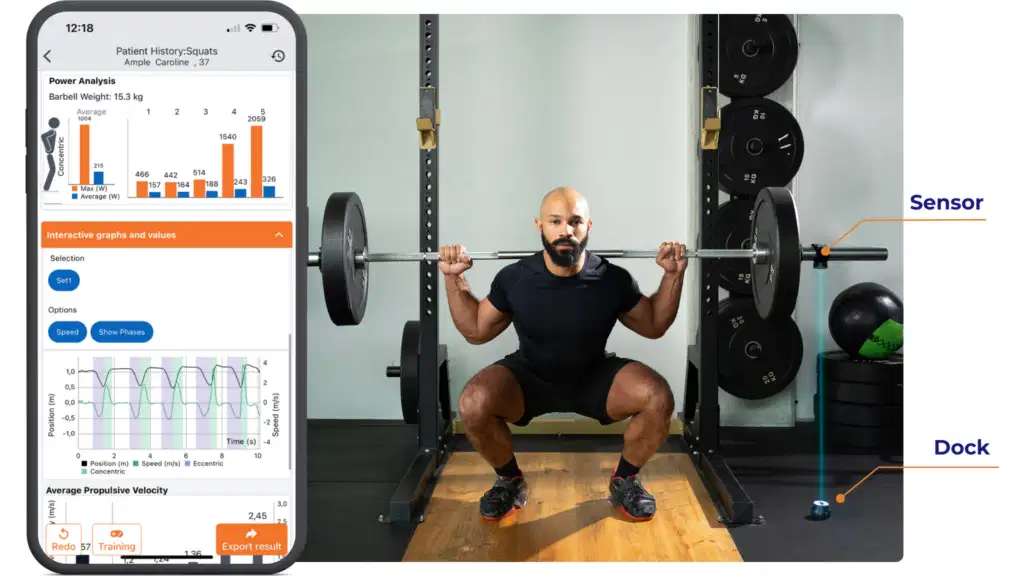
This approach may help:
- adapt training intensity to the patient’s day-to-day capacity
- monitor power recovery
- identify subtle asymmetries
- provide immediate biofeedback to improve movement execution and patient motivation
Validation Criteria
Return to higher-demand activity should rely on strict objective criteria.
Strength and Symmetry
- force / power LSI ≥90–95%
- minimal asymmetry on dynamometry or force plate assessment
Motor Control
- high-quality Single Leg Squat
- no significant dynamic valgus
- satisfactory multiplanar movement control
Functional Performance
Relevant tests may include:
- Stair Climb Test
- 6-Minute Walk Test
- Timed Up and Go
- Single Leg Stance
- Heel Rise Test
- adapted hop tests (single hop, triple hop) when clinically appropriate
Target performance should ideally approach 90% of expected norms or the contralateral limb, depending on context.
Gait / Locomotion
- symmetrical gait
- symmetrical running or dynamic locomotion when relevant
- satisfactory movement speed
Force plates and K-Power may provide additional objective insight.
Clinical Tolerance
- no significant pain after loading
- no reactive joint effusion
PROMs and Patient Readiness
- progression in KOOS
- Oxford Knee Score
- patient satisfaction
- confidence using the operated limb
Medical Clearance
Return to higher-demand activities should also consider:
- patient-reported readiness
- clinician judgment
- medical clearance when required
This phase does not simply mark the end of rehabilitation, but the recovery of a function robust enough to meet the patient’s real-world demands.
5- How Connected Tools Can Improve Rehab After Total Knee Replacement
Rehab after total knee replacement relies on well-established clinical markers: pain, mobility, strength, balance, and function. But in practice, visual observation or manual testing alone may not always be enough to accurately detect persistent deficits or compensatory strategies.
Connected tools help transform clinical observations into objective, measurable, and trackable data.
Objective Monitoring at Every Stage of Recovery
Different tools can support clinicians at different stages of the rehabilitation process:
- K-Move to precisely measure the range of motion and guide mobility exercises with visual biofeedback
- K-Myo to objectively assess muscle activation, particularly quadriceps recruitment in the early post-operative phase
- Dynamometry to quantify muscle strength and monitor asymmetries using the Limb Symmetry Index (LSI)
- Force plates to analyze weight distribution, transfer mechanics, postural stability, and dynamic compensations
- K-Power to monitor gait speed, movement velocity, and power output during functional exercises
This allows for a more individualized and safer progression throughout rehab.
From Assessment to Biofeedback-Driven Rehab
One of the key advantages of connected tools is the ability to move seamlessly from assessment to active rehabilitation.
For example, a patient can:
- immediately visualize weight distribution during a squat
- correct asymmetrical loading during sit-to-stand work
- monitor quadriceps activation through EMG biofeedback
- adjust movement speed during strengthening exercises
This real-time feedback often improves movement quality, patient understanding, and overall engagement.
Better Clinical Tracking and Documentation
The benefits extend beyond the assessment session itself.
Connected tools also support:
- automatic data capture
- longitudinal progress tracking
- comparison across sessions
- easy PDF or CSV export
- clearer clinical documentation
In a criteria-based rehab model, this kind of traceability helps clinicians make more informed progression decisions and facilitates communication between professionals.
A Complement to Clinical Expertise, Not a Replacement
Technology does not replace clinical reasoning or the therapeutic relationship.
Instead, it helps clinicians objectively quantify what they are already observing, while adding greater precision to progression decisions and recovery monitoring.
In total knee replacement rehab, where asymmetries, compensations, and persistent deficits can significantly impact long-term outcomes, this level of objectivity can become a meaningful clinical advantage.
6- FAQ: Answer your questions about Rehab After Total Knee Replacement
How Long Does Rehab After Total Knee Replacement Take?
Recovery timelines vary depending on the patient’s baseline condition, functional goals, surgical outcome, and rehabilitation progression. Early recovery milestones may be achieved within the first weeks, but a more complete restoration of functional capacity often takes 3 to 6 months or longer in some cases.
What Criteria Should Be Used to Progress Rehab After Total Knee Replacement?
Progression should not rely solely on time since surgery. Common criteria include:
- pain and joint effusion
- range of motion
- muscle strength
- limb symmetry
- balance
- gait quality
- functional testing performance
- patient-reported outcome measures
A criteria-based approach helps ensure progression reflects actual functional recovery rather than arbitrary timelines.
What Functional Tests Are Useful After Total Knee Replacement?
Several tests can help objectively monitor recovery:
- Timed Up and Go (TUG)
- 5 Times Sit-to-Stand Test
- 30-Second Chair Stand Test
- Stair Climb Test
- 6-Minute Walk Test
- 15-Second Step Up & Down Test
- Heel Rise Test
- Single Leg Stance
- Y-Balance Test
The most relevant tests depend on the rehabilitation stage and the patient’s functional goals.
Why Is Quadriceps Strength So Important After Total Knee Replacement?
The quadriceps play a major role in gait, stability, stair negotiation, and sit-to-stand performance. Persistent weakness can delay recovery, increase compensatory movement strategies, and limit return to activity.
Objective strength assessment helps clinicians better guide progression and identify residual deficits.
Are Force Plates Useful in Total Knee Replacement Rehab?
Yes. Force plates can help objectively assess variables that may be difficult to accurately detect through visual observation alone, including:
- loading asymmetries
- postural control
- weight transfer strategies
- dynamic compensations
- movement stability
They can provide valuable biomechanical insight throughout multiple rehab phases.
Can Patients Return to Sport After Total Knee Replacement?
This depends on the patient profile, surgical outcome, activity demands, and functional recovery.
A progressive return to recreational or higher-demand activities may be appropriate when strength, symmetry, motor control, and load tolerance are sufficiently restored.
Clinical judgment and medical clearance should always guide return-to-activity decisions.
7- Conclusion: Rehab after total knee replacement
Rehab after total knee replacement should no longer be reduced to a fixed timeline based solely on time since surgery. While broad recovery milestones remain useful, real clinical progress depends on the patient’s actual functional capacity.
A modern, criteria-based approach, supported by objective markers such as mobility, muscle strength, symmetry, balance, gait quality, functional testing, and patient-reported outcomes, allows for safer and more individualized rehabilitation.
Connected tools further strengthen this process by providing measurable data, real-time biofeedback, and improved clinical traceability. From early mobility restoration to advanced return-to-activity decisions, they help clinicians make more informed progression choices.
In practice, the goal is not simply to recover from surgery, but to restore durable function that matches the patient’s real-world needs.
8- References
- Artz, N., Elvers, K. T., Lowe, C. M., Sackley, C., Jepson, P., & Beswick, A. D. (2015). Effectiveness of physiotherapy exercise following total knee replacement: Systematic review and meta-analysis. BMC Musculoskeletal Disorders, 16, 15. https://doi.org/10.1186/s12891-015-0469-6
- Bade, M. J., & Stevens-Lapsley, J. E. (2011). Early high-intensity rehabilitation following total knee arthroplasty improves outcomes. Journal of Orthopaedic & Sports Physical Therapy, 41(12), 932–941. https://doi.org/10.2519/jospt.2011.3734
- Bohannon, R. W. (1997). Comfortable and maximum walking speed of adults aged 20–79 years: Reference values and determinants. Age and Ageing, 26(1), 15–19. https://doi.org/10.1093/ageing/26.1.15
- Christiansen, C. L., Bade, M. J., Judd, D. L., & Stevens-Lapsley, J. E. (2011). Weight-bearing asymmetry during sit-to-stand transitions related to impairment and functional mobility after total knee arthroplasty. Archives of Physical Medicine and Rehabilitation, 92(10), 1624–1629. https://doi.org/10.1016/j.apmr.2011.04.022
- Haute Autorité de Santé. (2008). Critères de suivi en rééducation et d’orientation en ambulatoire après arthroplastie totale du genou. Haute Autorité de Santé.
- Jette, D. U., Hunter, S. J., Burkett, L., Langham, B., Long, A., Smith, M. V., Harpster, K., & Stevens-Lapsley, J. E. (2020). Physical therapist management of total knee arthroplasty. Physical Therapy, 100(9), 1603–1631. https://doi.org/10.1093/ptj/pzaa099
- Kennedy, D. M., Stratford, P. W., Riddle, D. L., Hanna, S. E., & Gollish, J. D. (2008). Assessing recovery and establishing prognosis following total knee arthroplasty. Physical Therapy, 88(1), 22–32. https://doi.org/10.2522/ptj.20070051
- McClelland, J. A., Webster, K. E., & Feller, J. A. (2007). Gait analysis of patients following total knee replacement: A systematic review. The Knee, 14(4), 253–263. https://doi.org/10.1016/j.knee.2007.04.008
- Mizner, R. L., Petterson, S. C., & Snyder-Mackler, L. (2005). Quadriceps strength and the time course of functional recovery after total knee arthroplasty. Journal of Orthopaedic & Sports Physical Therapy, 35(7), 424–436. https://doi.org/10.2519/jospt.2005.35.7.424
- Philippeau, D. (2013). Rééducation et arthroplasties totales du genou. Kinésithérapie Scientifique, 548, 17–30.
- Podsiadlo, D., & Richardson, S. (1991). The Timed “Up & Go”: A test of basic functional mobility for frail elderly persons. Journal of the American Geriatrics Society, 39(2), 142–148. https://doi.org/10.1111/j.1532-5415.1991.tb01616.x
- Pozzi, F., Snyder-Mackler, L., & Zeni, J. (2013). Physical exercise after knee arthroplasty: A systematic review of controlled trials. Clinical Interventions in Aging, 8, 1591–1603. https://doi.org/10.2147/CIA.S48836
- Stevens-Lapsley, J. E., Balter, J. E., Wolfe, P., Eckhoff, D. G., & Kohrt, W. M. (2012). Early neuromuscular electrical stimulation to improve quadriceps muscle strength after total knee arthroplasty: A randomized controlled trial. Journal of Orthopaedic & Sports Physical Therapy, 42(9), 716–726. https://doi.org/10.2519/jospt.2012.3914
- Zeni, J. A., Jr., & Snyder-Mackler, L. (2010). Most patients gain weight in the 2 years after total knee arthroplasty: Comparison to a healthy control group. Clinical Orthopaedics and Related Research, 468(1), 52–57. https://doi.org/10.1007/s11999-009-0993-3


