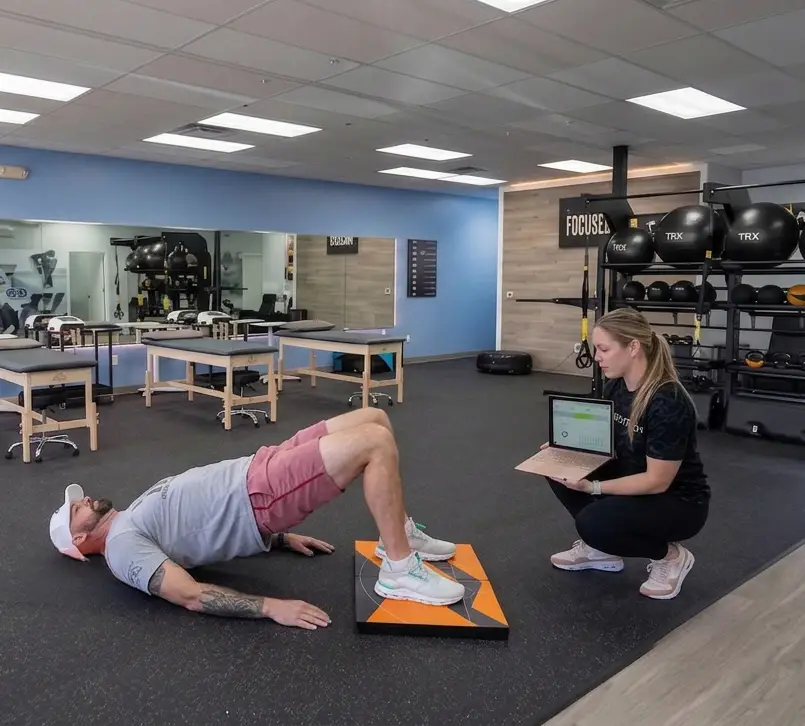





Athlete performing a single-leg Bulgarian split squat test on K-Deltas force plates with the K-Move motion sensor

How Kinvent Data Helps One PT Clinic Get Insurance Claims Approved

Competitive Edge Physical Therapy (CEP) is a Tampa-based physical therapy clinic that specializes in rehabilitating athletes and active patients eager to return to their sports or lives. The clinic treats common orthopedic issues like low back, shoulder, and knee pain – but also provides post-op care and supports active aging.

Since its inception in 2007, CEP has taken a technology-forward approach to care. When physical therapist Jason Waz founded the clinic, he eschewed traditional, generic tools and methods. Instead, he grounded the clinic’s approach in evidence-based practice and invested heavily in technology, including biofeedback tools, NEUBIE (neuro-bio-electric stimulator), TECAR (transfer of energy capacitive and resistive) and PEMF (pulsed electromagnetic fields) therapy, and HRV (heart rate variability) analytics.

CEP’s commitment to innovation has paid off – and won the clinic legions of devoted patients. In addition to treating college, amateur and recreational athletes, CEP has rehabilitated PGA Tour, NFL, MLB and NHL professionals.

While CEP cracked the code to effective care early in its history, one problem persisted until recently: insurance claims denials.
The Problem: Insurance Claims Denials

When Kate Carney, a Doctor of Physical Therapy and certified strength and conditioning specialist, joined CEP in early 2025, she was impressed by the clinic’s high-tech methodology – but frustrated by the number of insurance claim denials she received.

As a former athlete and current CrossFit enthusiast, Carney understands how important it is to ensure patients are fully rehabilitated before returning to activity. She was concerned about sending her patients back to their sport or lives under-rehabbed, just because their insurance company refused to cover additional sessions.

Because approximately 40% of the clinic’s business is insurance-based, Carney found herself caught in a time-consuming vicious cycle. She would submit a claim for additional sessions. The insurance company would deny the claim. She would gather additional evidence and appeal her claim. The insurance company would either approve (or partially approve) the claim or deny it again, putting Carney back at square one.

That back-and-forth wasted valuable time Carney would have otherwise spent treating patients. “It would absolutely save time if claims were approved up front,” she said.

Carney and CEP’s other PTs knew the progress notes they submitted to the insurance companies would be stronger with objective data. Until December 2025, CEP used biofeedback devices from a well-known brand. Those devices should, in theory, have given them the data they needed to strengthen their insurance claims. Unfortunately, the PTs thought the data was hard to parse and took too long to interpret.

“We weren’t really using the force plates we had that much,” Carney said. “The software was hard to use and gives you almost too much information for each phase of a test. Sometimes you don’t even know what to look at.”

The Solution: User-Friendly, Objective Data

In January 2026, CEP purchased Kinvent’s K-Deltas Force Plates, hoping the Kinvent ecosystem would produce more user-friendly data and reporting. It delivered.

Compared to the products they previously used, Carney said Kinvent’s software is “way easier to use and gives you way more biofeedback information.” Data from the plates is sent to the Kinvent App in real time and automatically generates numbers and reports that are easy to understand. Interpreting the data is a “much more seamless process,” according to Carney.

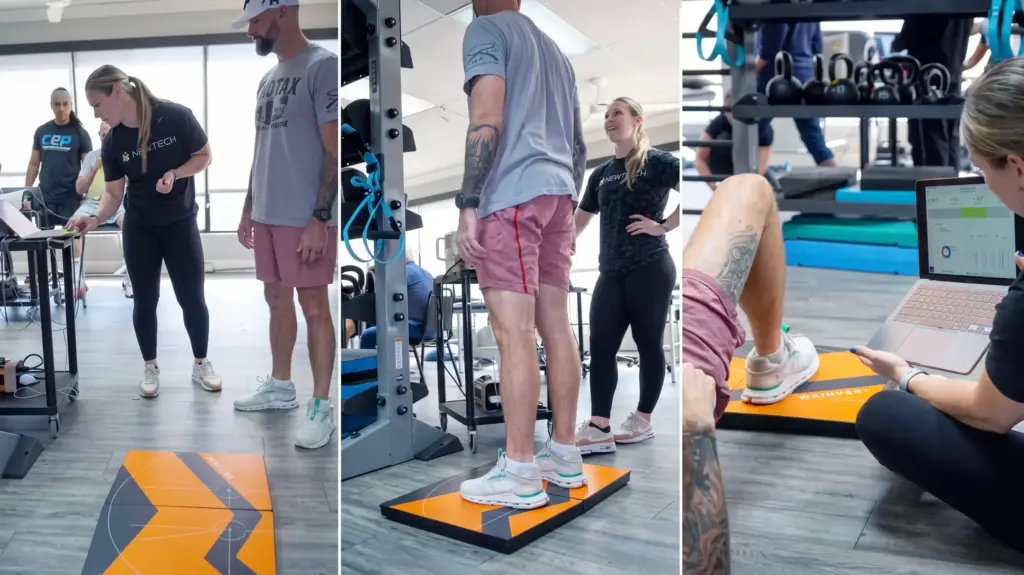
Now, Carney uses the plates frequently and in a variety of applications – from squat assessments to countermovement jump tests, and hip bridges to balance assessments.

The easy-to-understand data also helps ensure patients remain motivated and complete their prescribed courses of therapy. “Kinvent definitely helps with the buy-in process,” Carney said. “Having a visual representation helps patients understand why they may not be ready to return to their sport and makes them pump the brakes a little bit. That helps prevent reinjury.”

Patients aren’t the only ones convinced by the data – insurance companies are, too. When Carney started submitting Kinvent data to insurance companies to justify the need for additional sessions, approvals increased.

Use Case 1

Who: An active senior and pickleball devotee recovering from a total knee replacement.

The problem: A woman recovering from knee replacement surgery transferred to CEP from another rehab clinic. She had used the majority of her insurance-approved PT appointments but had a “ways to go to get back to normal life,” according to Carney.

The insurance claims process before Kinvent: Carney submitted her progress notes to Medicare and requested additional sessions. The claim was denied.

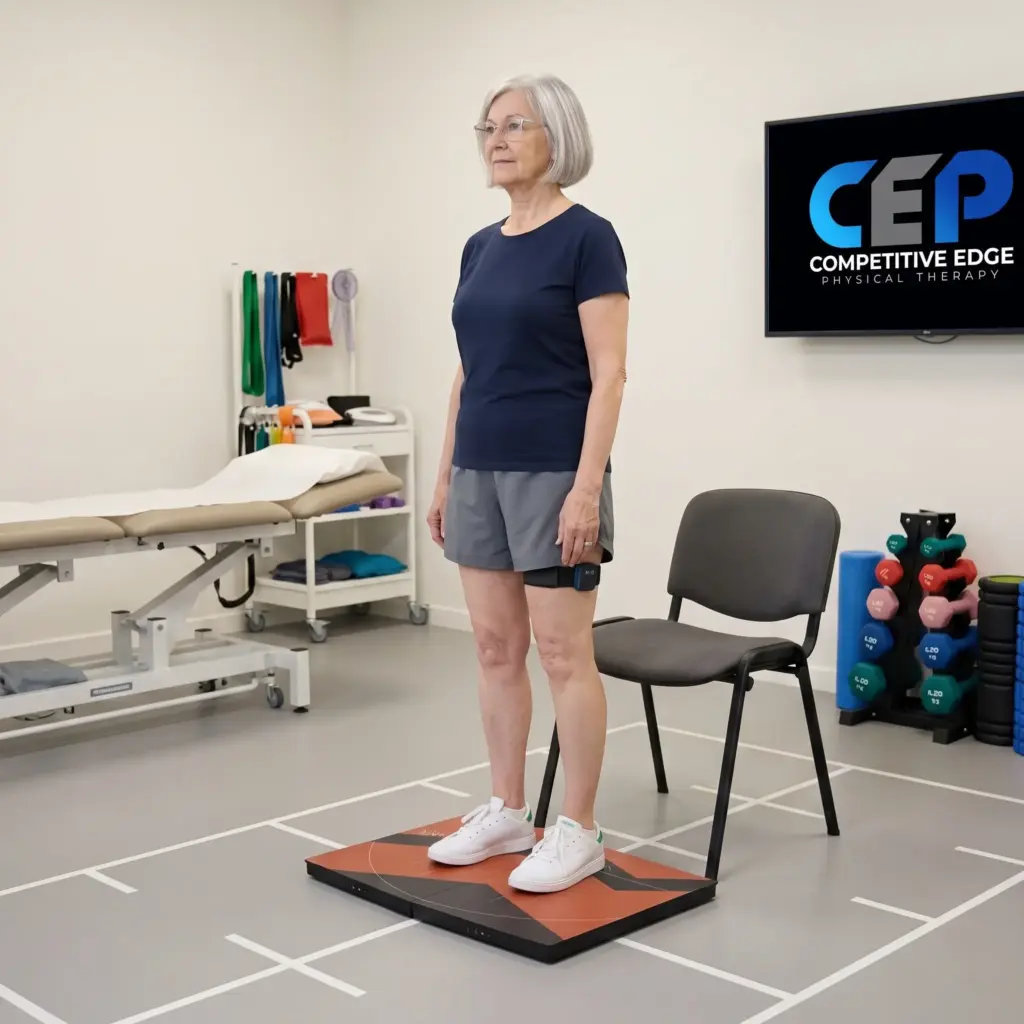
The insurance claims process after Kinvent: To add additional evidence to her claim, Carney had her patient complete squat and balance assessments using the K-Deltas. She included the data in her progress notes and resubmitted the claim.

The outcome: Medicare approved eight additional sessions for the patient. During those sessions, Carney helped the patient strengthen her quads and improve her cutting speed so she could return to the pickleball court with confidence.

Senior woman playing pickleball or paddle tennis on an indoor court, ready position

Use Case 2

Who: An Army Colonel recovering from hamstring repair surgery.

The problem: A man quickly ran out of insurance-approved PT sessions while rehabbing a post-op hamstring. Though he had made progress, he was still walking with a limp. Carney said additional sessions were non-negotiable, which meant he would have to pay out of pocket if insurance refused to cover additional sessions.

The insurance claims process before Kinvent: Tricare granted the patient five additional sessions, which Carney knew would be insufficient.

The insurance claims process after Kinvent: Carney had the patient complete squat, glute bridge and balance assessments using the K-Deltas and included the data when she resubmitted the claim.

The outcome: Tricare approved 15 additional sessions for the patient, who is still in treatment but no longer walking with a limp. This saved the patient $2,250 in out-of-pocket costs.

Man stretching his hamstring on a padded bench in a physical therapy clinic

The Results: Improved Outcomes & Return-to-Sport Confidence

Kinvent data has helped Carney and other CEP PTs get more sessions approved for the patients who need them. Because of this, patients now get the full course of care they need without having to pay out of pocket. The result? Patients return to their sport or life safely and adequately rehabbed.

As an added benefit, Carney can bill insurance companies using the CPT code 97750 when she uses Kinvent tools. The reimbursement rate is higher than the standard code, which means the clinic gets more money back to invest in tools and therapies for its patients.

Financial benefits aside, Carney appreciates the validation Kinvent’s data gives her.

“Having data makes me feel more confident as a practitioner,” Carney said. “I don’t question my decisions because they’re based on what the data says – not just how the patient looks.”

Open Close
kassandra logo

Kassandra

AI Agent