


The broad jump, also known as the standing broad jump or standing long jump, is often viewed as a simple distance test. Yet in rehabilitation and return-to-sport settings, it can provide far more information than a result measured in inches or centimeters.
In a single movement, the test challenges horizontal force production, intersegmental coordination, trunk control, propulsion strategy, and landing quality. It can therefore help assess key physical qualities in a wide range of profiles, including athletes returning to play, patients in the final stages of lower-limb rehabilitation, and athletes seeking to improve acceleration and explosiveness.
Simple to administer, inexpensive, and time-efficient, the broad jump is a valuable tool for physical therapists, sport scientists, strength and conditioning professionals, and coaches. On its own, it already provides an initial indication of horizontal power. When combined with connected assessment tools such as force plates or speed sensors, however, it can become a more objective decision-making tool for monitoring progress, identifying asymmetries, and guiding return-to-sport decisions.
In this article, we will explore why the broad jump is relevant in rehabilitation, what it can actually assess, how to integrate it into a return-to-sport progression, and how instrumented analysis can help clinicians and performance professionals move beyond jump distance alone.
CONTENTS
1- What Is the Broad Jump?
2- How to Perform a Broad Jump: Step by Step
3- What Does the Broad Jump Assess?
4- Which Muscles and Physical Qualities Influence Broad Jump Performance?
5- How to Integrate the Broad Jump into a Return-to-Sport Program
6- What Criteria Should You Use to Progress the Broad Jump?
7- References
1- What Is the Broad Jump?
The broad jump is a maximal horizontal jump performed from a stationary position. The goal is simple: propel the body as far forward as possible from a two-foot takeoff, then stabilize the landing.

At first glance, the broad jump may appear to be nothing more than a distance test. In reality, it can provide insight into several important aspects of movement, including the ability to produce force quickly, direct that force horizontally, and control the landing.
In rehabilitation and return-to-sport settings, this test is particularly valuable because it challenges several physical qualities at the same time:
- Horizontal power of the lower limbs
- Coordination between the hips, knees, ankles, trunk, and upper limbs
- The ability to project the center of mass forward
- Landing control and the ability to absorb force
The broad jump can therefore be used as a functional test, a power assessment, and a progressive exercise during the later stages of rehabilitation.
2- How to Perform a Broad Jump: Step by Step
One of the biggest advantages of the broad jump is its simplicity. However, to ensure reliable and repeatable results, the testing protocol should be standardized.

Step-by-Step Protocol
A standard broad jump test typically follows these steps:
- Starting Position
The athlete or patient stands behind a starting line with both feet approximately shoulder-width apart.
- Movement Preparation
The hips and knees are flexed to prepare for takeoff. Depending on the testing protocol, the arms may swing freely to generate momentum or remain on the hips to minimize upper-body contribution.
- Takeoff
The individual performs an explosive forward jump, attempting to cover the greatest possible horizontal distance. This phase relies on coordinated force production throughout the kinetic chain.
- Landing
The landing is performed with both feet, emphasizing balance and control. Landing quality is an important component of the assessment, as it provides valuable information about force absorption and dynamic stability.
- Performance Measurement
In its simplest form, performance is determined by measuring the horizontal distance between the starting line and the landing point.
Standardizing the Test
To improve reliability and make results comparable over time, clinicians should standardize:
- Starting position
- Arm position (free swing or hands on hips)
- Number of trials
- Verbal instructions
- Measurement method
Although the most common approach is to measure from the starting line to the heel closest to the takeoff line after landing, this method may introduce bias related to foot length. Some authors recommend using consistent anatomical reference points, such as toe-to-toe or heel-to-heel measurements, to improve measurement consistency, particularly when comparing results with instrumented assessments.
3- What Does the Broad Jump Assess?
The broad jump is often viewed as a simple measure of jump distance. In reality, it provides valuable information about an athlete’s ability to generate, transfer, and absorb force. In rehabilitation and return-to-sport settings, it can be used to assess horizontal power, movement quality, and functional recovery throughout the rehabilitation process.
Assessing Horizontal Power and Propulsion
The broad jump is primarily a test of horizontal power production. Unlike vertical jump tests such as the Squat Jump or Countermovement Jump, it emphasizes the athlete’s ability to generate force in a forward direction.
This makes it particularly relevant for evaluating physical qualities associated with:
- Sprint acceleration
- Explosive forward movements
- Horizontal force production
- Sport-specific power development
From a clinical perspective, the broad jump provides insight into several key performance components:
- The ability to generate force rapidly
- Efficient horizontal force application
- Contribution of the posterior chain during propulsion
- Coordination between the hips, knees, ankles, trunk, and upper limbs
- The ability to convert force into effective forward displacement
These qualities are directly related to many athletic tasks, making the broad jump a valuable bridge between rehabilitation exercises and on-field performance.
Identifying Asymmetries and Movement Deficits
Beyond jump distance, the broad jump can help clinicians identify movement asymmetries, compensatory strategies, and deficits in neuromuscular control that may not be apparent during isolated strength testing.
Even during a bilateral jump, clinicians can observe:
- Uneven force production
- Compensatory movement patterns
- Poor coordination
- Unstable landings
- Deficits in eccentric control
These observations become even more meaningful when using the single-leg broad jump. By requiring takeoff and landing on one limb, this variation places greater demands on:
- Unilateral force production
- Hip, knee, and ankle stability
- Trunk control
- Force production and absorption without compensation
This makes the single-leg broad jump particularly valuable during the later stages of rehabilitation following injuries such as:
- Anterior cruciate ligament (ACL) reconstruction
- Lateral ankle sprains
- Extensor mechanism injuries
- Other lower-limb conditions requiring a progressive return to sport
Monitoring Progress Throughout Rehabilitation
One of the greatest strengths of the broad jump is its ability to monitor functional progress over time. Because the test is quick, inexpensive, and easy to reproduce, it can be repeated throughout rehabilitation to track meaningful improvements.
Clinicians can monitor changes in:
- Jump distance
- Propulsion quality
- Landing stability
- Inter-limb symmetry
- Progression toward more demanding tasks, such as the single-leg broad jump or multiple broad jumps
However, jump distance should never be interpreted in isolation. Age, sex, training background, sport, injury history, and movement technique all influence performance.
In clinical practice, the greatest value of the broad jump often comes from monitoring how an individual athlete progresses over time rather than comparing their performance with normative values alone. When combined with movement quality, symmetry, and other functional assessments, the broad jump becomes a reliable indicator of readiness to progress through rehabilitation and return to sport.
4- Which Muscles and Physical Qualities Influence Broad Jump Performance?
The broad jump is a whole-body movement that relies on more than a single muscle group. Performance depends on the ability to generate force, transfer it efficiently through the kinetic chain, and control the landing. As a result, the broad jump assesses not only power, but also coordination and movement efficiency.
Which Muscle Groups Play the Biggest Role?
The broad jump primarily recruits the muscles responsible for hip extension, knee extension, ankle plantarflexion, and trunk stabilization. The main contributors include:
- The gluteus maximus and hamstrings, which play a key role in hip extension and horizontal propulsion
- The quadriceps, responsible for knee extension during takeoff and landing control
- The calf muscles (gastrocnemius and soleus), which contribute to the final push-off and force transfer
- The core musculature, including the abdominal and spinal stabilizers, which provide trunk stiffness for efficient force transmission
- The upper limbs, whose arm swing contributes to momentum, coordination, and overall jump performance
From a clinical perspective, weakness or inhibition in any of these muscle groups, particularly the gluteals, quadriceps, or core, can alter jump mechanics, reduce propulsion, or compromise landing control following a lower-limb injury.
Why Coordination and Technique Matter Just as Much as Strength
Jump distance is not determined by strength alone. Two athletes with similar strength levels can achieve very different broad jump performances depending on how effectively they coordinate the movement.
An efficient broad jump requires:
- A dynamic countermovement before takeoff
- Well-timed hip, knee, and ankle extension
- Effective horizontal force application
- Efficient force transfer between the lower limbs, trunk, and upper body
- A stable landing capable of absorbing force without losing balance
For this reason, the broad jump should not be interpreted solely as a measure of muscular power. It also reflects how effectively that power is translated into functional movement.
Reduced performance may result from several factors, including:
- Limited strength or power output
- Poor intersegmental coordination
- Inefficient propulsion mechanics
- Fear of movement or lack of confidence during takeoff or landing
- Deficits in eccentric control during landing
In rehabilitation, identifying the primary limiting factor is essential. Rather than assuming that every poor performance reflects a lack of strength, clinicians can tailor interventions toward the athlete’s specific deficit, whether that involves strengthening, movement coordination, landing mechanics, trunk stability, or progressive exposure to explosive tasks.
5- How to Integrate the Broad Jump into a Return-to-Sport Program
The broad jump is more than a one-time assessment. Throughout rehabilitation and return-to-sport training, it can also serve as a progressive exercise, provided it is introduced at the right stage and progressed using clear clinical criteria.
One of its greatest strengths is its versatility. The broad jump can evolve alongside the athlete, from a relatively controlled bilateral movement to more demanding unilateral and reactive variations that challenge power, stability, coordination, and landing control.
The exercise can therefore be adapted according to the athlete’s functional capacity, rehabilitation goals, and stage of recovery. Rather than introducing the most challenging variation immediately, clinicians should select the version that best matches the athlete’s current abilities.
Bilateral Broad Jump: Building the Foundation
The bilateral broad jump is often the first variation introduced during late-stage rehabilitation. It allows athletes to reintroduce horizontal propulsion while remaining in a relatively controlled environment.
It can be used to:
- Reintroduce explosive horizontal force production
- Assess takeoff and landing mechanics
- Gradually expose the athlete to horizontal loading
- Begin preparing the athlete for more sport-specific movement demands
Single-Leg Broad Jump: Progressing Toward Sport-Specific Demands
The single-leg broad jump significantly increases the physical and neuromuscular demands of the task. By requiring takeoff and landing on the same limb, it more closely replicates the demands encountered during sprinting, acceleration, cutting, and many sport-specific movements.
This variation is particularly useful for assessing:
- Inter-limb asymmetries
- Unilateral power production
- Hip, knee, and ankle stability
- The ability to generate and absorb force without compensatory strategies
Because of these increased demands, the single-leg broad jump is typically introduced during the later stages of rehabilitation, once the athlete demonstrates adequate control during bilateral jumping tasks.
Reactive Variations and Multiple Broad Jumps: Moving Closer to Sport
As rehabilitation progresses, the broad jump can be expanded into more dynamic variations, including:
- Triple broad jump
- Triple hop test
- Broad jumps performed after a short approach step or drop
- Consecutive broad jumps with controlled landings
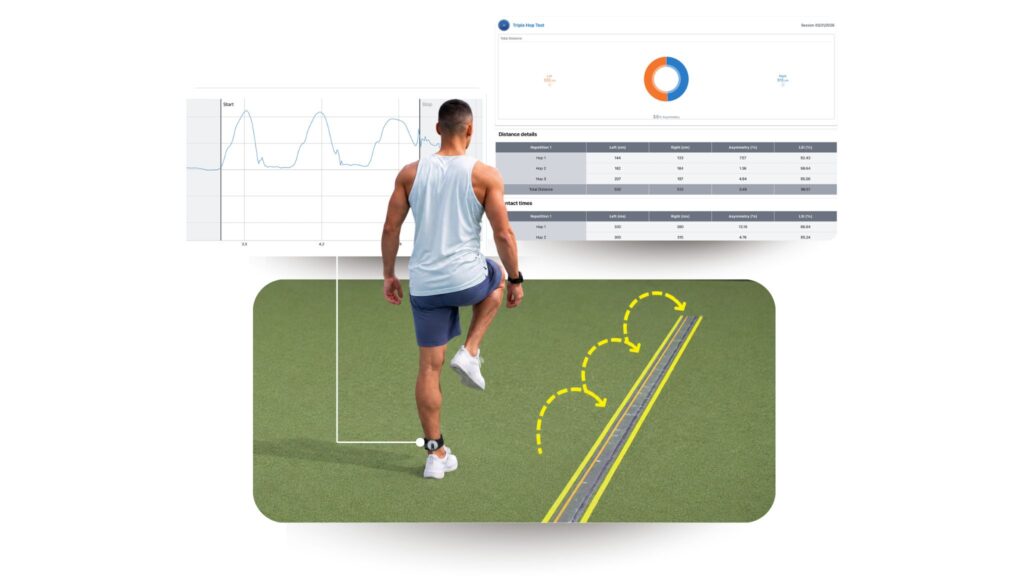
These progressions increase the demands on:
- Reactive strength
- Eccentric control
- Repeated acceleration and force production
- Dynamic stability
- Movement coordination across multiple contacts
The appropriate variation should always be selected according to the athlete’s functional capacity, sport-specific demands, injury history, and stage of the return-to-sport process.
6- What Criteria Should You Use to Progress the Broad Jump?
Integrating the broad jump into a rehabilitation program is not simply about helping an athlete jump farther. To make the test clinically meaningful, clinicians must determine what should be assessed, when progression is appropriate, and how to objectively measure improvements throughout the rehabilitation process.
Clinical Criteria Come First
Before progressing to more demanding broad jump variations, clinicians should ensure that the athlete can:
- Generate an explosive takeoff without significant pain
- Demonstrate controlled landings without major balance loss
- Tolerate the exercise load without excessive post-session symptoms
- Maintain consistent movement quality as task demands increase
- Show progress that matches their current stage of rehabilitation and return to sport
At this stage, clinical observation remains essential. Propulsion quality, apparent symmetry, landing stability, and the athlete’s confidence during the movement all provide valuable information to guide progression.
Why Jump Distance Alone Is Not Enough
Jump distance is a useful performance metric, but it does not tell the whole story. Two athletes may achieve a similar broad jump distance while using very different movement strategies. One may generate efficient propulsion with excellent movement control, while another compensates through excessive trunk motion, asymmetrical force production, or an unstable landing.
In other words, a longer jump does not necessarily mean the athlete has regained the physical qualities required for a safe return to sport. This is where objective assessment becomes particularly valuable.
Objectifying the Broad Jump with Kinvent Technology
When combined with Kinvent 3D Deltas force plates, the broad jump becomes much more than a simple distance test. Clinicians can objectively analyze the propulsion phase and gain a deeper understanding of how the athlete produces performance.
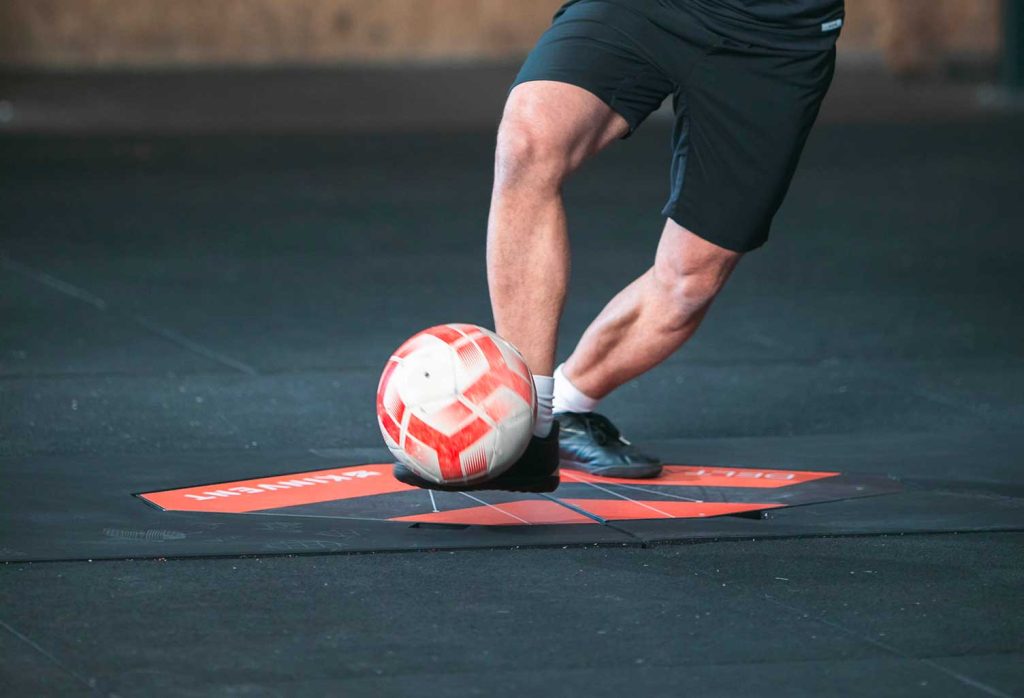
Key metrics include:
- Horizontal impulse
- Horizontal rate of force development (RFD)
- Peak horizontal force
- Takeoff velocity
- Force distribution between limbs when appropriate
These measurements help identify propulsion deficits, persistent inter-limb asymmetries, or incomplete recovery, even when jump distance appears to improve.
Combining synchronized video capture with 3D force plate analysis further enhances interpretation. By synchronizing force data with movement analysis, clinicians can visualize joint alignment, trunk position, lower-limb mechanics, and movement organization during the key phases of force production and force absorption. This integrated approach provides a more complete understanding of the athlete’s movement strategy and supports more informed clinical decision-making.
Going Further with Multiple Jumps and K-Power
Broad jump assessment can be expanded using multiple-jump tasks, such as the triple broad jump or the triple hop test, with the support of K-Power.
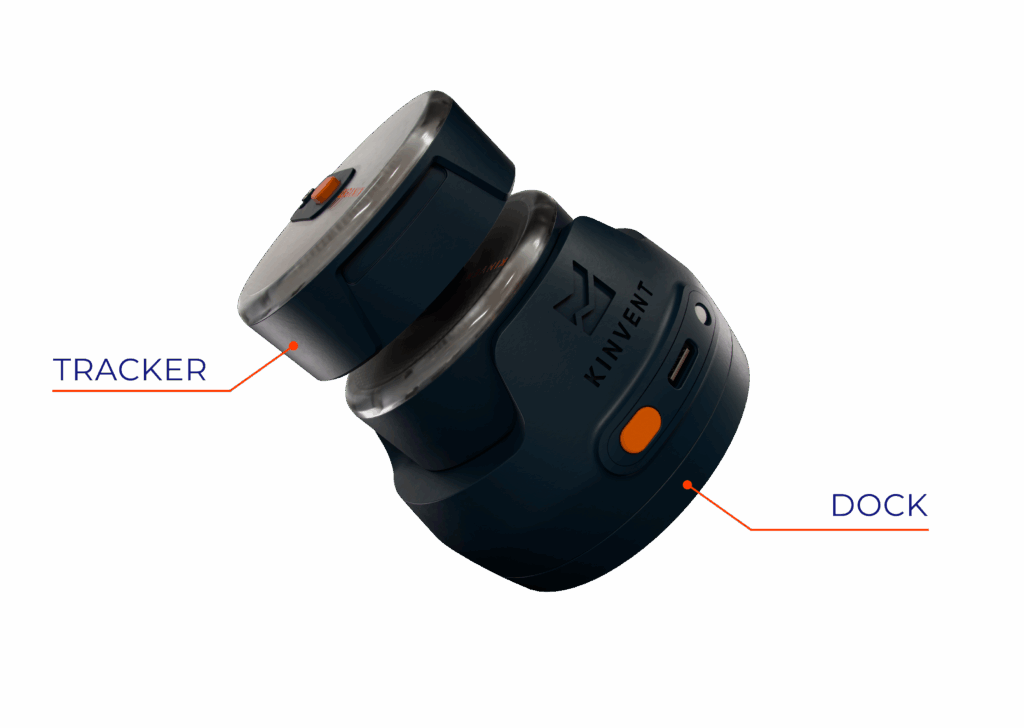
These assessments provide additional performance metrics, including:
- Ground contact time between jumps
- Individual jump distances
- Performance distribution across each jump
- The ability to maintain propulsion, coordination, and stability throughout the sequence
These objective measurements offer a more detailed understanding of movement strategy. Two athletes may achieve a similar total jump distance while displaying very different movement profiles. One may generate an excellent first jump before rapidly losing power or control, while another maintains a more consistent and efficient performance across every contact.
By combining force plate analysis, synchronized video, and wearable performance data, clinicians can move beyond jump distance alone and make more objective decisions throughout rehabilitation and return-to-sport progression.
7- FAQ: Broad Jump in Rehabilitation and Return to Sport
What Is the Broad Jump?
The broad jump, also known as the standing broad jump or standing long jump, is a maximal horizontal jump performed from a stationary position. It is commonly used to assess horizontal force production, lower-body power, coordination, and landing control.
Why Is the Broad Jump Used in Rehabilitation?
The broad jump is widely used during rehabilitation because it evaluates multiple physical qualities within a single functional task, including:
- Horizontal power
- Propulsion mechanics
- Whole-body coordination
- Landing control
- Inter-limb asymmetries, depending on the variation used
It complements isolated strength assessments and provides valuable information during the later stages of rehabilitation and return-to-sport progression.
When Is the Broad Jump Most Useful in Clinical Practice?
The broad jump can be particularly valuable following:
- Anterior cruciate ligament (ACL) reconstruction
- Lateral ankle sprains
- Extensor mechanism injuries
- More broadly, during the return-to-sport phase after lower-limb injuries
It helps clinicians evaluate an athlete’s readiness to tolerate movement demands that more closely resemble sprinting, acceleration, and change-of-direction activities.
What Is the Difference Between a Bilateral Broad Jump and a Single-Leg Broad Jump?
The bilateral broad jump is performed using both legs for takeoff and landing and is typically introduced first during rehabilitation.
The single-leg broad jump is performed on one limb, increasing the demands on unilateral power, dynamic stability, and neuromuscular control. It is particularly useful for identifying inter-limb asymmetries and evaluating readiness for higher-level athletic tasks during return to sport.
Is Jump Distance Enough to Interpret a Broad Jump?
No. While jump distance is an important performance metric, it should never be interpreted in isolation. Two athletes may achieve the same jump distance while using very different movement strategies.
A comprehensive interpretation should also consider:
- Propulsion quality
- Landing stability
- Movement compensations
- Inter-limb symmetry during unilateral variations
- The athlete’s progress over time
What Can Force Plates Add to Broad Jump Assessment?
Force plates provide a much deeper analysis than jump distance alone by objectively measuring the propulsion and, when combined with additional tests, the landing phases of the movement.
They can help clinicians evaluate:
- Horizontal impulse
- Rate of force development (RFD)
- Peak force
- Takeoff velocity
- Inter-limb asymmetries and force production strategies
These objective measurements help clinicians better understand movement quality, monitor rehabilitation progress, and make more informed return-to-sport decisions.
8- References
- Nakai Y, Usumoto Y, Takeshita Y. The Effects of Regional Muscle Strength and Mass on Standing Long Jump Performance. Muscles. 2024;3(1):60-70.
- Lozowski B, Fava AW, Roper JA, Oliver GD. Validating Methods of the Standing Broad Jump Test. J Athl Enhanc. 2023;12(2):1-8.
- Škorik M, Švantner R, Brűnn D, Karabin L. The Relationship Between Standing Broad Jump and 30-Meter Sprint in 826 Youth Soccer Players: A Cross-Sectional Study. J Strength Cond Res. 2026;40(5):e512-e519.
- Marin-Jiménez N, et al. Criterion-related validity and reliability of the standing long jump test in adults: The Adult-Fit project. Eur J Sport Sci. 2024;24(9):1379-1392.
- Pérez-Castilla A, et al. Unilateral or Bilateral Standing Broad Jumps: Which Jump Type Provides Inter-Limb Asymmetries with a Higher Reliability? J Sports Sci Med. 2021;20:317-327.
- Thomas E., et al. Percentile values of the standing broad jump in children and adolescents aged 6-18 years old. Eur J Transl Myol. 2020;30(2):240-246.
- Rahman ZA, et al. Reliability, Validity, and Norm References of Standing Broad Jump. GEINTEC. 2021;11(3):1340-1355.
- Johansen B, van den Tillaar R. Relationship and Training Effects of Horizontal Multi-Step Jumps on Sprint Performance: A Systematic Review. J Funct Morphol Kinesiol. 2026;11(1):95. doi:10.3390/jfmk11010095
- Boone JB, et al. Relationships Between Sprinting, Broad Jump, and Vertical Jump Kinetics Are Limited in Elite, Collegiate Football Athletes. J Strength Cond Res. 2021;35(5):1306-1316.
- Harry JR, et al. Phase-Specific Force and Time Predictors of Standing Long Jump Performance. J Appl Biomech. 2021;37(5):400-407.


