Alexander Hyde, PT, DPT, CSCS, Performance Physical Therapist at Bridge Physical Therapy and Performance

Teaching the Next Generation of Physical Therapists to Turn Data Into Clinical Decisions

Physical therapy is becoming increasingly data-driven. As objective measurement tools become more accessible, future physical therapists must learn not only how to collect data, but also how to interpret and apply it to clinical decision-making.

At Florida International University (FIU), Dr. Alec Hyde, PT, DPT, CSCS, integrates dynamometry into the musculoskeletal curriculum, helping students move beyond traditional manual assessments and use objective data to identify deficits, track progress, and guide rehabilitation decisions.

Meet Dr. Alec Hyde

Dr. Alec Hyde, PT, DPT, CSCS, is a physical therapist, educator, and strength and conditioning specialist focused on sports rehabilitation and athletic performance. A 2018 FIU Doctor of Physical Therapy graduate, he is Co-Founder and Director of Rehab at Bridge Physical Therapy and Performance, varsity pitching coach at Gulliver Prep, and a former member of the Cleveland Guardians organization.

As an adjunct professor at FIU, he combines clinical, coaching, and teaching experience to help future physical therapists turn objective measurements into meaningful clinical insights.


The Challenge: Moving Beyond Subjective Strength Assessment

Manual muscle testing remains a cornerstone of physical therapy education, but it has limitations. Subtle strength asymmetries and changes over time are difficult to quantify through manual assessment alone.
Objective measurement helps clinicians answer critical questions: How significant is the deficit? How does strength compare between limbs or against benchmarks? Is the patient ready to progress?
For Dr. Alec Hyde, integrating technology into physical therapy education is essential.

“If we believe the future of physical therapy is layered with technology and data-driven decision guidance, how can we expect the profession to widely implement this idea without first teaching future clinicians how to use this technology?”

The goal is not to replace clinical expertise, but to strengthen it with objective data.

The Solution: Introducing Objective Measurement in the Classroom

FIU has integrated dynamometry into its musculoskeletal Tests & Measures course, teaching students to conduct objective strength assessments, explore normative data, and interpret results across different joints.

Hyde uses Kinvent’s K-Pull to introduce pull-cell dynamometry through simple, repeatable testing. Beyond performing the test, the key objective is learning how to interpret the data to support clinical decisions.

Students therefore work through case-study-based laboratory examples and learn to analyze three particularly important metrics:

  • Force output
  • Limb symmetry
  • Torque-to-bodyweight ratio

This creates a bridge between learning how a measurement device works and understanding how its results could influence a rehabilitation plan.

Those three metrics also provide the foundation for a series of practical use cases, helping students move progressively from collecting a measurement to interpreting it and ultimately using it to support a clinical decision.

Step 1

Quantifying Strength Instead of Relying on Impression

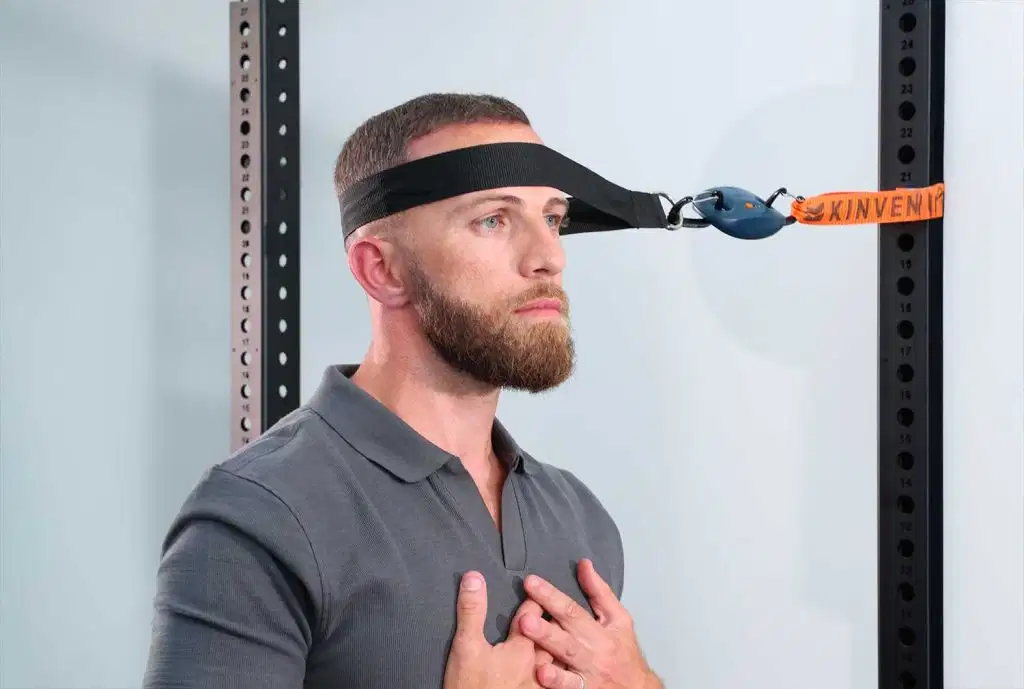
Manual muscle testing can identify weakness but is less sensitive to subtle differences or improvements. Using the K-Pull, students learn to measure force under standardized conditions, establishing objective baselines to track rehabilitation progress.
Instead of asking whether a patient feels stronger, clinicians can determine how much force they produce and how it changes over time. These measurements complement clinical observation, helping identify progress or adjust rehabilitation when strength remains unchanged.
What students learn: How to standardize strength assessments, interpret force measurements, and objectively monitor rehabilitation progress.

A close-up of a male athlete performing a neck strength and isometric resistance test using a Kinvent K-Pull dynamometer attached to a head harness and a training rig for cervical rehabilitation

Step 2

Identifying and Tracking Limb Asymmetry

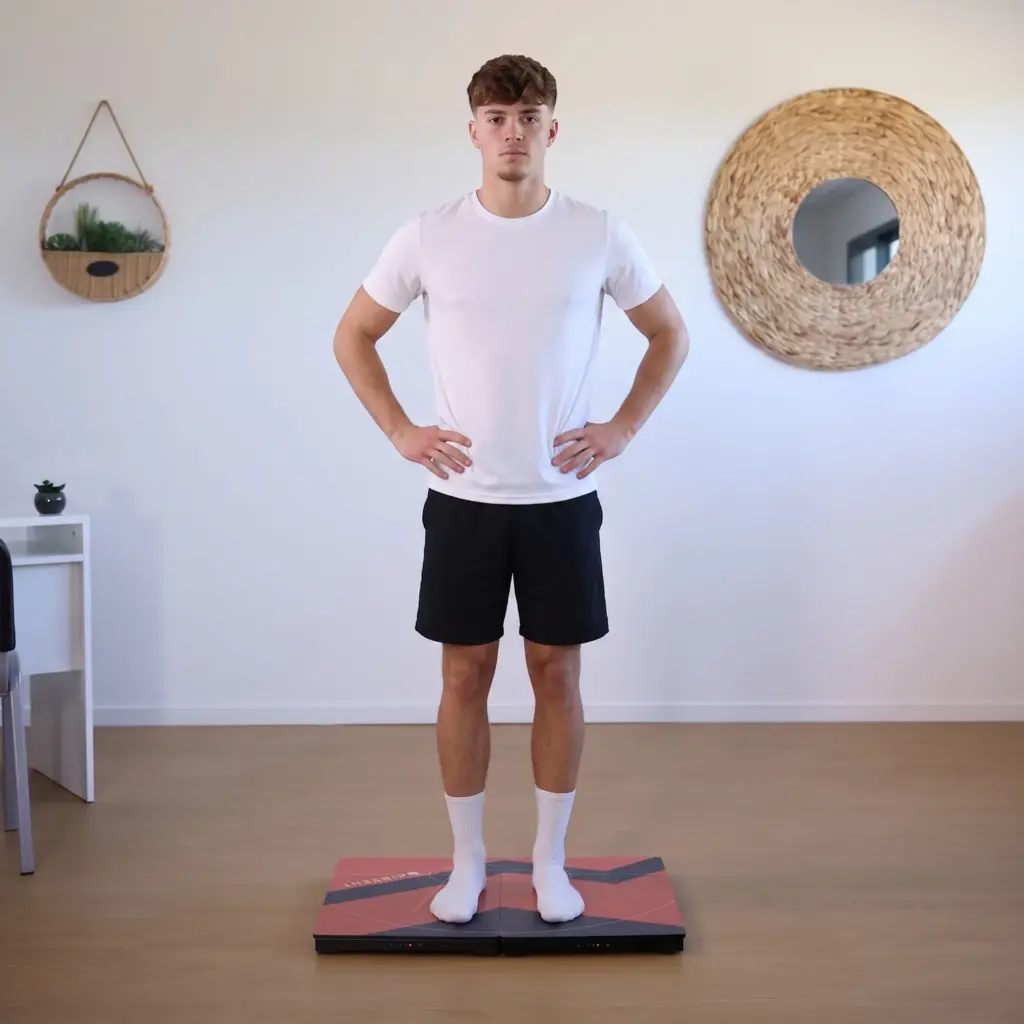
Comparing affected and unaffected limbs helps clinicians identify measurable strength deficits. For example, a patient recovering from a knee injury may still show a 20% strength deficit despite making progress.
Hyde teaches students to translate these measurements into meaningful clinical insights, helping patients understand their progress while establishing clear rehabilitation targets and tracking improvements in limb symmetry over time.

What students learn: How to calculate and interpret inter-limb asymmetries, monitor changes over time, and integrate these findings into rehabilitation goals.

Young athlete doing an assymetry test on the K-Deltas force plates from Kinvent

Step 3

Looking Beyond Symmetry With Torque-to-Bodyweight Ratios

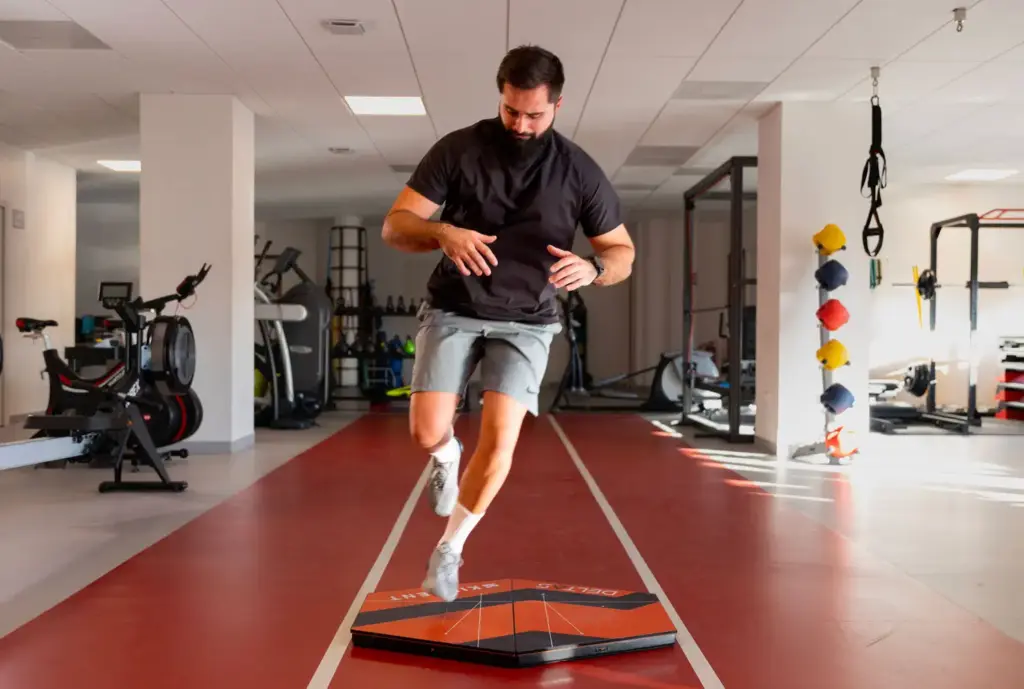
Good limb symmetry does not necessarily mean adequate strength. Hyde illustrates this with a patient producing 2.0 Nm/kg on the unaffected side and 1.6 Nm/kg on the affected side, compared with a reference value of approximately 3.0 Nm/kg.

While the focus might initially be on restoring symmetry, both limbs actually show strength deficits. By combining limb symmetry with torque-to-bodyweight ratios and reference values, students learn to assess overall muscular capacity rather than relying on a single metric.

What students learn: How to interpret normalized strength values, identify bilateral weakness, and recognize that good symmetry does not always indicate adequate strength.

A male patient performing a single-leg stability test on extra-large Kinvent force plates inside a gym for comprehensive biomechanical assessment

Step 4

Turning Objective Data Into a Patient Conversation

Data becomes meaningful when patients understand their progress. Hyde teaches students to turn strength measurements into clear explanations of improvements, remaining deficits, and rehabilitation goals.

What students learn: How to communicate results clearly and use measurable progress to strengthen patient engagement.

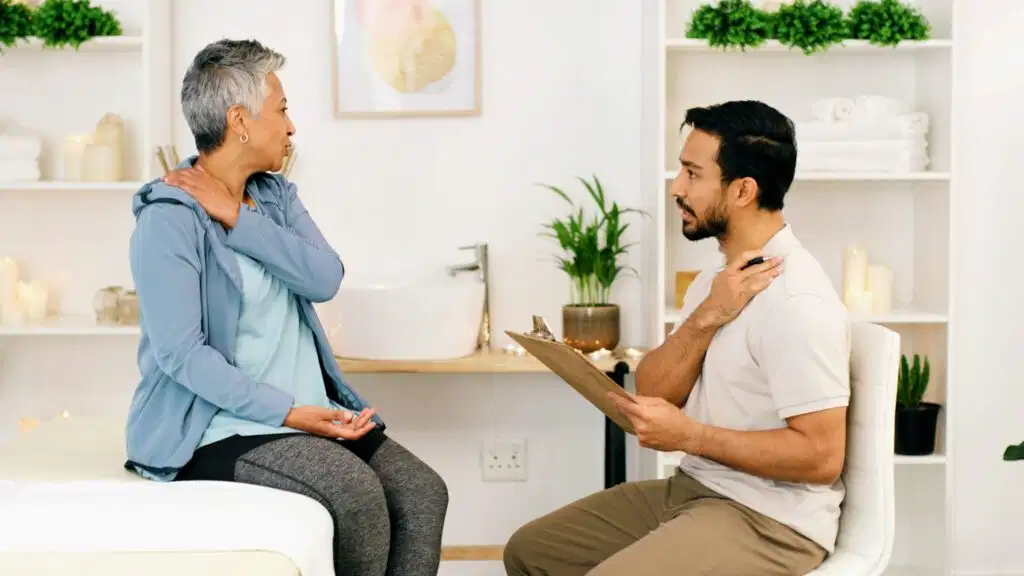
Un kinésithérapeute échange avec sa patiente pour comprendre la localisation de sa douleur à l'épaule lors du bilan initial

Preparing Students for a More Data-Driven Profession

For FIU, the goal goes beyond teaching students how to use a dynamometer. It is to make objective measurement a natural part of clinical practice from the very beginning.

By learning to select, standardize, and interpret assessments during their education, students develop the skills to integrate objective data into everyday clinical decisions, rather than treating technology as an additional step after graduation.

As Hyde explains:
“Our goal isn’t to use technology simply because it’s available. It’s to teach future physical therapists how to use objective data to better understand their patients, communicate progress, and guide rehabilitation plans.”

Beyond Manual Muscle Testing

Objective measurement does not replace clinical expertise: it complements it. Alongside manual testing, observation, and patient-reported outcomes, dynamometry provides precise strength data that may otherwise be difficult to detect or communicate.

By learning to interpret these measurements, students can set measurable rehabilitation goals, track progress, and support return-to-activity decisions.

The FIU initiative reflects a broader shift in physical therapy education: moving beyond teaching students how to perform tests to teaching them how to turn objective data into clinical decisions.

The Bigger Picture: Data Is Only Valuable When You Know What to Do With It

More data does not automatically mean better rehabilitation. Clinicians must know which metrics matter, how to interpret them, and how to translate findings into clinical decisions. For Hyde, developing these skills during professional education is essential.

“There are countless applications for technology in our profession, but we believe introducing students to these tools early will better prepare them for a profession that is increasingly moving beyond traditional MMTs and toward objective measurement.”

Ultimately, the key takeaway is simple:
“The future of physical therapy isn’t just about collecting more data. It’s about knowing what to do with it.”

Open Close
kassandra logo

Kassandra

AI Agent