Truespeed coach

Optimizing Athletic Performance & Injury Prevention with Kinvent

As a neuroperformance specialist, Coach Ernest Osias trains athletes smarter, quite literally.

Instead of relying on hunches to train his clients, the North Carolina-based speed and agility coach uses technology and objective data to gain deep insight into the relationship between athletes’ brains, muscles and nervous systems. He then leverages that knowledge to help athletes improve key performance markers, like reaction time, proprioception and balance. The result? Coach Osias’s athletes make great performance strides, quickly.

About True Speed Training

Coach Osias entered the speed and agility training space around 14 years ago as a middle and high school track and field coach. The runners he trained excelled – but what really stood out to parents and other coaches was how fast Osias’s own kids were. Private coaching requests first trickled, then flooded, in. Eventually, what started as a side hustle blossomed into a full-fledged coaching business, True Speed Training.

Now, Coach Osias works with amateur and professional soccer players, runners, gymnasts, and lacrosse and field hockey players, including several high-profile college athletes. He uses a range of modalities and technologies to train and rehabilitate athletes, including SHREDmill training, TECAR (transfer of energy capacitive and resistive) therapy, and, critically, Kinvent’s biofeedback ecosystem.

The Problem: A Cycle of Reinjury

While technology is now the cornerstone of Coach Osias’s process, it wasn’t always fully integrated into his practice. While he experimented with biofeedback-adjacent tools, like the Exer-Genie, in the early days of True Speed Training, he primarily relied on manual tools and traditional timing gates.

That changed when his oldest son suffered an ACL/LCL meniscus tear about five and a half years ago.

The tear was one of a handful sports-related injuries his son experienced, including a twice-broken ankle. Watching his son continually re-injure himself was painful. Even more painful was the fact that traditional physical therapy programs kept returning his son to the field under-rehabbed and vulnerable to further injury.

“I was at my wits end,” Coach Osias said. He contacted several specialists and he went “down the rabbit hole” trying to understand why injuries happen – and learning how to prevent them by using data, technology and biohacking.

The Solution: Neuromuscular Therapy & Biofeedback Devices

Neuromuscular Therapy Solution Inspires a New Approach

Coach Osias eventually came across a neuromuscular therapy machine that uses electrical stimulation to activate muscles and hasten recovery. His son used the machine – and he recovered in a brief seven months, instead of the forecasted 18 months.

The efficacy of the technology was something Coach Osias said he “couldn’t unsee.” It changed his outlook on the relationship between injury prevention and performance and transformed his approach to coaching. In the years since his son’s injury, Coach Osias has invested heavily in technology, uses quantitative data to drive decisions, and encourages his clients to tap into the brain/body connection, instead of pushing through pain and injuries.

“It’s tough for kids,” he said. “There’s someone sitting on the bench trying to take your spot, so you’re trying to prove yourself. My goal is to keep [athletes] from feeling they have to hide injuries. We have a means of addressing injuries appropriately, so [athletes] don’t have to hide their pain and still perform at their best,” he said.

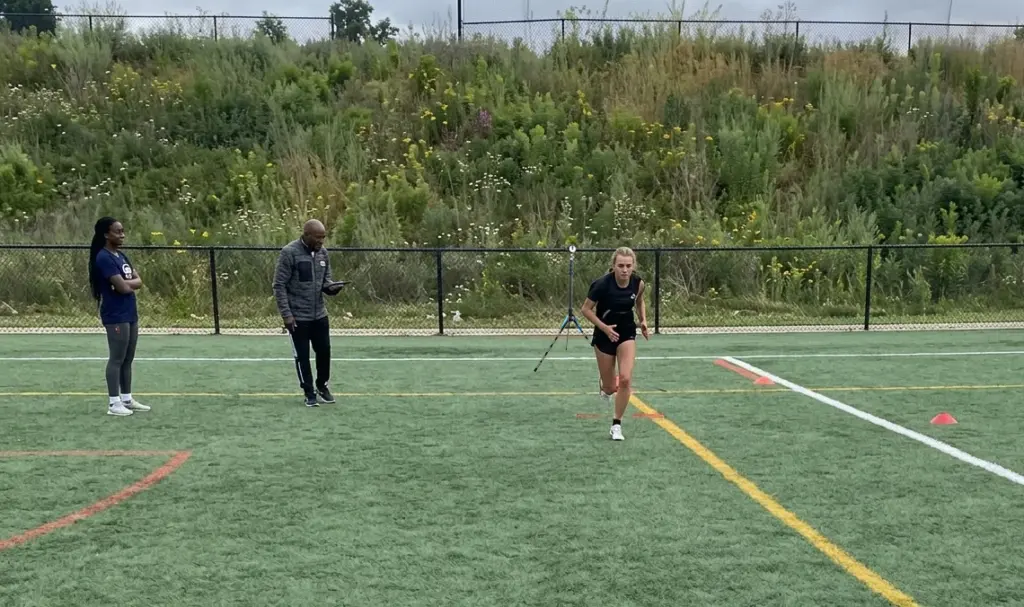
10 sprint yards test with K-Power

Kinvent’s Biofeedback Devices Complete the Puzzle

Biofeedback devices have been an important part of Coach Osias’s new tech-forward approach to training and rehab. But the tools he used to rely on fell short of his expectations. Until about a year and a half ago, he used force plates from a popular brand but thought the “software and usability weren’t great.”

In early 2025, he started looking for alternative solutions and was introduced to Kinvent by a colleague. Initially, he was won over by Kinvent’s customer service. After demoing the devices, he was impressed by how user-friendly and comprehensive the ecosystem is – so impressed that the purchased nearly the entire suite of sensors at once.

“The combination of the software and efficacy that Kinvent brings is huge for me,” he said. “The software is so much easier to use. And being able to collect the data, give the clients feedback right after a session, print out a PDF or email it to them… everything is just so much easier and cleaner. Kinvent is the full package.”

Use Case 1

Who: A top-five-in-the-nation college runner

The problem: The runner injured a nerve, and his leg went numb from his knee to his groin.

The rehab and return-to-sport plan: The athlete turned to Coach Osias, who used microcurrent therapy on his injured leg. Once sensation returned, Coach Osias used the K-Myo to test how strong the runner’s injured leg was, compared to his non-injured leg.

What the data showed: Data from the K-Myo showed that the athlete’s injured leg was “insanely stronger” than his non-injured leg – in fact, it was 40% stronger. To address the imbalance, Coach Osias used the same microcurrent therapy on the athlete’s non-injured leg.

The outcome: The athlete returned to the track strong and balanced – and was able to compete in that year’s regionals and nationals.

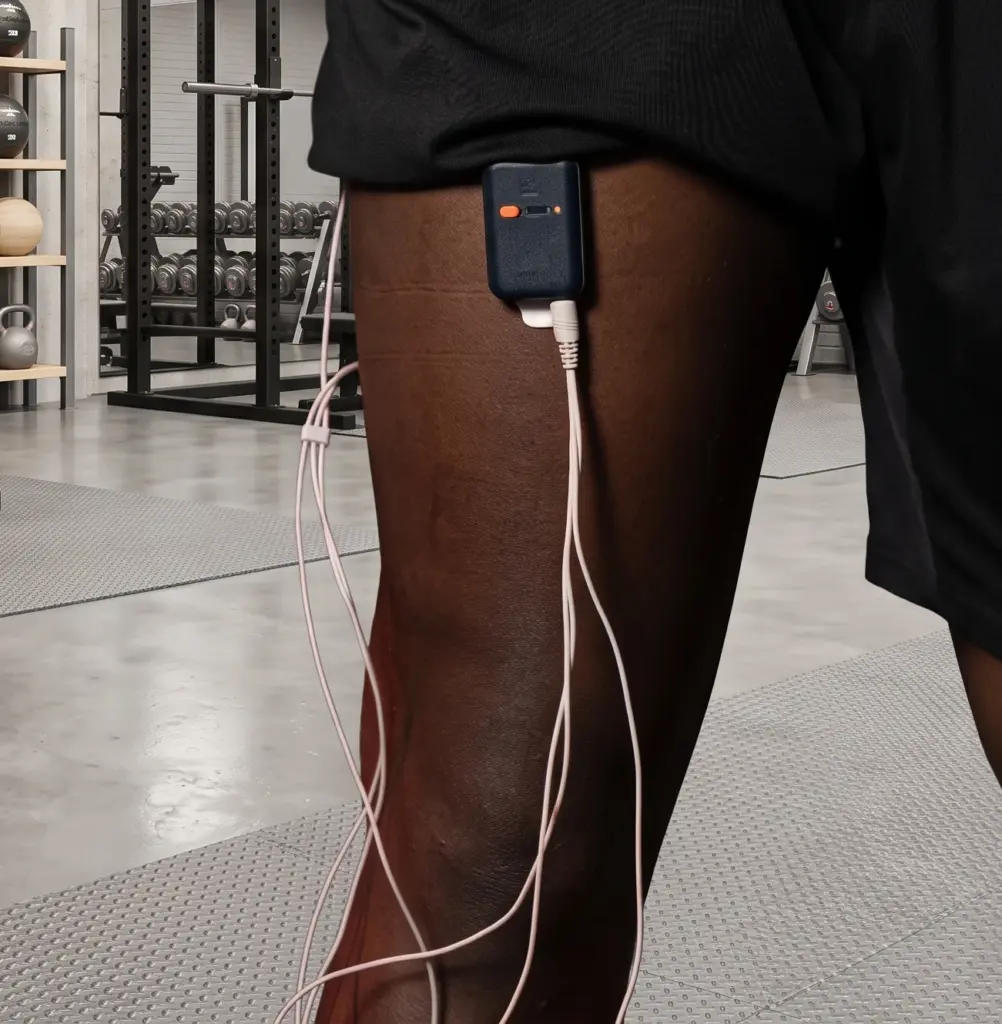
K-Myo test for injured athlete on hamstring

Use Case 2

Who: A first-year college soccer player

The problem: The athlete pulled her hamstring during practice and tried to push herself through her injury. “She didn’t want to quit because the was starting on the spring team as a freshman,” Coach Osias said. “She said, ‘I’m not passing up this opportunity. I’m not sleeping on this.”

Unfortunately, if she continued to play without intervention, she was at high risk of a more severe injury.

The rehab and return-to-sport plan: Coach Osias rehabbed her hamstring with neurotherapy tools over a handful of sessions. Once he thought her hamstring was stronger, he used the K-Myo to measure the ratio of strength between her quad and hamstring.

What the data showed: The K-Myo validated that the athlete’s quad to hamstring ratio of strength was above 60% – and gave Coach Osias the proof he needed that she was ready to return to the field.

The outcome: The athlete played out the rest of her season pain-free and at reduced risk of worsening her injury.

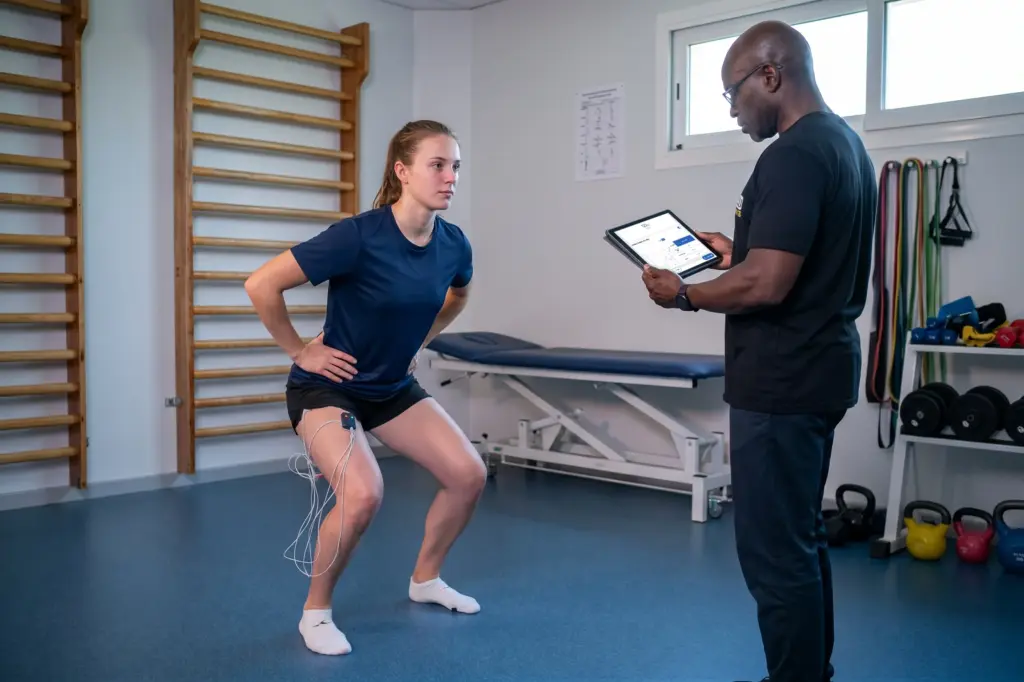
young footbal player doing test with Kinvent K-myo sensor

Use Case 3

Who: A college goalkeeper

The problem: The goalie tore her labrum in both shoulders.

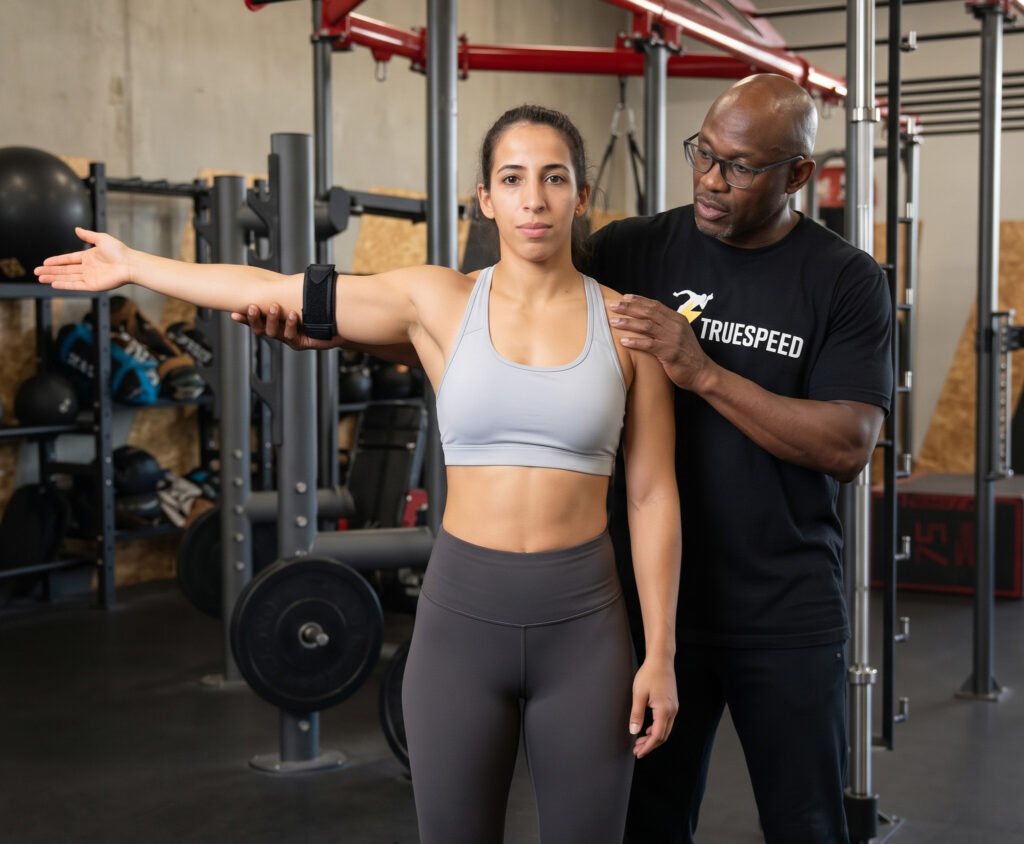
The rehab and return-to-sport plan: After surgery, the goalie worked with Coach Osias to rehabilitate her injuries using neurotherapy. He consistently tested her range of motion with the K-Move.

What the data showed: The data showed significant improvements in her shoulders’ range of motion. “As we were progressing through, I could see the angles with the K-Move and could see the movement getting progressively better,” Coach Osias said.

The outcome: When the athlete went back to her surgeon for her first post-op follow-up, he was shocked. He was expecting she’s he able to list her arm 90°, at best. Instead, she moved her arm the full 180°.

young goal keeper injured doing shoulder mobility test with K-Move

Use Case 4

Who: A college baseball pitcher

The problem: The athlete tore his UCL and was recovering from Tommy John surgery.

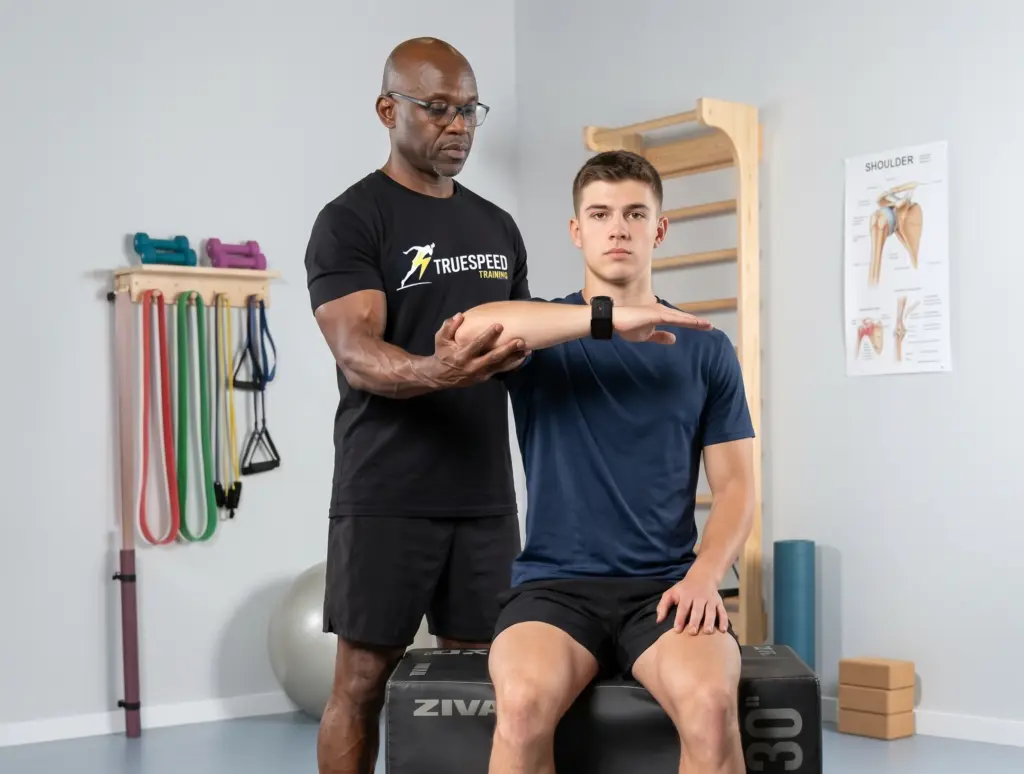
The rehab and return-to-sport plan: After ten weeks of standard physical therapy, the athlete came to Coach Osias, who measured his elbow’s range of motion with the K-Move. It was at +7%. Coach Osias then used Tecar therapy and other neurotherapy modalities on the athlete and re-measured him with the K-Move.

What the data showed: At the end of the session, the K-Move showed major improvements: the athlete gained 6° of flexion and left the session with his elbow range of motion at +1%.

The outcome: The athlete returned to his normal PT and was able to gain and additional 5° of flexion. He left the session with -4% range of motion in his elbow.

injured baseball player doing elbow mobility test

Data Athletes Can See & Trust

With Kinvent, Coach Osias no longer needs to guess whether an athlete is ready to push their body, needs to back off, or is compensating in a way that could raise their risk of injury. Now, he can fine-tune training in real-time based on objective measurements that tell him exactly where an athlete is on a given day.

“Having the data just makes a huge difference to be able to program appropriately,” he said.

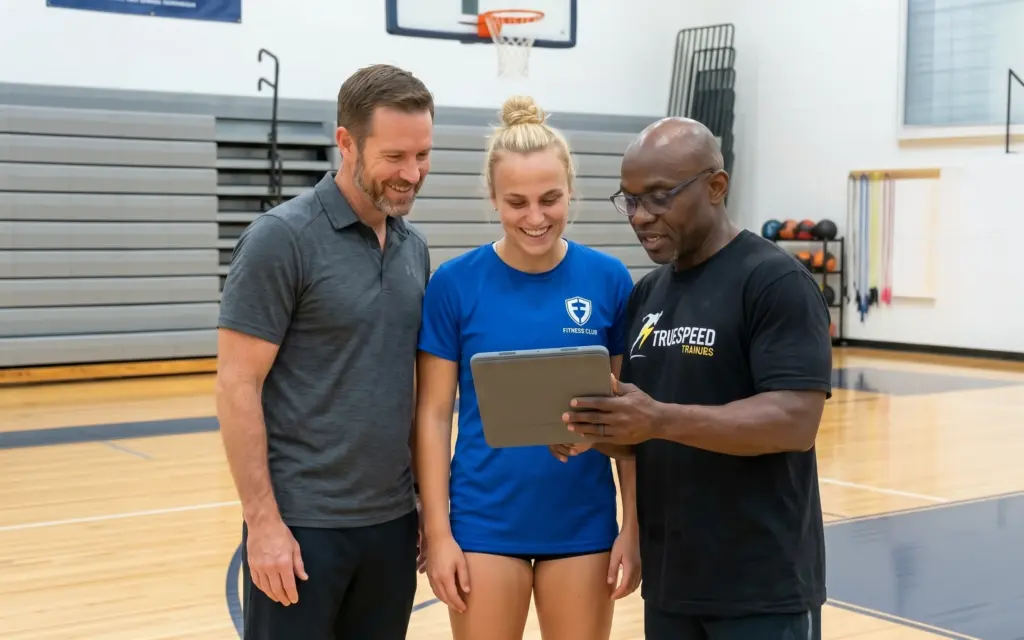
The data doesn’t just make Coach Osias more confident in his decisions – it also makes his athletes more confident in their abilities. When athletes are worried that something is “off,” Kinvent gives Coach Osias a way to show clients what is actually going on. Sometimes, that means confirming a deficit. Other times, it means proving to an athlete that they are strong and balanced and can have confidence in their body.

“The body doesn’t know the difference between thinking about something and experiencing it,” Coach Osias said. “Being able to show them, with empirical evidence, that their limbs are balanced makes a big difference.”

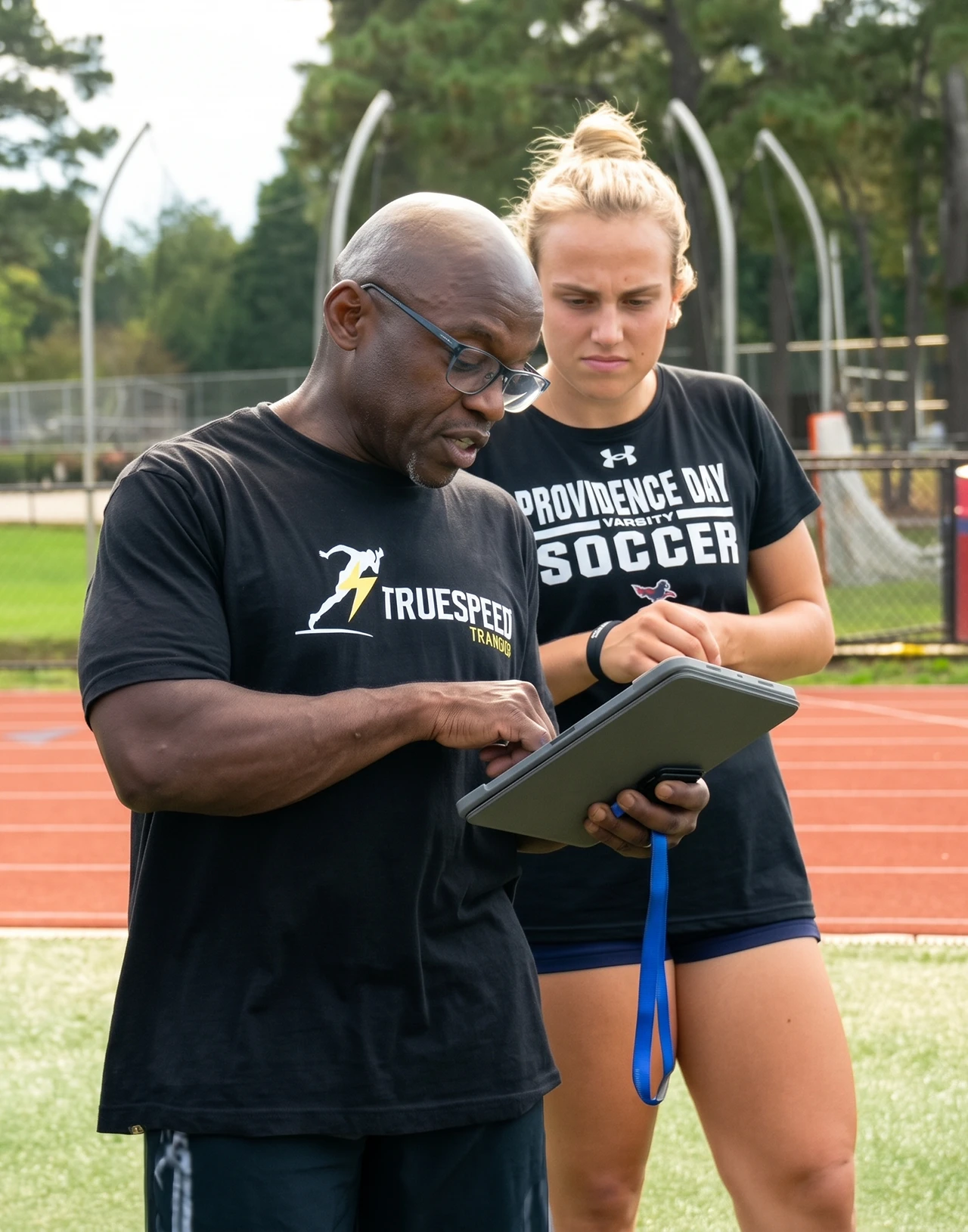
coach Ernest Osias showing improvement to young athlete and father

Quantifying performance and progress with Kinvent has helped Coach Osias strengthen his relationships with his clients and their families. He can show progress without speculation – and give athletes a better understanding of the connection between how a movement feels and how they are performing.

“Someone comes in and I can show them the data that they’ve improved,” he said. “And when you provide that data to the athletes or the athlete’s parents, it’s a gamechanger.”

Kinvent has also been a gamechanger for referrals to True Speed Training. When athletes return to their teams faster, more agile, and more confident, their teammates notice.

“Part of what happens every now and again, I end up with maybe 50% or 60% of a team. One person comes back and people go, ‘Oh, what happened?!’ And it just kind of trickles that way,” he said.

Coach Osias said Kinvent has “absolutely” helped him attract new business. But, more importantly, the ecosystem has helped him do the work that first sent him searching for answers: protecting athletes from overuse, reducing their risk of reinjury, and helping them reach their full athletic potential.


Open Close
kassandra logo

Kassandra

AI Agent