


Human movement is fundamental to performance, injury prevention, and long-term musculoskeletal health. Yet, movement is often trained or rehabilitated without a clear understanding of its core components, leading to compensations, reduced efficiency, and increased injury risk.
The four pillars of human movement: mobility, stability, strength, and functional movement, provide a structured framework to understand how the body moves and adapts to physical demands. These pillars are deeply interconnected: a limitation in one area can disrupt movement quality across the entire kinetic chain.
By assessing and developing these four pillars together, clinicians and performance professionals can better identify movement deficits, guide targeted interventions, and improve the transfer of physical capacities to real-life and sport-specific tasks.
In this article, we’ll explore the four pillars of human movement, explain their role in movement quality and injury prevention, and highlight why objective assessment is a key step in optimizing human performance.
CONTENTS
1- What Are the Four Pillars of Human Movement?
2- Pillar #1: Mobility, The Foundation of Movement Quality
3- Pillar #2: Stability, Controlling Movement to Protect the Body
4- Pillar #3: Strength, Producing and Absorbing Force Safely
5- Pillar #4: Functional Movement, Integrating Mobility, Stability, and Strength
6- Why Assessing the Four Pillars of Human Movement Is Essential
7- Step-by-Step: How to Assess the Four Pillars of Human Movement
8- FAQ: Four Pillars of Human Movement
9- Conclusion
10- References
1- What Are the Four Pillars of Human Movement?
The four pillars of human movement represent the fundamental physical qualities required to move efficiently, safely, and consistently across a wide range of activities. Rather than viewing movement as a single capacity, this framework breaks it down into four complementary and interdependent components:
- Mobility: the ability of joints and soft tissues to move through adequate ranges of motion
- Stability: the capacity to control movement and maintain joint integrity under load
- Strength: the ability to produce and absorb force effectively
- Functional Movement: the integration of mobility, stability, and strength into coordinated, task-specific movement patterns
These pillars do not function in isolation. For example, adequate mobility without sufficient stability may increase injury risk, while strength developed without proper movement integration may fail to transfer to sport or daily activities. Movement quality emerges from the balance and interaction between all four pillars.
Understanding the four pillars of human movement provides a practical framework for clinicians, therapists, and performance professionals to assess movement, identify limiting factors, and design targeted interventions. This approach supports both injury prevention and performance optimization by addressing the root causes of movement dysfunction, rather than focusing on isolated symptoms.
2- Pillar #1: Mobility, The Foundation of Movement Quality
Mobility refers to the ability of joints and surrounding tissues to move through sufficient ranges of motion to meet the demands of a given task. It is a fundamental prerequisite for efficient movement, as restricted mobility often leads to compensatory strategies elsewhere in the kinetic chain.

The scientific literature consistently demonstrates that mobility limitations, particularly at the ankle and hip, are associated with altered lower-limb biomechanics. Reduced ankle dorsiflexion, for example, has been linked to increased dynamic knee valgus during single-leg tasks, a movement pattern associated with a higher risk of knee injuries (Bartosz Wilczynski et al., 2020; José Javier Alfaro Santafé et al., 2017). Similarly, restricted hip mobility has been correlated with pathologies affecting the hip, lumbar spine, and lower extremity, highlighting the systemic impact of local mobility deficits (Michael P. Reiman et al., 2013).
From both a rehabilitation and performance perspective, inadequate mobility can:
- Limit movement efficiency
- Increase joint loading and tissue stress
- Reduce the effectiveness of strength and stability training
Improving mobility is therefore not simply about increasing range of motion, but about restoring usable, task-specific mobility. Interventions such as static and dynamic stretching, joint mobilization, and foam rolling have been shown to acutely and chronically improve range of motion without negatively affecting muscle strength when appropriately prescribed (Diulian M. Medeiros PT et al., 2016; Masatoshi Nakamura et al., 2021; Andreas Konrad et al., 2022).
However, mobility gains alone are insufficient. Without adequate neuromuscular control and force production, increased range of motion may not translate into safer or more effective movement. For this reason, mobility must be assessed and developed in coordination with the other pillars of human movement.
3- Pillar #2: Stability, Controlling Movement to Protect the Body
Stability refers to the body’s ability to control movement and maintain joint alignment during both static positions and dynamic actions. While mobility allows movement to occur, stability ensures that movement is controlled, efficient, and safe.

In simple terms, stability is what allows the body to resist unwanted motion. It relies on the coordinated action of muscles, the nervous system, and joint structures to maintain segment alignment when forces are applied, whether during walking, lifting, jumping, or changing direction.
A lack of stability does not always mean a lack of strength. An individual may be strong but still struggle to control movement, especially during single-leg tasks or rapid, multi-directional actions. When stability is insufficient, the body often compensates by shifting load to other joints or tissues, increasing mechanical stress and injury risk.
Research has shown that poor movement control, such as dynamic knee valgus during single-leg squats or landings, is associated with a higher risk of knee injuries. These altered movement patterns are often linked to deficits in hip and trunk stability, rather than isolated joint weakness (Bartosz Wilczynski et al., 2020). In this context, stability plays a key role in protecting joints by limiting excessive or poorly controlled motion.
From an injury prevention perspective, adequate stability helps:
- Maintain proper joint alignment under load
- Reduce excessive stress on ligaments and cartilage
- Improve force absorption during dynamic tasks
Stability is therefore essential not only in rehabilitation but also in everyday movement and athletic performance. Without sufficient stability, increases in mobility or strength may fail to translate into safer movement patterns. For this reason, stability must be assessed and developed alongside the other pillars of human movement to support long-term joint health and movement efficiency.
4- Pillar #3: Strength, Producing and Absorbing Force Safely
Strength refers to the ability of muscles to produce, transmit, and absorb force in response to internal and external demands. In human movement, strength is not only about lifting heavy loads, but about controlling forces efficiently to protect joints and tissues.

From a clinical and performance standpoint, adequate strength is essential for stabilizing joints during dynamic activities such as running, jumping, or changing direction. Muscles act as active shock absorbers, helping to reduce stress on passive structures like ligaments, tendons, and cartilage. When strength is insufficient or poorly distributed, joint loading increases and injury risk rises.
Scientific evidence highlights strong associations between muscle weakness and injury occurrence, particularly in the lower extremities. Deficits in hip, knee, and ankle strength have been linked to altered movement patterns and a higher incidence of ligament injuries, tendinopathies, and muscle strains. Conversely, structured strengthening programs have been shown to significantly reduce the risk of lower-limb injuries by improving force control and neuromuscular efficiency (Amir Human Hoveidaei et al., 2025; Samuel S. Rudisill et al., 2023).
Strength is also closely related to movement asymmetries. Side-to-side imbalances in force production can increase mechanical stress during unilateral tasks and have been associated with injury recurrence, especially following return to sport. Objective strength assessment allows clinicians and performance professionals to identify these asymmetries and guide targeted interventions.
Importantly, strength must be developed in coordination with mobility and stability. High levels of force production without adequate joint range of motion or movement control may increase injury risk rather than reduce it. When integrated appropriately, strength supports efficient movement, enhances performance, and contributes to long-term injury prevention.
5- Pillar #4: Functional Movement, Integrating Mobility, Stability, and Strength
Functional movement refers to the ability to coordinate mobility, stability, and strength into efficient, purposeful movement patterns. It represents how the body actually moves in real-life situations, whether during sport-specific actions, work-related tasks, or everyday activities.
Unlike isolated exercises, functional movement involves multiple joints, multiple muscle groups, and multiple planes of motion. It requires the nervous system to organize movement in a way that is both efficient and adaptable to changing external demands. In this sense, functional movement is not a separate physical quality, but the expression of all three previous pillars working together.
From a clinical perspective
Dysfunctional movement patterns often emerge when one or more pillars are compromised. Limited mobility may force compensations, insufficient stability may reduce movement control, and inadequate strength may limit force production or absorption. These compensations can persist even when pain is absent, increasing the risk of injury recurrence.
In performance settings
Functional movement quality determines how well physical capacities transfer to sport. An athlete may demonstrate adequate strength or range of motion in isolated tests, yet struggle to apply these qualities during complex tasks such as sprinting, cutting, or landing. Functional movement bridges the gap between physical capacity and performance execution.
Assessing functional movement allows clinicians and performance professionals to:
- Identify movement inefficiencies and compensations
- Evaluate coordination and motor control under load
- Monitor readiness for progression or return to sport
Ultimately, functional movement is where assessment and training converge. It reflects how effectively mobility, stability, and strength are integrated into meaningful movement. For this reason, functional movement assessment is a critical step in injury prevention, rehabilitation, and performance optimization.
6- Why Assessing the Four Pillars of Human Movement Is Essential
While understanding the four pillars of human movement provides a strong conceptual framework, their true value lies in how they are assessed and applied in practice. Relying on observation alone can overlook subtle deficits, compensations, or asymmetries that influence movement quality and injury risk.
Each pillar contributes differently to movement efficiency, and deficits are not always obvious. An individual may demonstrate adequate mobility in isolated tests but lack stability during dynamic tasks. Similarly, sufficient strength measured in controlled conditions may not translate into effective force control during functional movement. Without structured assessment, these limitations often remain undetected.
Objective assessment of the four pillars of human movement allows clinicians and performance professionals to:
- Identify specific mobility restrictions and joint limitations
- Detect deficits in movement control and stability
- Quantify strength levels and side-to-side asymmetries
- Evaluate how these qualities integrate during functional tasks
From an injury prevention perspective
Early identification of movement deficits is particularly important. Research has shown that altered movement patterns, such as poor control during single-leg tasks, are associated with increased injury risk even in otherwise healthy and active individuals. Assessing the four pillars provides insight into modifiable risk factors before injury occurs.
In rehabilitation and return-to-sport contexts
Assessment supports informed decision-making. Tracking changes in mobility, stability, strength, and functional movement over time helps guide progression, reduce reinjury risk, and ensure that physical capacities are restored in a coordinated manner rather than in isolation.
Ultimately, assessing the four pillars of human movement shifts practice from a generalized approach to a targeted, individualized, and data-informed strategy, improving both safety and performance outcomes.
7- Step-by-Step: How to Assess the Four Pillars of Human Movement
The goal is to prepare the body, improve movement control, and progressively transfer these qualities to real-life and sport-specific tasks.
Mobility
Goal: prepare tissues and restore joint range of motion, particularly in key transition areas such as the ankle, hip, and spine.
- Myofascial preparation: Self-massage using balls or foam rolling (e.g., under the calf) to prepare soft tissues

- Joint mobilization: Ankle dorsiflexion lunges (knee-to-wall), hip rotations, or lumbar “windshield wipers”
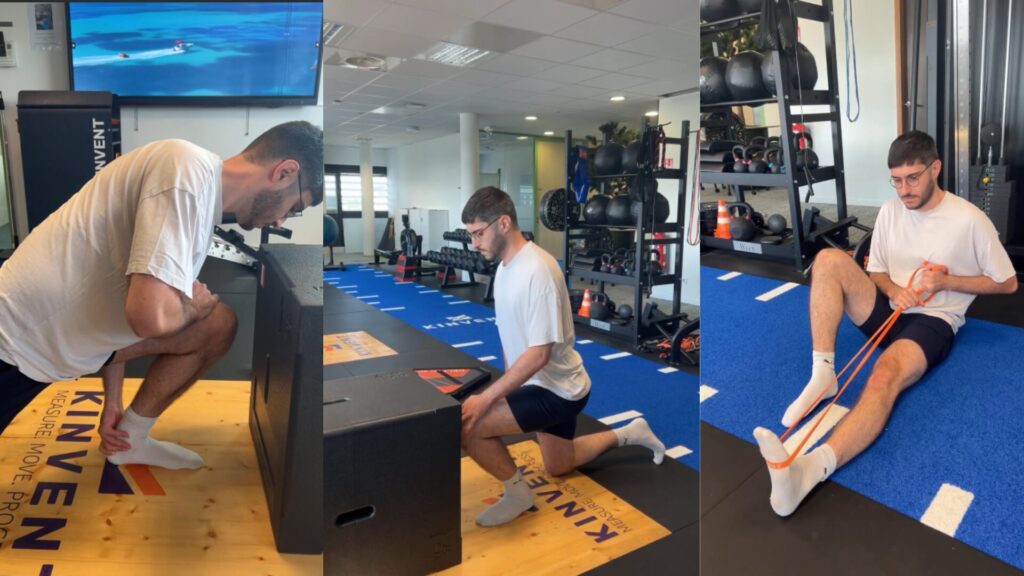
- Muscle activation: Light resistance band exercises for hip rotators
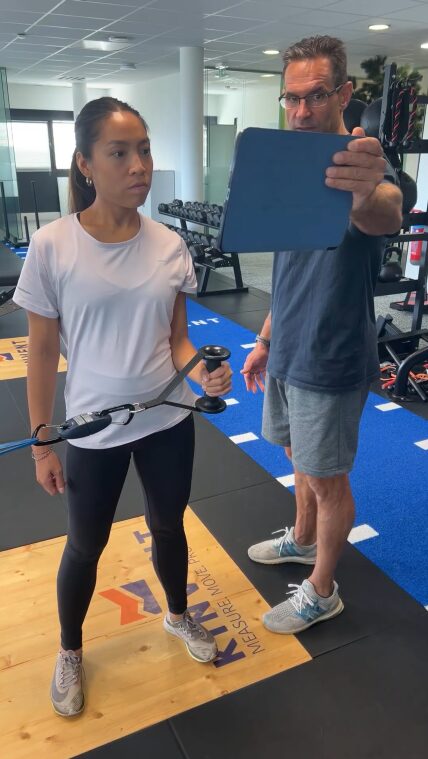
- Active movement: Controlled squat or split-squat variations to use mobility in movement
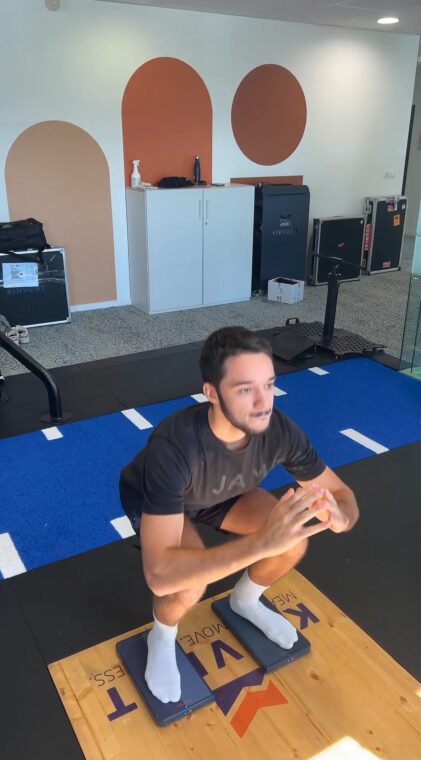
Stability
Stability focuses on controlling movement and maintaining joint alignment under load.
- Control of body position and center of pressure
- Activation of muscles surrounding the joint
- Core stabilization and postural control exercises
- Emphasis on alignment at the ankle, knee, hip, and trunk
Strength
Strength supports the body’s ability to produce and absorb force safely.
- Progressive activation of key muscle groups
- Exercises targeting force production and control
- Gradual exposure to higher loads or faster actions
- Focus on joint protection and movement quality
Functional Movement
Functional movement integrates mobility, stability, and strength into meaningful actions.
- Movements that resemble sport, work, or daily activities

- Emphasis on motor control and coordination
- Reduction of compensations and uncontrolled motion
- Safe and efficient execution of complex movement patterns
8- FAQ: Four Pillars of Human Movement
What are the four pillars of human movement?
The four pillars of human movement are mobility, stability, strength, and functional movement. Together, they describe how the body moves, controls forces, and adapts to physical demands in daily life, rehabilitation, and sport.
Why are the four pillars important for injury prevention?
Injuries often occur when one pillar is insufficient, and the body compensates elsewhere. For example, limited mobility or poor stability can increase joint stress during movement. Assessing and addressing all four pillars helps identify modifiable risk factors before injury occurs.
Which pillar should be assessed first?
Mobility is typically assessed first, as an adequate range of motion is a prerequisite for proper movement control and force production. From there, stability, strength, and functional movement can be evaluated in a logical progression.
What is the difference between strength and stability?
Strength refers to the ability to produce and absorb force, while stability refers to the ability to control movement and joint alignment. A person can be strong but still unstable during dynamic tasks.
Why is functional movement assessed last?
Functional movement reflects how well mobility, stability, and strength are integrated during real-life or sport-specific tasks. Assessing it last ensures that observed movement patterns are interpreted in the context of the underlying pillars.
Can the four pillars be applied outside of sports?
Yes. The four pillars of human movement apply to rehabilitation, workplace ergonomics, daily activities, and long-term musculoskeletal health, not only athletic performance.
Why use objective tools to assess the four pillars?
Objective assessment tools provide quantitative data on movement, force, and asymmetries that may not be visible to the naked eye. This supports more precise decision-making, progression tracking, and individualized interventions.
9- Conclusion
The four pillars of human movement mobility, stability, strength, and functional movement, offer a simple yet powerful framework to understand how the body moves and why movement sometimes fails. Rather than focusing on isolated exercises or symptoms, this approach highlights the importance of identifying and addressing the true limiting factors behind movement inefficiency and injury risk.
By assessing the four pillars in a structured, step-by-step manner, clinicians and performance professionals can move from observation to objective decision-making. This process helps reveal mobility restrictions, deficits in movement control, strength imbalances, and integration issues that directly influence movement quality.
Ultimately, optimizing human movement is not about maximizing a single physical capacity, but about balancing and integrating all four pillars. When supported by objective assessment and guided progression, this integrated approach leads to safer movement, better performance transfer, and long-term musculoskeletal health.
10- References
Wilczyński, B., Zorena, K., & Ślężak, D. (2020). Dynamic knee valgus in single-leg movement tasks: Potentially modifiable factors and exercise training options – A literature review. International Journal of Environmental Research and Public Health, 17(21), 8208. https://doi.org/10.3390/ijerph17218208
Reiman, M. P., & Matheson, J. W. (2013). Restricted hip mobility: Clinical suggestions for self-mobilization and muscle re-education. International Journal of Sports Physical Therapy, 8(5), 729–739.
Alfaro Santafé, J. J., Gómez Bernal, A., Lanuza Cerzócimo, C., Sempere Bonet, C., Barniol Mercadé, A., & Alfaro Santafé, J. V. (2017). Results of the weight-bearing lunge test in patients with functional hallux limitus: A cross-sectional case–control study. Revista Española de Podología, 28(2), 87–92. https://doi.org/10.1016/j.repod.2017.10.001
Medeiros, D. M., Cini, A., Sbruzzi, G., & Lima, C. S. (2016). Influence of static stretching on hamstring flexibility in healthy young adults: A systematic review and meta-analysis. Physiotherapy Theory and Practice. https://doi.org/10.1080/09593985.2016.1204401
Nakamura, M., Onuma, R., Kiyono, R., Yasaka, K., Sato, S., Yahata, K., Fukaya, T., & Konrad, A. (2021). The acute and prolonged effects of different durations of foam rolling on range of motion, muscle stiffness, and muscle strength. Journal of Sports Science and Medicine, 20, 62–68.
Behm, D. G., Alizadeh, S., Daneshjoo, A., Hadjizadeh Anvar, S., Graham, A., Zahiri, A., Edwards, C., Culleton, R., Scharf, C., & Konrad, A. (2023). Acute effects of various stretching techniques on range of motion: A systematic review with meta-analysis. Sports Medicine – Open, 9, 107. https://doi.org/10.1186/s40798-023-00652-x
Konrad, A., Alizadeh, S., Hadjizadeh Anvar, S., Fischer, J., Manieu, J., & Behm, D. G. (2024). Static stretch training versus foam rolling training effects on range of motion: A systematic review and meta-analysis. Sports Medicine, 54, 2311–2326. https://doi.org/10.1007/s40279-024-02041-0
Konrad, A., Nakamura, M., Tilp, M., Donti, O., & Behm, D. G. (2022). Foam rolling training effects on range of motion: A systematic review and meta-analysis. Sports Medicine, 52, 2523–2535. https://doi.org/10.1007/s40279-022-01699-8
Hoveidaei, A. H., Moradi, A. R., Nakhostin-Ansari, A., Mousavi Nasab, M. M., Taghavi, S. P., Eghdami, S., Forogh, B., Bagherzadeh Cham, M., & Murdock, C. J. (2025). Risk Factors of Ankle Sprain in Soccer Players: A Systematic Review and Meta-Analysis. Sports (Basel), 13(4), 105. https://doi.org/10.3390/sports13040105 PubMed
Rudisill, S. S., Varady, N. H., Kucharik, M. P., Eberlin, C. T., & Martin, S. D. (2023). Evidence-Based Hamstring Injury Prevention and Risk Factor Management: A Systematic Review and Meta-analysis of Randomized Controlled Trials. The American Journal of Sports Medicine, 51(7), 1927–1942. https://doi.org/10.1177/03635465221083998


