


In sports performance and rehabilitation, understanding how the body produces and absorbs force has become essential to improving results and reducing injury risk. Visual observation alone is no longer enough; professionals now need objective data to analyze human movement with precision.
This is where 3D motion analysis comes in. By measuring forces in all directions, it provides a complete view of the body’s biomechanics in action. This approach helps identify asymmetries, optimize movement mechanics, and track rehabilitation progress with reliable, measurable data.
In this guide, discover how 3D motion analysis is transforming performance assessment, injury prevention, and return-to-play strategies. At the end of this article, download our free ebook to explore 3D motion analysis in even greater detail.
CONTENTS
1- What is 3D Motion Analysis?
2- Practical Applications of 3D Motion Analysis in Sports
3- Integrating 3D Motion Analysis with Motion Capture
4- FAQ: 3D Motion Analysis
5- Conclusion
1- What is 3D Motion Analysis?
3D motion analysis is a biomechanical assessment method used to measure and understand how forces act on the human body in three dimensions: vertical, anterior-posterior, and medial-lateral. Unlike traditional assessments limited to a single direction, it provides a comprehensive and precise view of real human movement.
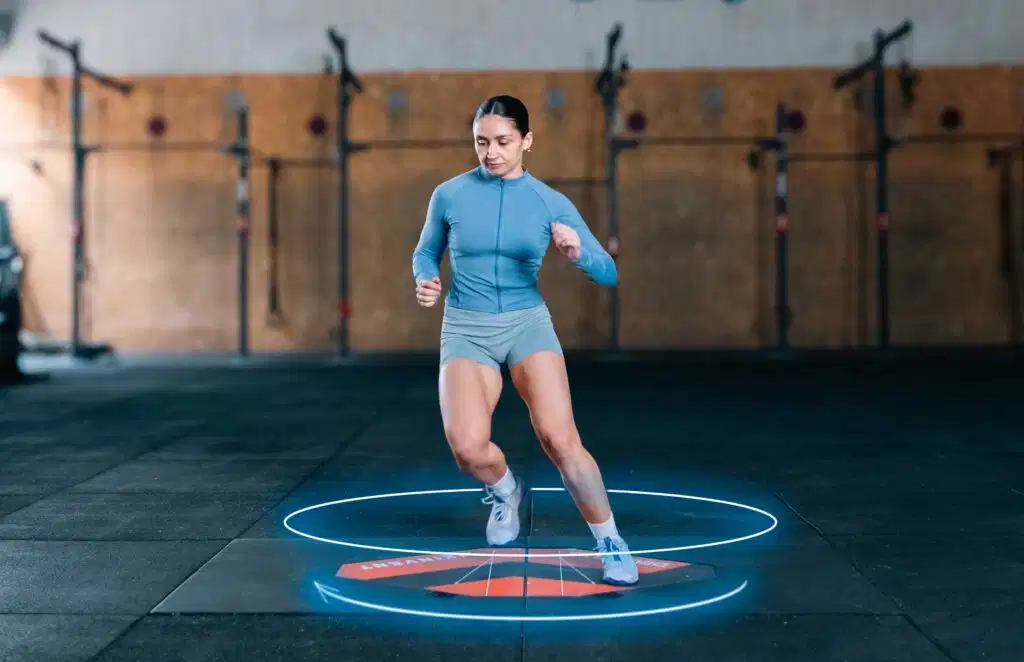
This approach relies in particular on 3D force plates capable of capturing ground reaction forces in all directions. Every movement, whether a jump, sprint, change of direction, or weight transfer, can be quantified with accuracy. The goal is to transform human movement into measurable data to better evaluate performance, stability, power, and movement strategies.
In practice, 3D motion analysis enables observation not only of how much force is produced, but also of how that force is applied, distributed, and controlled over time and across different planes of motion.
Why analyze movement in 3D rather than 2D?
Human movement is inherently multidirectional. In most sports and functional activities, the body moves forward, laterally, and rotationally at the same time. Yet many assessments are still limited to visual observation or vertical-only measurements.
A 2D analysis or traditional 1D force plate can measure jump height or vertical force production. However, it cannot detect:
- lateral asymmetries during landing
- inefficient weight transfer
- poor force management during direction changes
- subtle stability or control deficits
These critical elements often go unnoticed without three-dimensional measurement.
3D motion analysis reveals what the naked eye cannot see: inter-limb asymmetries, mechanical inefficiencies, stability deficits, and compensatory strategies. It provides a far deeper understanding of both athletic and functional movement, allowing professionals to take targeted, data-driven action.
What 3D motion analysis makes possible
By measuring forces in all directions, 3D motion analysis delivers key performance and rehabilitation insights. It allows professionals to:
- measure force and power production in each direction
- evaluate explosiveness and rate of force development
- identify asymmetries between limbs
- analyze balance and stability through center of pressure data
- detect compensatory movement strategies
- track athlete or patient progress objectively over time
These insights provide clear, actionable feedback for practitioners. Training programs can be adjusted more precisely, rehabilitation can be individualized, and movement mechanics can be understood with a level of accuracy that was previously impossible.
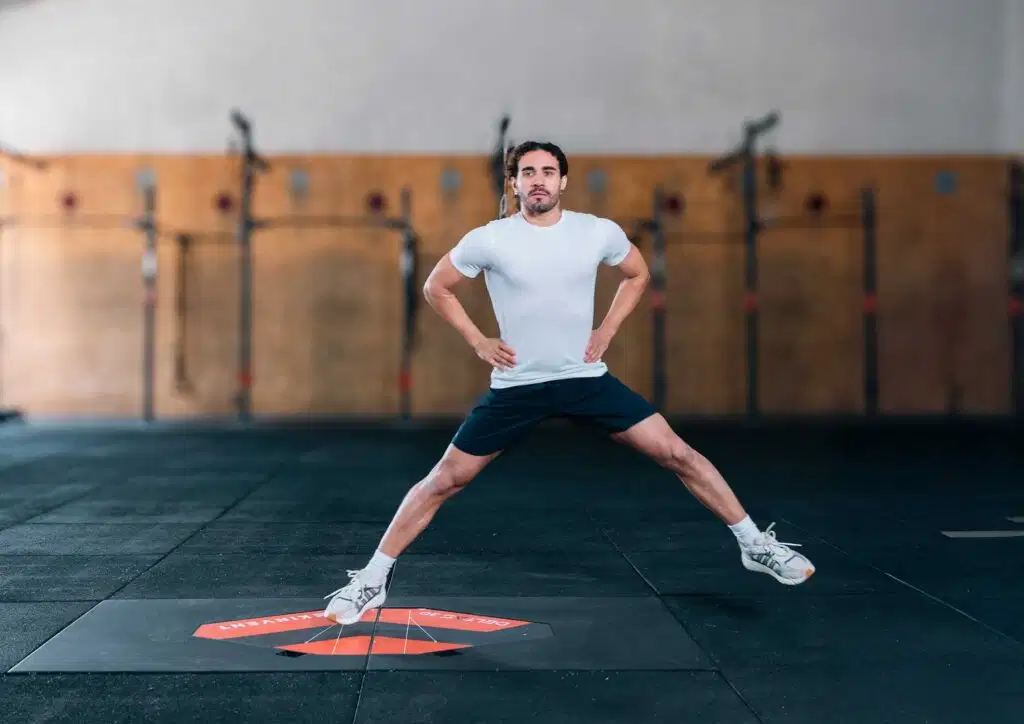
💡 Kinvent’s 3D Deltas force plates provide a complete three-dimensional view (X, Y, Z) to analyze performance and imbalances in every direction.
Whether the goal is to detect asymmetries, improve posture, refine technique, or secure return to sport, 3D Deltas offer a portable, field-ready solution already adopted by practitioners worldwide.
Beyond raw force measurement, 3D Deltas deliver detailed and actionable reports that help professionals interpret movement with precision. Key performance indicators available in the reports include:
- Entry velocity and exit velocity to evaluate acceleration, deceleration, and re-acceleration capacity
- Lateral reactivity index to assess an athlete’s ability to rapidly produce force and change direction
- Entry–exit impulse (N·s) to quantify total force production over time during directional movements
- Peak force (X, Y, Z) to measure the maximal force generated in each direction
- Relative force (N/kg) to compare performance between athletes regardless of body weight
- Total movement time and contact time to assess agility and movement efficiency
- Inter-limb asymmetry indicators to detect strength or control imbalances
- Force-time curves and vector visualization to better understand movement strategies
These insights allow practitioners to move beyond simple observation and base their decisions on objective biomechanical data. Training, rehabilitation, and return-to-play strategies can then be adjusted with greater precision and confidence.
2- Practical Applications of 3D Motion Analysis in Sports
3D motion analysis becomes truly valuable when applied to real sports movements. By measuring forces in every direction, it provides a precise understanding of how athletes produce, absorb, and control energy during key performance actions.
For strength coaches, physical therapists, and sports scientists, this data creates an objective foundation to enhance performance, prevent injuries, and individualize training or rehabilitation programs.
Football (Soccer): Mastering Change of Direction
Football requires constant acceleration, deceleration, and rapid changes of direction. These actions place significant stress on the lower limbs and demand optimal multidirectional force management.

3D motion analysis helps professionals:
- analyze acceleration and deceleration capabilities
- measure entry and exit impulse during direction changes
- evaluate ground contact time
- identify asymmetries between dominant and non-dominant limbs
- detect lateral force or neuromuscular control deficits
- refine strength and agility programs
- secure return to play after injury (especially ACL injuries)
These insights are essential to improving movement efficiency while reducing joint stress and injury risk.
Basketball: Evaluating Lateral Force and Explosiveness
Basketball involves frequent lateral movements, repeated jumps, and rapid transitions. 3D motion analysis enables precise evaluation of force production in the frontal plane, which is often overlooked in traditional assessments.

It allows practitioners to:
- measure maximal lateral force during jumps or cuts
- evaluate rate of force development and explosiveness
- analyze lateral impulse and power output
- compare performance between limbs
- monitor progress after lower-limb injury
- assess readiness for return to competition
- individualize strength and injury prevention programs
Lateral explosiveness assessment is particularly valuable for defensive movements and high-speed directional changes.
Golf: Understanding Weight Transfer and Balance
In golf, performance heavily depends on weight transfer and coordination between body segments. 3D motion analysis provides a detailed view of how forces are distributed throughout the swing.
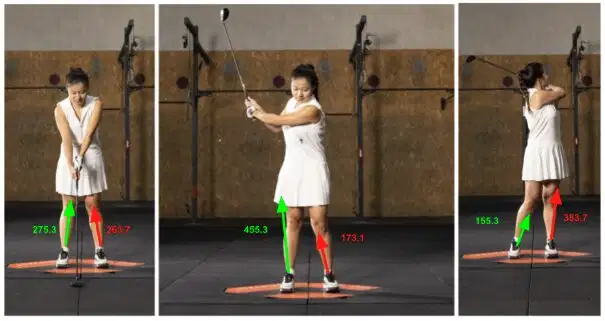
It delivers insights into:
- weight distribution between both feet
- center of pressure movement during the swing
- stability and balance control
- ability to generate efficient ground reaction forces
- asymmetries in load transfer
- inefficiencies affecting power or consistency
- potential overload risks on the spine and joints
These data points help coaches and therapists refine swing mechanics while reducing injury risk and improving consistency.
Rugby & American Football: Power, Stability, and Neuromuscular Control
In high-impact and power-based sports, the ability to produce force rapidly while controlling landings is critical. 3D motion analysis provides a detailed evaluation of these qualities.
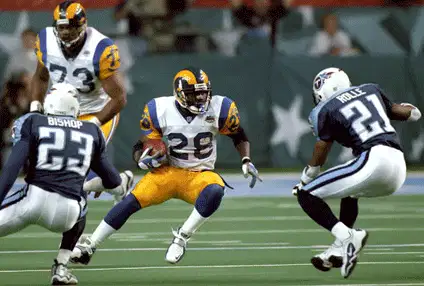
It enables professionals to:
- measure explosive power during jumps and starts
- analyze landing forces and shock absorption capacity
- assess knee and ankle stability
- detect strength asymmetries between limbs
- monitor recovery after ligament injuries
- track fatigue and performance variations
- adjust training loads based on objective data
These insights are essential to keeping athletes safe, optimizing performance, and reducing long-term injury risk.
💡 Download our free ebook on 3D motion analysis
The 3D Deltas guide provides a practical and illustrated exploration of this technology, including:
- clear explanations of key concepts (force, impulse, asymmetry)
- sport-specific use cases
- real data interpretation examples
- setup and implementation tips
3- Integrating 3D Motion Analysis with Motion Capture
3D motion analysis becomes even more powerful when combined with motion capture technology. By synchronizing force data with visual movement analysis, professionals gain a complete and objective understanding of biomechanics in action.
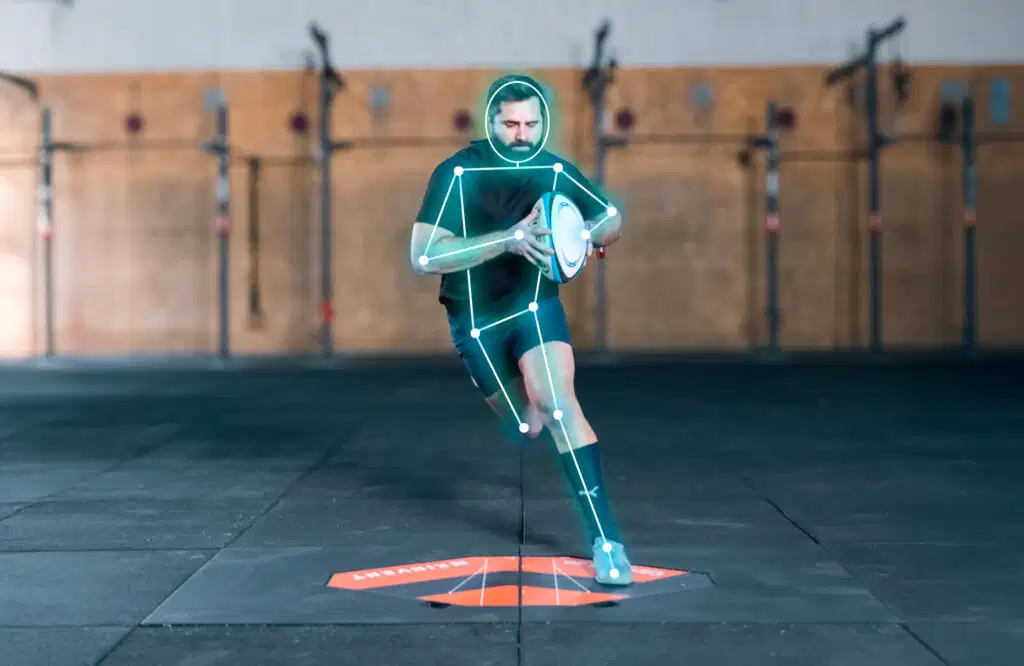
This combination bridges the gap between what clinicians and coaches see and what the body actually produces in terms of force. It transforms movement analysis into a visual, measurable, and immediately actionable tool for both performance and rehabilitation settings.
Connecting force measurement with visual movement analysis
When motion capture is integrated with 3D force plate data, every phase of a movement can be analyzed simultaneously from both a visual and biomechanical perspective.
This integrated approach allows practitioners to:
- synchronize video with force data for a complete movement analysis
- visualize how forces are applied to the ground in real time
- identify asymmetrical loading between limbs
- detect compensatory strategies invisible to the naked eye
- connect technical execution with force production
- better understand joint loading and movement efficiency
By linking visual observation to quantifiable data, professionals can move from subjective analysis to objective, evidence-based decision-making.
Smarter and more accessible motion capture technologies
Advancements in technology have made motion capture more accessible than ever. Markerless systems and mobile-based solutions now allow practitioners to perform detailed movement analysis directly on the field, in the clinic, or in the gym.
This accessibility enables:
- faster setup and testing
- real-world performance evaluation
- frequent monitoring of athletes or patients
- easier integration into daily practice
- data-driven decision making across training and rehabilitation
The result is a more practical and scalable approach to biomechanical assessment that fits seamlessly into modern performance environments.
From data to real-time feedback
One of the greatest advantages of combining 3D motion analysis with motion capture is the ability to deliver immediate feedback. Force data and movement visualization can be reviewed instantly after a test or exercise, allowing practitioners to adjust training or rehabilitation strategies on the spot.
This real-time feedback makes it possible to:
- correct movement mechanics immediately
- adjust exercises during rehabilitation sessions
- improve athletes’ or patients’ understanding of movement
- increase engagement through visual and measurable data
- track progress with objective comparisons over time
Solutions such as Kinvent’s 3D force plate ecosystem now integrate synchronized video, force vectors, and joint angle analysis within a single workflow, making comprehensive biomechanical evaluation easier to implement in everyday practice.
By combining 3D motion analysis with advanced motion capture, professionals gain a complete picture of human movement, enabling more precise coaching, safer rehabilitation, and more effective performance optimization.
4- FAQ: 3D Motion Analysis
What is 3D motion analysis?
3D motion analysis is a biomechanical assessment method that measures how forces act on the human body in three dimensions: vertical, anterior-posterior, and lateral. It provides a complete understanding of movement by quantifying force production, stability, asymmetries, and movement strategies, helping professionals optimize performance and rehabilitation.
Why use a 3D force plate?
A 3D force plate measures how an individual produces and absorbs forces during movement in all directions. This allows practitioners to identify imbalances, improve performance, reduce injury risk, and objectively track progress in both training and rehabilitation settings.
What is the difference between 3D motion analysis and video analysis?
Video analysis allows practitioners to observe movement, while 3D motion analysis measures the forces behind that movement. When combined, they provide a complete biomechanical picture linking what is seen to how force, power, and stability are actually generated.
Who uses 3D motion analysis?
3D motion analysis is used by physical therapists, strength and conditioning coaches, sports scientists, researchers, and professional sports teams. It is increasingly adopted in clinics, training centres, and performance facilities to enhance decision-making and reduce injury risk.
How does 3D motion analysis help prevent injuries?
It detects asymmetries, inefficient force distribution, and movement patterns that can place excessive stress on joints. By identifying these risk factors early, professionals can implement targeted corrective strategies to reduce injury risk and improve long-term movement efficiency.
Is 3D motion analysis useful in rehabilitation?
Yes. It provides objective data to monitor recovery, evaluate strength and symmetry between limbs, and guide return-to-play decisions. This ensures that athletes and patients regain not only movement capacity but also safe and efficient movement mechanics.
5- Conclusion
3D motion analysis represents a major shift in how human movement is understood and evaluated. Accurately measuring force production, asymmetries, and movement strategies, it provides sports and rehabilitation professionals with reliable data to guide their decisions.
Whether the goal is to enhance performance, prevent injuries, or support a safe return to play, this approach offers a comprehensive and objective view of the body in motion. It enables practitioners to individualize training and rehabilitation programs, monitor progress with precision, and adjust interventions based on measurable outcomes rather than subjective observation alone.
As technology becomes more accessible and adaptable to real-world environments, 3D motion analysis is no longer limited to research laboratories. It is becoming an essential tool for coaches, clinicians, and performance specialists who want to optimize results while protecting athlete and patient health.
To go further and explore real-world use cases, download our free ebook dedicated to 3D motion analysis and discover how 3D force plate technology is transforming performance and rehabilitation.


