


A PT evaluation, also known as a physical therapy evaluation, is the first and most important step in starting physical therapy care. Performed during the initial visit, it allows the physical therapist to assess the patient’s condition, identify functional impairments, and establish a personalized plan of care.
In this article, we explain what a PT evaluation is, why it matters, and the key steps of an effective physical therapy evaluation. You’ll also learn what to expect during your first PT visit, how objective measurements improve clinical decision-making, and how modern assessment tools help therapists better track patient progress over time.
CONTENTS
1- What Is a Physical Therapy Evaluation?
2- Key Steps of an Effective PT Evaluation
3- Why Objective Measures Matter in Physical Therapy Evaluation
4- What Happens During Your First Physical Therapy Evaluation?
5- Improving Patient Engagement Through PT Evaluation
6- PT Evaluation: A Tool for Both the Patient and the Physical Therapist
7- FAQ: Physical Therapy Evaluation
8- Conclusion: Toward More Objective and Outcome-Driven PT Evaluations
1- What Is a Physical Therapy Evaluation?
A physical therapy evaluation is a structured clinical process used by physical therapists to assess a patient’s movement, function, and physical limitations. It serves as the foundation for clinical decision-making and guides the entire course of physical therapy care.
Definition of a PT Evaluation
A PT evaluation combines subjective information from the patient with objective clinical findings. Its purpose is to identify functional impairments, movement limitations, and performance deficits that affect daily activities, work, or sports participation.

Unlike a medical diagnosis, which identifies a disease or injury, a physical therapy evaluation focuses on how the condition impacts movement and function. This approach allows the physical therapist to design a treatment plan tailored to the patient’s specific needs and goals.
Why the PT Evaluation Is Essential in Physical Therapy
The PT evaluation plays a central role in physical therapy practice. It allows the physical therapist to:
- establish a clear functional baseline,
- identify impairments and movement deficits,
- define measurable and patient-centered goals,
- create an individualized plan of care,
- monitor progress throughout treatment.
By providing a structured framework for assessment and decision-making, the physical therapy evaluation ensures that care is both personalized and outcome-driven.
2- Key Steps of an Effective PT Evaluation
An effective PT evaluation follows a structured process that combines patient input, clinical testing, and professional judgment. Rather than relying on isolated tests, the physical therapy evaluation is designed to support sound clinical reasoning and guide the plan of care.
Step 1: Subjective Examination (Patient Interview)
The first step of a physical therapy evaluation is the subjective examination, often referred to as the patient interview. During this phase, the physical therapist gathers essential information directly from the patient to understand their condition and expectations.

This step typically includes:
- the chief complaint and reason for seeking care,
- injury or condition history,
- current symptoms and symptom behavior,
- functional limitations in daily life, work, or sports,
- patient goals and expectations.
The subjective examination helps contextualize the physical findings and ensures that the evaluation remains patient-centered.
Step 2: Objective Measures and Clinical Testing
The second step of the PT evaluation focuses on objective clinical testing. The goal is to quantify physical impairments and movement deficits using reliable and repeatable measures.

Objective testing may assess:
- muscle strength,
- joint range of motion (ROM),
- balance and postural control,
- movement quality and functional tasks.
Relying on objective data reduces variability and improves the accuracy of the evaluation. Many physical therapists now use connected measurement tools to support this process. Solutions such as dynamometers, EMG, motion sensors, or force platforms allow therapists to objectively measure strength, mobility, and balance using sensors that integrate seamlessly into clinical workflows.
These tools provide precise, reproducible data that enhance clinical decision-making and strengthen the relevance of the PT evaluation.

Step 3: Clinical Analysis and Plan of Care
Once subjective and objective data have been collected, the physical therapist analyzes the findings to develop a comprehensive clinical picture. This final step of the physical therapy evaluation translates assessment results into a clear and actionable plan of care.
It includes:
- identifying key impairments and movement deficits,
- setting measurable and functional goals,
- defining an individualized treatment strategy,
- establishing a reassessment and progress-tracking plan.
This structured approach ensures that the PT evaluation directly informs treatment and supports ongoing clinical decisions throughout the rehabilitation process.
3- Why Objective Measures Matter in Physical Therapy Evaluation
Objective data play an increasingly important role in modern physical therapy evaluations. While clinical expertise and observation remain essential, relying solely on subjective or visual assessment can limit the accuracy and consistency of the evaluation.
Limitations of Visual and Manual Assessment Alone
Traditional assessment methods often depend on visual observation and manual testing. Although valuable, these approaches can present several limitations:
- variability between clinicians,
- difficulty quantifying subtle changes,
- challenges in comparing results across sessions,
- limited ability to clearly demonstrate progress.
These limitations can make it harder to track improvement over time, especially in longer or more complex rehabilitation programs.
The Value of Data-Driven PT Evaluations
Integrating objective measures into the PT evaluation strengthens clinical reasoning and supports more informed decision-making. Quantified data provide a reliable baseline and allow physical therapists to monitor progress with greater precision.
Objective measures help therapists:
- quantify strength, mobility, and balance deficits,
- track functional improvements over time,
- adjust the plan of care based on measurable outcomes,
- clearly communicate progress to patients and other providers.
In this context, tools such as connected sensors and digital assessment platforms enable physical therapists to collect consistent, repeatable data. By integrating objective measurements into the evaluation process, therapists can deliver more outcome-driven and patient-centered care.
4- What Happens During Your First Physical Therapy Evaluation?
For many patients, the first physical therapy evaluation can feel unfamiliar. Understanding what happens before, during, and after the visit helps set expectations and makes the experience more comfortable and productive.
What to Expect During Your First Visit
During your first PT evaluation, the physical therapist will begin by discussing your condition, symptoms, and goals. This conversation helps the therapist understand how your injury or condition affects your daily activities, work, or sports participation.
The visit typically includes:
- a detailed patient interview,
- physical testing and movement assessment,
- evaluation of strength, mobility, balance, and functional tasks,
- an explanation of the initial findings.
The therapist may use specific tests or measurement tools to better understand your movement and physical capabilities.
What to Bring to Your PT Evaluation
To make the most of your physical therapy evaluation, it’s helpful to bring:
✔️ a referral or prescription, if required,
✔️ medical reports or imaging results (X-rays, MRI, etc.),
✔️ comfortable clothing that allows movement,
✔️ information about previous treatments or injuries.
Having this information available helps the therapist complete a thorough evaluation.
What Happens After the PT Evaluation?
At the end of the physical therapy evaluation, the therapist will review the results with you and explain the next steps.
This usually includes:
- a summary of the evaluation findings,
- a discussion of your treatment goals,
- an outline of the recommended plan of care,
- scheduling follow-up visits.
In some clinics, objective measurements collected during the evaluation are stored and reviewed over time, allowing both the therapist and the patient to track progress more clearly throughout the rehabilitation process.
5- Improving Patient Engagement Through PT Evaluation
A well-conducted PT evaluation does more than guide clinical decisions; it also plays a key role in patient engagement. When patients understand their condition and can see their progress, they are more likely to stay motivated and involved in their care.
Making Progress Visible to the Patient
Using objective data during a physical therapy evaluation helps make progress more tangible. Quantified results and clear benchmarks allow patients to better understand their physical limitations at the start of care and recognize improvements over time.
When progress is measurable and visible, patients can:
- better understand the purpose of their treatment,
- see how their efforts translate into improvement,
- stay motivated throughout the rehabilitation process.
Centralized Data for Better Progress Tracking
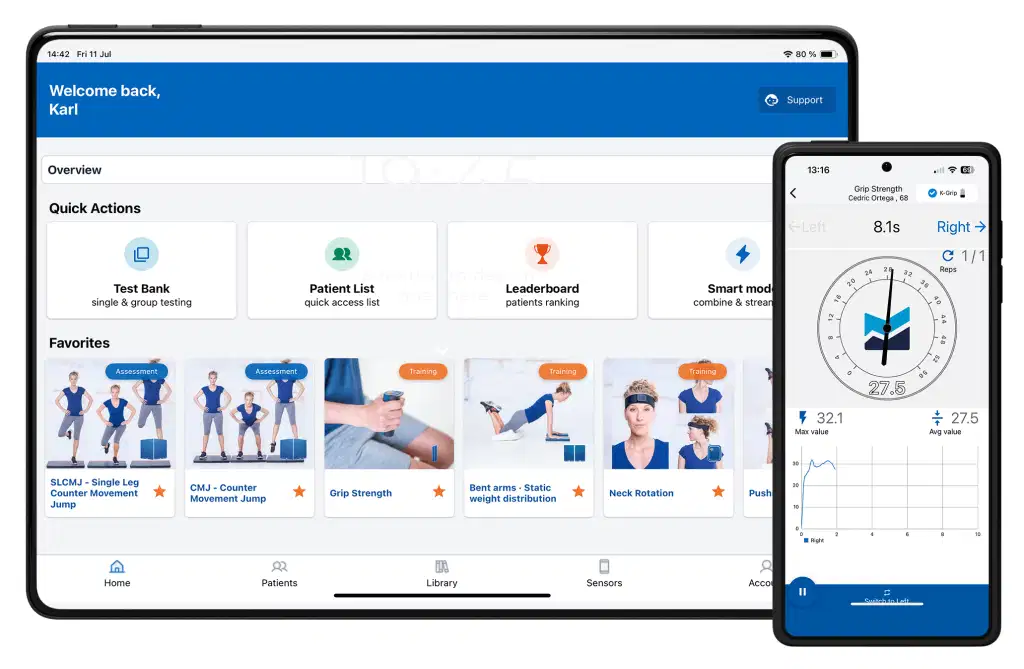
Objective measurements are most effective when they are easy to access and track over time. When data collected during the PT evaluation and follow-up sessions are centralized within a single platform, both therapists and patients benefit from a clearer view of progress.
With solutions such as those developed by Kinvent, measurements from connected sensors, such as strength, mobility, and balance assessments, can be stored and reviewed within one application. This centralized approach allows physical therapists to monitor changes over time and communicate progress more effectively.
For patients, this means:
- clearer visualization of improvement,
- better understanding of their rehabilitation journey,
- stronger engagement and adherence to the plan of care.
By making progress easier to track and understand, the PT evaluation becomes a powerful tool for supporting long-term patient outcomes.
6- PT Evaluation: A Tool for Both the Patient and the Physical Therapist
A PT evaluation is more than a required starting point; it is a key tool that supports effective communication, clinical reasoning, and long-term outcomes. When performed thoroughly, the physical therapy evaluation benefits both the patient and the physical therapist.
Supporting Patient Understanding and Involvement
For patients, the PT evaluation provides clarity. By explaining findings and goals in a structured and understandable way, physical therapists help patients better grasp their condition and the purpose of treatment.
This clarity helps patients:
- understand their functional limitations,
- see how therapy addresses their specific needs,
- stay actively involved in their rehabilitation.
Patients who understand their evaluation are more likely to engage consistently and follow their treatment plan.
Strengthening Clinical Reasoning for Physical Therapists
For physical therapists, the physical therapy evaluation is a cornerstone of clinical decision-making. It allows therapists to organize information, prioritize impairments, and adapt treatment strategies based on patient response.
A structured PT evaluation helps therapists:
- make informed clinical decisions,
- adjust care based on objective progress,
- document outcomes clearly,
- communicate effectively with other healthcare providers.
By combining clinical expertise with objective data and ongoing reassessment, the PT evaluation supports a more precise, efficient, and outcome-driven approach to care.
7- FAQ: Physical Therapy Evaluation
What is a PT evaluation?
A PT evaluation, or physical therapy evaluation, is the initial assessment performed by a physical therapist. It involves reviewing the patient’s history, assessing movement and function, and identifying physical impairments in order to create an individualized plan of care.
How long does a physical therapy evaluation take?
A physical therapy evaluation typically lasts between 45 and 60 minutes, depending on the complexity of the condition and the amount of testing required. This time allows the therapist to perform a thorough assessment and discuss findings and next steps with the patient.
Do I need a referral for a PT evaluation?
In many U.S. states, direct access allows patients to see a physical therapist without a physician referral. However, referral requirements may vary depending on state regulations and insurance policies. It’s recommended to check with your clinic or insurance provider beforehand.
What does a physical therapist evaluate?
During a PT evaluation, a physical therapist may assess:
- strength and muscle performance,
- joint mobility and range of motion,
- balance and postural control,
- movement quality and functional tasks,
- how symptoms affect daily activities, work, or sports.
Is the PT evaluation done only once?
No. While the initial PT evaluation establishes a baseline, physical therapists regularly reassess patients throughout treatment. These follow-up evaluations help track progress, adjust the plan of care, and ensure that therapy remains effective and goal-oriented.
Why are objective measurements important in a PT evaluation?
Objective measurements provide quantifiable data that help physical therapists track progress over time, compare results between sessions, and make informed clinical decisions. They also make it easier for patients to understand their improvement throughout the rehabilitation process.
8- Conclusion: Toward More Objective and Outcome-Driven PT Evaluations
The PT evaluation is the foundation of effective physical therapy care. By assessing movement, function, and limitations, it allows physical therapists to make informed clinical decisions and create individualized plans of care.
As physical therapy continues to evolve, the role of objective, data-driven evaluations becomes increasingly important. Combining clinical expertise with reliable measurements improves accuracy, supports progress tracking, and strengthens patient engagement throughout rehabilitation.
By integrating modern assessment tools and centralized data tracking, such as those offered by Kinvent, physical therapists can deliver more consistent, measurable, and patient-centered care. Ultimately, a well-structured physical therapy evaluation supports better outcomes for both patients and clinicians.


