




Growth-related injuries are one of the most common causes of musculoskeletal pain in physically active children and adolescents. Yet, they occur within a paradoxical context.
While many young people do not meet recommended physical activity levels, those involved in regular sports may be exposed to repetitive mechanical stress during periods of rapid growth, increasing the risk of developing growth-related injuries.
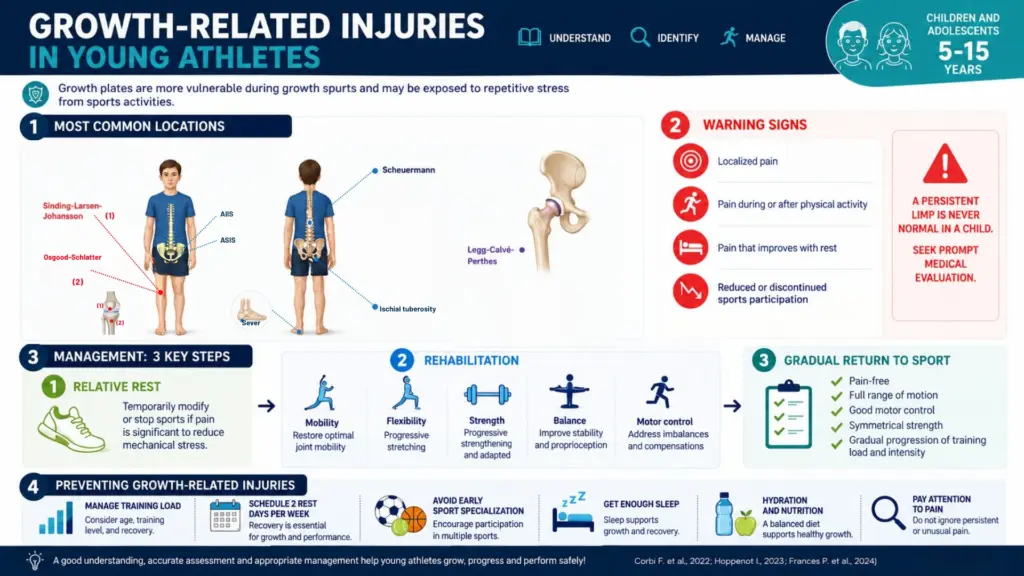
Among the most common conditions are Osgood-Schlatter disease, Sever’s disease, and Scheuermann’s disease. These conditions primarily affect children and adolescents between 5 and 15 years of age and are frequently encountered in sports medicine and pediatric physical therapy.
In this article, we’ll explain what growth-related injuries are, review the most common conditions affecting young athletes, discuss how they are diagnosed and managed in physical therapy, and explore strategies to prevent them through appropriate training load management and objective physical assessment.
CONTENTS
1- What Are Growth-Related Injuries?
2- The Most Common Growth-Related Injuries in Children and Adolescents
3- What Are the Warning Signs of Growth-Related Injuries?
4- How Are Growth-Related Injuries Diagnosed?
5- What Is the Best Physical Therapy Management for Growth-Related Injuries?
6- Why Is Objective Assessment Important in Young Athletes?
7- How Can Growth-Related Injuries Be Prevented in Young Athletes?
8- FAQ: Growth-Related Injuries in Young Athletes
9- References
1- What Are Growth-Related Injuries?
Growth-related injuries are conditions affecting the growth cartilage (growth plates) or tendon attachment sites (apophyses) in children and adolescents. Because these structures are still developing, they are particularly vulnerable to the repetitive mechanical loads generated by sports and physical activity.
Also known as osteochondroses or apophyseal injuries, depending on their location, growth-related injuries most commonly occur between 5 and 15 years of age, a period characterized by rapid musculoskeletal development.
Growth-related injuries generally fall into three main categories:
- Articular forms, such as Legg-Calvé-Perthes disease, affecting the hip.
- Apophyseal injuries, the most common type in young athletes, involving tendon attachment sites on the bone (such as Osgood-Schlatter disease, Sever’s disease, and Sinding-Larsen-Johansson syndrome).
- Growth plate disorders (physes), such as Scheuermann’s disease, affecting the spine.
During growth spurts, bones often lengthen more rapidly than muscles and tendons can adapt. This temporary imbalance increases tensile forces on immature bone structures and may lead to pain.
A simple analogy is to imagine an elastic band constantly pulling on a nail fixed into a fragile wall. As the tension increases, the attachment point eventually becomes irritated.
Typical features of growth-related injuries include:
- Localized, well-defined pain.
- Symptoms that worsen during or after physical activity.
- Pain relief with rest.
- Tenderness when the affected area is palpated.
- Temporary reduction in sports participation or athletic performance.
Management initially focuses on relative rest, or even temporary cessation of sports when symptoms are severe. Once pain has improved, a gradual return to activity, combined with education and physical therapy when needed, helps young athletes safely resume sport.
2- What Are the Most Common Growth-Related Injuries in Children and Adolescents?
Although the term growth-related injuries is often used as a broad category, it actually includes several conditions affecting different parts of the body. What these conditions have in common is that they involve immature skeletal structures exposed to repetitive mechanical loading, particularly during periods of rapid growth.
Certain locations are especially vulnerable in young athletes because of the high physical demands associated with training and competition.
Osgood-Schlatter Disease
Osgood-Schlatter disease is probably the best-known growth-related injury in young athletes. It affects the tibial tuberosity, just below the kneecap, where the patellar tendon attaches to the tibia.
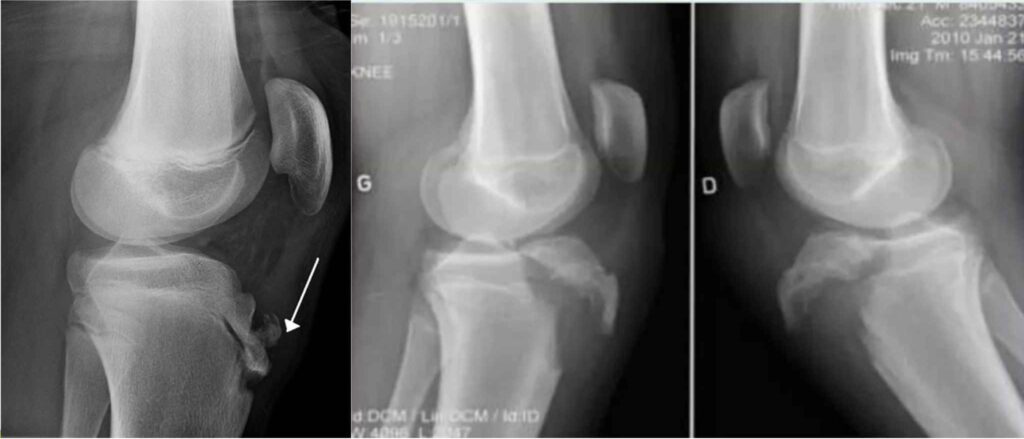
It most commonly develops between 10 and 15 years of age and is particularly associated with sports involving:
- Repeated jumping
- Frequent acceleration and deceleration
- Changes of direction
- Kicking movements
The main symptoms include:
- Localized pain below the knee
- Tenderness over the tibial tuberosity
- Pain during running, jumping, or squatting
- Occasionally, a visible bony prominence below the knee
Sever’s Disease
Sever’s disease, also known as calcaneal apophysitis, affects the growth plate of the heel. It is common in children aged 8 to 12 years, particularly those participating in sports involving repeated impact.
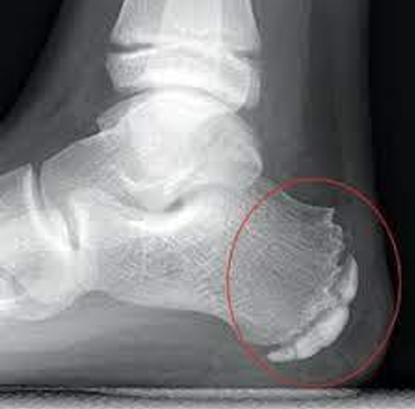
The sports most frequently associated with Sever’s disease include:
- Soccer
- Track and field
- Basketball
- Handball
Typical symptoms include:
- Heel pain
- Pain while walking or running
- Symptoms that worsen after training
- Tenderness when the heel is compressed
Sinding-Larsen-Johansson Syndrome
This condition affects the inferior pole of the patella, where the patellar tendon inserts. It usually occurs between 10 and 15 years of age and shares many risk factors with Osgood-Schlatter disease.
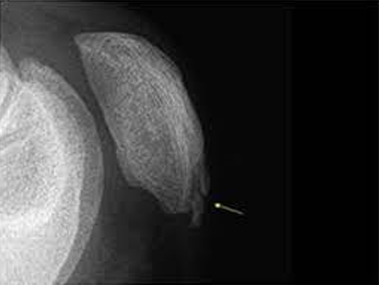
- Common symptoms include:
- Pain at the lower tip of the kneecap
- Discomfort during jumping and landing
- Pain during high-intensity sports
- Tenderness on palpation of the patella
Scheuermann’s Disease
Scheuermann’s disease is an osteochondrosis affecting the vertebrae and may lead to an excessive thoracic kyphosis.
It most commonly develops between 10 and 17 years of age and may present with:
- Upper or lower back pain
- Fatigue during prolonged sitting or standing
- Progressive rounded-back posture
- Reduced spinal mobility
Legg-Calvé-Perthes Disease
Less common than the previous conditions, Legg-Calvé-Perthes disease affects the hip and typically occurs between 4 and 10 years of age.
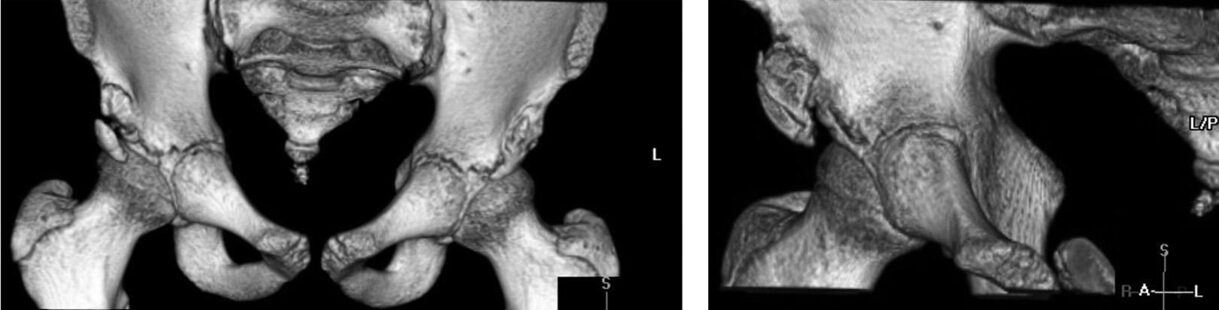
Warning signs include:
- Hip pain
- Referred pain to the thigh or knee
- Limping
- Reduced hip range of motion
Other locations can also be affected, particularly apophyseal sites of the pelvis such as the anterior inferior iliac spine (AIIS), anterior superior iliac spine (ASIS), ischial tuberosity, and iliac crest.
Although these growth-related injuries affect different anatomical regions, they share the same underlying mechanism: repetitive stress applied to immature skeletal structures. Early recognition and timely adjustment of training load usually help relieve symptoms and support a safe return to sport.
3- What Are the Warning Signs of Growth-Related Injuries?
Growth-related injuries typically cause mechanical pain in physically active children and adolescents. Recognizing the early warning signs is essential to prevent symptoms from worsening and to allow appropriate management.
The most common signs include:
- Localized pain (knee, heel, hip, back, or pelvis)
- Pain that develops during or after physical activity
- Pain that improves with rest
- Tenderness when the affected area is palpated
- Reduced or discontinued sports participation because of pain
A medical evaluation is recommended if:
- Pain persists for several weeks
- Symptoms limit sports participation or daily activities
- A persistent limp develops. Once a transient or non-organic limp has been ruled out, a persistent limp is never considered normal in a child or adolescent and should always prompt medical assessment.
- Pain progressively worsens
- Symptoms also occur at rest or during the night
Early diagnosis allows healthcare professionals to adapt activity levels, initiate appropriate treatment, reduce the risk of symptom progression or compensatory movement patterns, and support a safe return to sport.
4- How Are Growth-Related Injuries Diagnosed?
The diagnosis of growth-related injuries is primarily based on a clinical examination. The healthcare professional will ask about the child’s sports participation, training frequency, symptom onset, and how the pain has progressed over time.
The physical examination typically looks for:
- Localized tenderness on palpation
- Limitations in joint range of motion
- Reduced muscle flexibility or strength
- Compensatory movement patterns during functional tasks
Additional imaging, such as X-rays, ultrasound, or MRI, is not routinely required. These tests are mainly used when the diagnosis is uncertain, symptoms are atypical, or another condition needs to be ruled out.
The goal is to confirm the diagnosis, exclude other causes of pain, and identify the factors contributing to the symptoms to guide the most appropriate management of the growth-related injury.
5- What Is the Best Physical Therapy Management for Growth-Related Injuries?
The primary goal of managing growth-related injuries is to reduce mechanical stress on the painful area while allowing the child to maintain an appropriate level of physical activity whenever possible. In most cases, the prognosis is excellent when sports participation is modified early.
Temporarily Modify Sports Activity
During the painful phase, complete rest from sports for several days or even several weeks may sometimes be necessary to allow symptoms to settle. Once pain is under control, activity can be gradually resumed while respecting the pain-monitoring principle, ensuring that exercises remain below the individual’s pain threshold.
Depending on symptom severity, management may also include:
- Orthotics or heel cups to reduce mechanical stress
- Pain-relieving treatment when appropriate
- Temporary use of crutches in more painful cases
- Immobilization in rare cases with severe symptoms
Restore Mobility, Flexibility, and Strength
Although physical therapy is not required for every child, it can play an important role in the management of growth-related injuries. Rehabilitation generally focuses on four main areas:
- Flexibility and mobility: Progressive stretching of the involved muscle groups to reduce stress on the painful area (e.g., quadriceps for Osgood-Schlatter disease, calf muscles for Sever’s disease).
- Motor control and coordination: Exercises to improve movement quality and correct compensatory patterns.
- Balance and proprioception: Progressive exercises to improve postural control before advancing to more dynamic activities.
- Strength: Gradual strengthening, starting with pain-free exercises before progressing to more functional, sport-specific movements.
The objective is to restore full mobility, symmetrical strength, and good movement control before returning to sport.
Support a Safe Return to Sport
Return to sport should always be gradual and tailored to the demands of the athlete’s sport. The goal is not only to eliminate pain but also to restore adequate movement quality, mobility, and physical capacity.
Returning too quickly or increasing training load too rapidly may lead to symptom recurrence. For this reason, educating and supporting the young athlete, parents, and coaches is a key part of successful rehabilitation.
Objective criteria can help guide return-to-sport decisions, including:
- No pain during functional activities
- Less than 10% side-to-side asymmetry
- Full range of motion
- Good movement quality and motor control
6- Why Is Objective Assessment Important in Young Athletes?
Objective assessment complements the clinical examination by providing measurable data on a child or adolescent’s physical abilities. It helps clinicians identify deficits that may contribute to growth-related injuries, monitor progress throughout rehabilitation, and make more informed return-to-sport decisions.
Objective testing can be used to assess:
- Muscle strength and side-to-side asymmetries
- Balance and single-leg stability
- Landing mechanics and impact absorption
- Joint range of motion and movement quality
Which Tools Can Be Used to Assess Young Athletes?
Connected assessment technologies allow clinicians to accurately quantify physical deficits and monitor changes throughout rehabilitation.
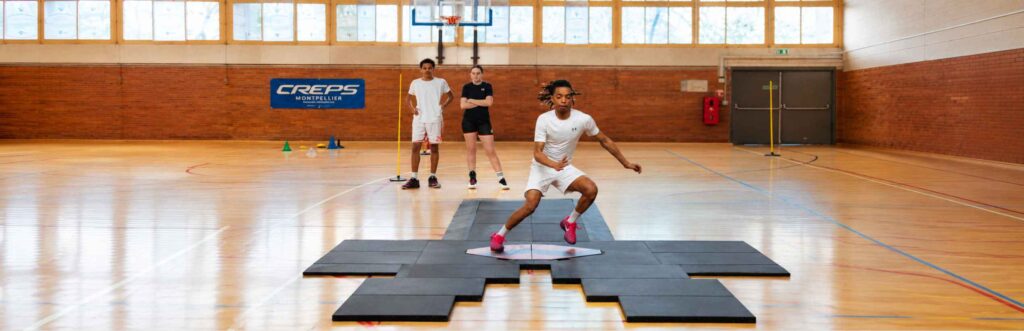
- Force plates (K-Force Plates, K-Deltas, 3D Deltas): Evaluate asymmetries, postural stability, time to stabilization, and impact absorption during tests such as the Single-Leg Landing, Drop Jump, or Countermovement Jump (CMJ).
- Handheld dynamometers (K-Push): Measure isometric muscle strength and detect side-to-side strength asymmetries.
- Digital goniometers (K-Move): Provide accurate measurements of joint range of motion and angular velocity.
- Speed sensors (K-Power): Analyze velocity, acceleration, deceleration, power output, and force-velocity profiles during jumping and sprinting tasks.
These objective measurements help identify deficits in strength, stability, mobility, or movement quality that may contribute to growth-related injuries, allowing clinicians to better tailor rehabilitation programs and make more confident return-to-sport decisions.
7- How Can Growth-Related Injuries Be Prevented in Young Athletes?
Preventing growth-related injuries is not just about training or physical preparation. Education also plays a key role by helping young athletes, parents, and coaches recognize early warning signs and adopt healthy training habits.
Education should focus on helping children understand:
- Early warning signs, such as localized pain that persists or returns during activity
- The importance of healthy lifestyle habits, including adequate sleep, hydration, and balanced nutrition
- The need to adjust training loads and respect recovery periods
Several practical strategies can also help reduce the risk of growth-related injuries:
- Limit weekly organized sports participation to no more hours than the child’s age (e.g., a maximum of 9 hours per week for a 9-year-old)
- Schedule at least two days of relative rest each week
- Encourage participation in multiple sports rather than early sport specialization
- Plan regular breaks throughout the sports season
Evaluating footwear, considering the specific physical demands of each sport, and regularly monitoring symptoms are additional components of an effective prevention strategy.
By involving young athletes in their own care and helping them better understand their bodies, clinicians, parents, and coaches can encourage healthy long-term sports participation while reducing the risk of recurrent growth-related injuries.
8- FAQ: Growth-Related Injuries in Young Athletes
What are growth-related injuries?
Growth-related injuries are conditions affecting the growth plates or tendon attachment sites (apophyses) in children and adolescents. They typically develop during periods of rapid growth and are often associated with repetitive sports-related loading.
What is the most common growth-related injury?
Osgood-Schlatter disease is one of the most common growth-related injuries in young athletes. It causes localized pain just below the kneecap at the tibial tuberosity, where the patellar tendon attaches.
Can a child continue playing sports with a growth-related injury?
Not without medical advice. If a growth-related injury is suspected, the child should be evaluated by a healthcare professional to confirm the diagnosis and determine the most appropriate management. As a precaution, temporary relative rest or, in some cases, complete cessation of sports may be necessary before a gradual return to activity.
How long do growth-related injuries last?
The duration varies depending on the condition, the child’s age, and activity level. Symptoms may last from several weeks to several months but generally resolve as skeletal maturity is reached.
When should a healthcare professional be consulted?
A medical evaluation is recommended if pain persists for several weeks, limits sports participation, causes a persistent limp, or occurs at rest or during the night.
How can growth-related injuries be prevented?
Preventing growth-related injuries involves appropriate training load management, adequate recovery, healthy lifestyle habits, and careful monitoring of pain during periods of rapid growth. Early recognition of symptoms and timely activity modification can help prevent more severe problems.
9- References
- ONAPS. Report Card sur l’activité physique et la sédentarité de l’enfant et de l’adolescent – Édition 2022.
- Corbi F, et al. Osgood-Schlatter Disease: Appearance, Diagnosis, and Treatment. A Narrative Review. Healthcare. 2022.
- Smith JM, Varacallo M. Sever Disease (Calcaneal Apophysitis). StatPearls. 2024.
- Giboire S. Effet d’un livret d’éducation dans la prévention primaire de la maladie d’Osgood-Schlatter… Mémoire Master 2, 2021.
- Haute Autorité de Santé. Focus : Activité physique, états de santé et pathologies de l’enfant. 2025.
- Hoppenot I. Ostéochondroses de croissance : une inadéquation entre sollicitation musculaire et maturation osseuse. Article de synthèse, 2023.
- Entretien avec le Dr Linh Vu Ngoc, médecin du sport, CREPS Île-de-France. VIDAL, 2023.
- Dr Feller. Pathologies de croissance chez l’enfant et l’adolescent : les ostéochondroses. Synthèse, 2024.
- Serrano HM, et al. Validity and Reliability of Kinvent Plates for Assessing Single-Leg Balance. Sensors. 2023.
- Seshadri DR, et al. Wearable Technology and Analytics… J Med Internet Res. 2021.
- Herman S. Pathologie ostéoarticulaire liée au sport chez l’enfant et l’adolescent. Dossier.
- Deswarte G. Ostéochondroses de croissance : apophysoses. Présentation.
- Frances P, et al. Ostéochondroses de l’enfant et de l’adolescent. La Revue de Médecine Générale. 2024.
- Recommandations NATA (National Athletic Trainers’ Association) sur la gestion du volume d’entraînement chez les jeunes athlètes.


