


Assessing muscle activation is a core part of rehabilitation and performance training. Clinicians, coaches, and sports scientists often rely on observation, palpation, and movement analysis to understand how muscles behave during exercise or functional tasks. But these methods don’t always tell the full story.
Is the muscle activating too late? Is the intended muscle actually doing the work, or is another muscle compensating? Are left-right activation patterns symmetrical? Has neuromuscular fatigue changed movement strategy?
This is where EMG muscle activation assessment becomes valuable.
By turning muscle activity into objective, measurable data, surface EMG helps professionals move beyond assumptions and make more informed clinical and performance decisions. From rehabilitation and motor control retraining to return-to-play monitoring and athlete optimization, EMG offers a clearer view of neuromuscular function.
In this article, we’ll explore how EMG muscle activation can improve assessment, decision-making, and outcomes in both physical therapy and sports performance.
CONTENTS
1- What Is Surface EMG?
2- Why Assessing Muscle Activation Objectively Matters
3- What EMG Reveals About Muscle Activation
4- Practical Applications of EMG Muscle Activation in Rehabilitation and Sports Performance
5- Best Practices for Meaningful EMG Muscle Activation Data
6- FAQ: Answer Your Questions about EMG Muscle Activation
1- What Is Surface EMG?
Surface electromyography (sEMG) is a non-invasive method used to measure the electrical activity produced by muscles during contraction. By placing electrodes on the skin over targeted muscles, clinicians and performance professionals can capture objective data about muscle activation patterns, recruitment timing, and neuromuscular behavior during movement.
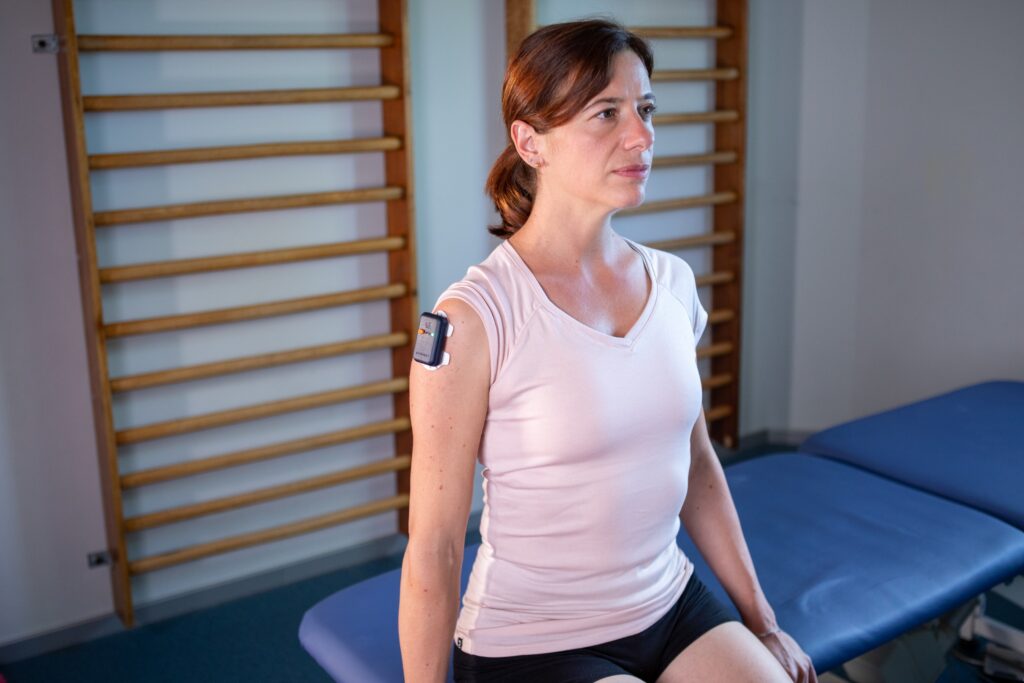
Unlike traditional assessment methods based solely on observation or palpation, surface EMG provides measurable insights into how muscles are actually functioning in real time.
Whether the goal is to assess movement quality, identify compensatory activation patterns, or support neuromuscular retraining, surface EMG adds an objective layer to decision-making.
💡 If you’d like a deeper dive into the science behind EMG signals, how surface EMG works, and its technical considerations, read our dedicated guide: Understanding Surface EMG.
2- Why Assessing Muscle Activation Objectively Matters
Muscle activation plays a central role in movement quality, rehabilitation progress, and athletic performance. Yet in many clinical and performance settings, assessment still relies heavily on observation, palpation, and movement analysis.
While these methods remain valuable, they also have limitations.
Some neuromuscular patterns are difficult or impossible to detect with the naked eye alone. A muscle may appear to be functioning normally while activating too late, contributing less than expected, or being replaced by compensatory activation from another muscle group. Similarly, subtle asymmetries or fatigue-related changes in recruitment strategy may go unnoticed without objective measurement.
This lack of precision can affect decision-making, whether you’re progressing a rehabilitation program, retraining movement patterns, or evaluating return-to-play readiness.
Objective EMG muscle activation assessment helps bridge that gap.
By providing measurable data on how and when muscles activate, EMG gives clinicians, coaches, and sports scientists clearer insights into neuromuscular function. It also makes progress easier to track over time and helps turn abstract movement observations into actionable data.
In short, better measurement leads to better decisions, and ultimately, better outcomes.
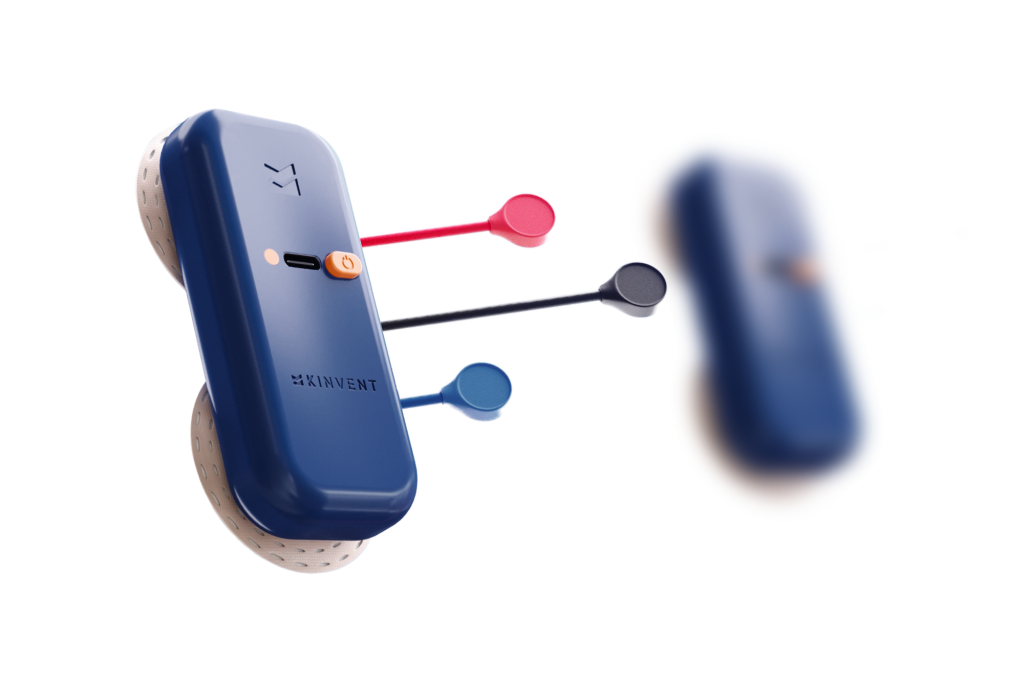
👉 If you’re looking to bring objective EMG muscle activation assessment into your practice, portable tools like K-Myo by Kinvent make it easier to assess neuromuscular activity in real time, whether in the clinic, gym, or on the field.
As part of the connected Kinvent ecosystem, K-Myo integrates seamlessly with the Kinvent App, allowing professionals to centralize EMG data alongside strength, force, range of motion, and movement assessments for a more complete view of neuromuscular performance.
Combined with intuitive visual biofeedback, it helps support smarter assessment, movement retraining, and long-term progress tracking.
3- What EMG Reveals About Muscle Activation
Understanding that a muscle is active is only part of the picture. The real value of EMG lies in what it reveals about how muscles behave during movement, exercise, or rehabilitation.
Objective EMG muscle activation data can uncover patterns that are difficult to identify through observation alone, helping professionals better understand neuromuscular function and make more targeted decisions.
Muscle Recruitment Timing
The timing of muscle activation is often just as important as the level of activation itself.
A muscle that activates too early, too late, or remains active longer than expected can alter movement mechanics and reduce efficiency. In rehabilitation, delayed activation may reflect neuromuscular inhibition or poor motor control. In sports performance, inefficient recruitment timing can impact force production, coordination, and movement quality.
EMG helps quantify these activation sequences objectively, making timing analysis far more precise than visual assessment alone.
Compensation Patterns
When the intended muscle is not contributing effectively, the body often finds alternative strategies.
For example, an athlete performing a shoulder exercise may appear to be moving correctly, while the upper trapezius compensates for insufficient activation of scapular stabilizers. Similarly, lower-body tasks may reveal excessive hip or lumbar compensation when local muscle recruitment is suboptimal.
EMG helps identify these hidden compensation patterns, allowing practitioners to target the true source of dysfunction rather than just the visible movement outcome.
Neuromuscular Fatigue
Muscle activation strategies can change significantly under fatigue.
As fatigue develops, the nervous system may recruit muscles differently, alter coordination patterns, or increase compensatory activation to maintain performance. These changes are not always visible externally but can meaningfully affect movement quality, injury risk, and training effectiveness.
EMG provides a clearer picture of how neuromuscular behavior evolves during repeated efforts or demanding tasks.
Activation Asymmetries
Left-right asymmetries in muscle activation can be particularly relevant in both rehabilitation and performance settings.
Following injury, surgery, or prolonged inactivity, activation deficits may persist even when gross movement appears normal. In athletes, asymmetrical recruitment strategies may indicate inefficiencies or unresolved neuromuscular deficits.
By comparing activation patterns between sides, EMG helps support more objective return-to-function and return-to-play decisions.
Isometric Training with Kinvent’s EMG, the K-Myo – Kinvent Tutorials on YouTube
💡 Download Our Free Surface EMG Ebook
Want to go further with EMG muscle activation assessment?
Our free ebook, Unlocking Muscle Potential: A Comprehensive Guide to Portable Surface EMG, explores the practical applications of EMG in rehabilitation and sports performance.
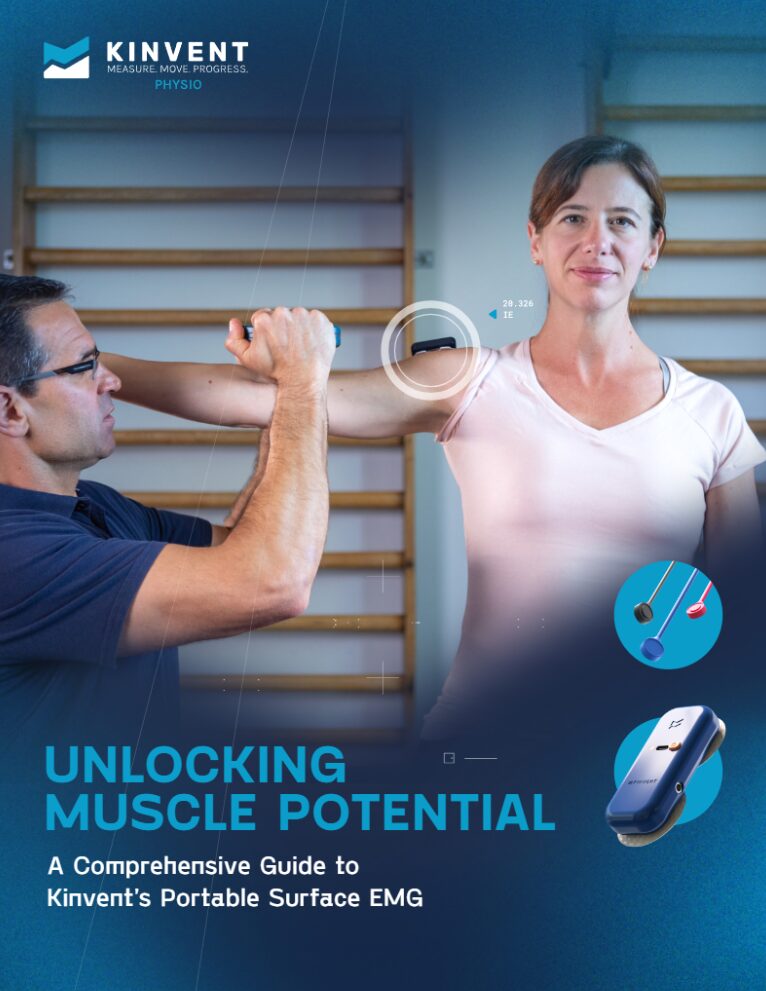
Inside, you’ll learn:
- the fundamentals of surface EMG
- how to assess muscle activation more objectively
- practical clinical and sports performance applications
- key considerations for collecting reliable EMG data
- how EMG can support motor control retraining and biofeedback
Whether you’re a physical therapist, sports scientist, strength coach, or rehabilitation professional, this guide will help you better understand how to integrate EMG into your assessment and decision-making process.
👉 Download the free ebook and start turning muscle activation data into smarter clinical and performance decisions.
4- Practical Applications of EMG Muscle Activation in Rehabilitation and Sports Performance
The true value of EMG lies in its practical application. Beyond simply measuring muscle activity, EMG helps professionals make more informed decisions in rehabilitation, performance optimization, and neuromuscular retraining.
Whether working with patients recovering from injury or athletes seeking performance gains, objective muscle activation data provides insights that can directly influence assessment and intervention strategies.
Physical Therapy & Rehabilitation Applications
In rehabilitation, EMG can help clinicians better understand why movement dysfunction persists, even when symptoms appear to improve.
Following surgery or injury, some muscles may remain inhibited despite restored range of motion or apparent functional recovery. EMG can help detect these activation deficits, making it easier to identify whether a patient is truly regaining neuromuscular control or simply developing compensatory strategies.
This can be particularly valuable in cases involving:
- post-operative rehabilitation
- chronic pain
- motor control dysfunction
- movement retraining
- neuromuscular inhibition
EMG can also support patient education. When patients can visualize their own muscle activation patterns in real time, it often becomes easier to understand movement dysfunction and actively engage in the rehabilitation process.
Sports Performance Applications
In sports performance, movement quality and efficiency often depend on how effectively muscles are recruited, not just how much force is produced.
EMG helps coaches and sport scientists better understand muscle activation strategies during training, exercise selection, and sport-specific movement analysis.
Practical applications include:
- validating whether an exercise activates the intended muscle groups
- analyzing neuromuscular strategies during sprinting or explosive movements
- monitoring fatigue-related changes in recruitment patterns
- identifying inefficient activation strategies that may limit performance
- supporting injury prevention programs
- informing return-to-play decisions
For performance professionals, EMG adds a layer of objective neuromuscular insight that traditional observation alone cannot provide.
EMG Biofeedback for Motor Learning
One of EMG’s most powerful applications is biofeedback.
By transforming muscle activation into visual, real-time feedback, EMG helps patients and athletes better understand how their muscles are functioning during movement.
This can be particularly effective for:
- improving body awareness
- correcting faulty activation patterns
- reinforcing motor learning
- increasing engagement during rehabilitation or training
- improving adherence through measurable progress
Rather than relying solely on verbal coaching cues or subjective perception, EMG biofeedback makes neuromuscular behavior visible and therefore easier to modify.
This can accelerate learning, improve movement quality, and help turn objective data into meaningful behavioral change.
5- Best Practices for Meaningful EMG Muscle Activation Data
Like any assessment tool, EMG is only as valuable as the quality and consistency of the data it provides.
To make EMG muscle activation analysis meaningful, clinicians and performance professionals must ensure that measurements are collected and interpreted within a reliable framework. Poor setup or inconsistent protocols can quickly lead to misleading conclusions.
Here are a few essential best practices to keep in mind:
Standardize Electrode Placement
Accurate electrode placement is fundamental to obtaining reliable EMG data.
Small variations in sensor positioning can significantly affect signal quality and muscle activation readings, making comparisons between sessions less meaningful. Consistent placement over the same muscle region is essential, especially when tracking progress over time.
Setting Up K-Myo’s Second Channel – Kinvent Tutorials on YouTube
Prioritize Proper Skin Preparation
Signal quality starts before the assessment begins.
Factors such as skin impedance, hair, sweat, or poor sensor contact can introduce noise and reduce data reliability. Proper skin preparation helps improve signal clarity and ensures more accurate muscle activation measurement.
Use Consistent Testing Conditions
Context matters when interpreting EMG data.
Changes in exercise setup, movement execution, fatigue level, or testing protocol can influence activation patterns independently of actual neuromuscular progress. To make meaningful comparisons, assessments should be performed under standardized conditions whenever possible.
Interpret EMG Within Clinical or Performance Context
EMG provides objective insights into muscle activation, but data should never be interpreted in isolation.
A higher activation signal does not automatically mean better function, just as lower activation does not necessarily indicate dysfunction. Interpretation should always consider the movement task, the individual’s goals, symptom presentation, and the broader clinical or performance context.
EMG should support decision-making, not replace clinical reasoning.
Focus on Trends, Not Single Data Points
One isolated measurement rarely tells the full story.
The real strength of EMG lies in tracking changes over time: improvements in recruitment timing, reductions in compensatory activation, better symmetry, or more efficient neuromuscular strategies.
When used consistently, EMG becomes a powerful tool for monitoring progress and informing smarter decisions over the long term.
6- FAQ: Answer your questions about EMG muscle activation
What does EMG tell you about muscle activation?
EMG measures the electrical activity produced by muscles during contraction. This helps professionals assess when muscles activate, how strongly they contribute during movement, and whether compensatory activation patterns are present.
Can EMG detect muscle imbalances?
Yes. EMG can help identify asymmetries in muscle activation between the left and right sides, as well as inefficient recruitment strategies that may contribute to dysfunction or reduced performance.
Is EMG useful in physical therapy?
Absolutely. In physical therapy, EMG can support movement assessment, motor control retraining, neuromuscular re-education, post-operative rehabilitation, and patient biofeedback.
Can EMG help with return-to-play decisions?
EMG can provide objective insights into muscle activation symmetry, neuromuscular readiness, and compensatory strategies, making it a useful complementary tool in return-to-play decision-making.
How is EMG used in sports performance?
In sports performance, EMG can be used to analyze muscle recruitment during exercises, monitor fatigue-related changes, validate exercise selection, and support performance optimization.
What muscles can be assessed with surface EMG?
Surface EMG is commonly used to assess superficial muscles that are accessible with skin-mounted sensors, such as the quadriceps, hamstrings, glutes, calves, trapezius, deltoids, and other major muscle groups.


