


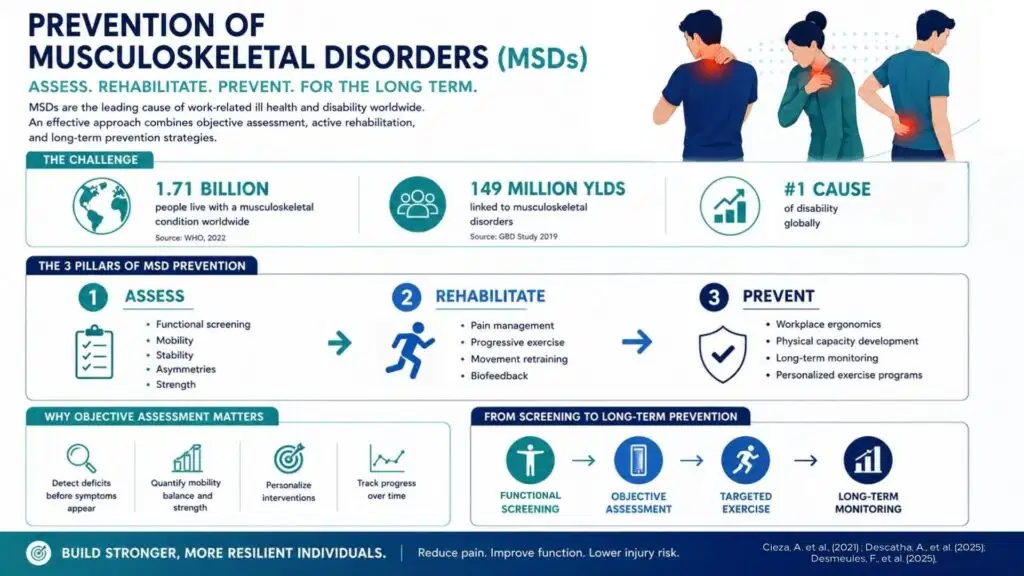
Musculoskeletal disorders (MSDs) are among the leading causes of pain, disability, and work absenteeism worldwide. Affecting muscles, tendons, joints, and nerves, they can significantly impact both quality of life and professional activity.
According to the World Health Organization (WHO), approximately 1.71 billion people worldwide live with a musculoskeletal condition, making MSDs the leading contributor to disability globally.
For physical therapists, sports scientists, and strength and conditioning coaches, prevention goes beyond symptom management. It requires objective assessment, active rehabilitation, and long-term strategies to reduce injury risk and improve physical capacity.
In this article, we’ll explore the main risk factors for MSDs, evidence-based rehabilitation approaches, and practical strategies for the prevention of musculoskeletal disorders.
CONTENTS
1- Musculoskeletal Disorders: A Major Occupational Health Challenge
2- What Are the Main Risk Factors for Musculoskeletal Disorders?
3- How to Manage a Musculoskeletal Disorder?
4- Prevention of Musculoskeletal Disorders: Adapt the Workplace and the Body
5- FAQ: Prevention of Musculoskeletal Disorders
6- References
1- Musculoskeletal Disorders: A Major Occupational Health Challenge
What Are Musculoskeletal Disorders?
Musculoskeletal disorders (MSDs) are a group of conditions affecting muscles, tendons, ligaments, joints, and nerves. Unlike traumatic injuries, they typically develop gradually when physical demands exceed the body’s ability to adapt and recover.
MSDs can affect various regions of the body, but they most commonly involve the shoulders, elbows, wrists, hands, neck, and lower back. Common examples include rotator cuff tendinopathy, lateral epicondylalgia (tennis elbow), carpal tunnel syndrome, and low back pain.
These conditions often result in pain, reduced mobility, loss of strength, and functional limitations that can negatively impact both work performance and daily activities.
Key Statistics Worldwide
Musculoskeletal disorders represent one of the greatest global health challenges. According to the World Health Organization (WHO), approximately 1.71 billion people worldwide live with a musculoskeletal condition, making MSDs the leading contributor to disability globally.
Musculoskeletal conditions account for approximately 149 million years lived with disability (YLDs), representing 17% of all YLDs worldwide. They include a wide range of conditions such as low back pain, neck pain, osteoarthritis, fractures, rheumatoid arthritis, amputations, and other musculoskeletal disorders.
Among them, low back pain is the largest contributor to the global burden, affecting around 570 million people worldwide and remaining the leading cause of disability in 160 countries. Other highly prevalent conditions include osteoarthritis (528 million people), fractures (440 million people), neck pain (222 million people), and rheumatoid arthritis (18 million people).
Although the prevalence of musculoskeletal disorders increases with age, younger adults are also significantly affected, often during their peak working years. As a result, MSDs are associated with reduced productivity, work absenteeism, early retirement, and substantial healthcare costs worldwide.
These figures highlight the importance of early detection, active rehabilitation, and effective strategies for the prevention of musculoskeletal disorders across all populations.
2- What Are the Main Risk Factors for Musculoskeletal Disorders?
Musculoskeletal disorders are multifactorial conditions. In most cases, they develop when physical demands consistently exceed the body’s ability to adapt and recover.
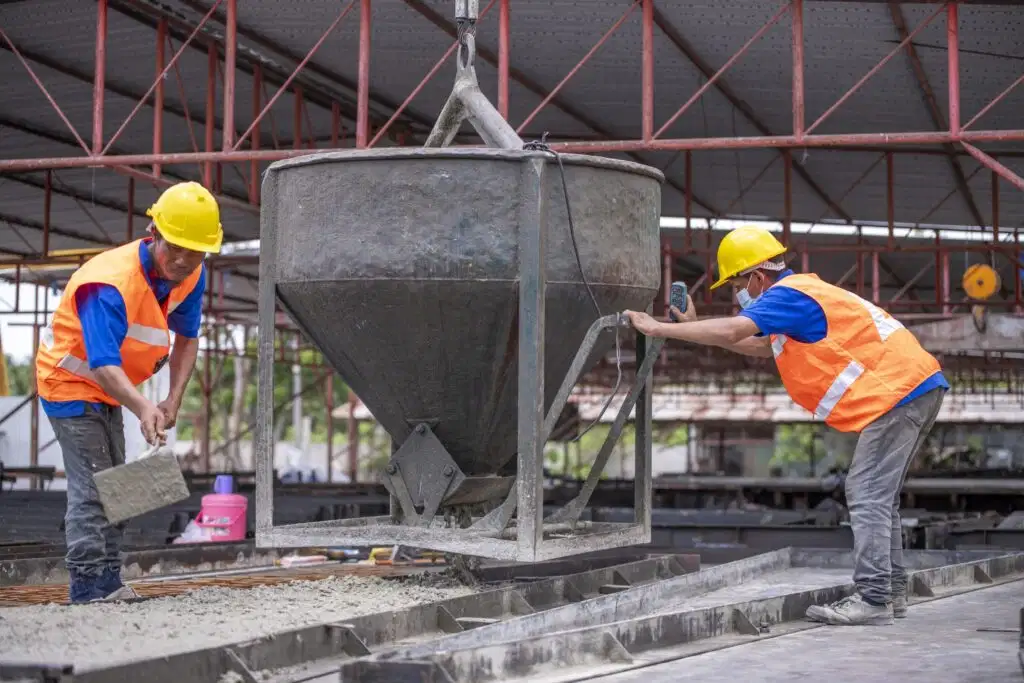
Some of the most common biomechanical risk factors include:
- Repetitive movements performed at high frequency
- Manual handling and heavy lifting
- Prolonged or awkward postures
- Sustained static positions
- Exposure to vibration
However, MSDs are not caused by physical factors alone. Organizational and psychosocial factors can also contribute to their development, including:
- High workload and time pressure
- Limited recovery opportunities
- Low job control or autonomy
- Work-related stress
- Physical and mental fatigue
Importantly, exposure to a risk factor does not guarantee the development of an MSD. Two individuals performing the same task may respond very differently depending on their strength, mobility, movement quality, physical conditioning, and ability to tolerate load.
This is why modern prevention strategies go beyond ergonomics alone. They also focus on identifying physical deficits, movement limitations, and asymmetries that may increase the risk of injury over time.
3- How to Manage a Musculoskeletal Disorder?
The management of musculoskeletal disorders should be progressive and patient-centered. While treatment strategies may vary depending on the condition, most evidence-based approaches follow three key phases: pain management, active rehabilitation, and long-term prevention.
Phase 1: Pain Management and Protection
During the acute phase, the primary goal is to reduce pain while creating the conditions for an early return to movement and activity.
Management may include:
- Relative rest while avoiding prolonged immobilization
- Ice application when appropriate
- Analgesic or nonsteroidal anti-inflammatory medications (NSAIDs), when indicated
- Patient education and reassurance
- Guidance on maintaining activities that remain tolerable
In more severe cases, temporary work restrictions, short-term bracing, or corticosteroid injections may be considered. For example, subacromial corticosteroid injections can be an option for persistent rotator cuff-related shoulder pain when symptoms do not improve after several weeks.
Medical imaging, including X-rays, ultrasound, or MRI, may help rule out alternative diagnoses or identify specific structural findings. However, imaging results should not be used in isolation to guide rehabilitation decisions or explain pain severity.
For most musculoskeletal disorders and non-ruptured tendinopathies, surgery is not considered a first-line treatment. The primary objective remains to control symptoms and facilitate a rapid transition toward active rehabilitation.
Phase 2: Active Rehabilitation and Functional Recovery
Once pain is under control, active rehabilitation becomes the cornerstone of treatment. Today, therapeutic exercise is considered the gold standard for the management of most musculoskeletal disorders and tendinopathies.
The primary goals are to restore function, improve tissue capacity, and progressively prepare the individual to return to daily, occupational, or sporting activities.
Rehabilitation may include:
- Progressive strength training
- Restoration of joint mobility
- Motor control and movement retraining
- Stability and proprioceptive exercises
- Gradual reintroduction of work- or sport-specific tasks
Depending on the stage of recovery, exercises typically progress from isometric contractions to concentric, eccentric, and eventually functional loading strategies.
This phase is also an opportunity to identify the physical deficits that may have contributed to the development of the disorder, such as reduced strength, mobility restrictions, impaired stability, or side-to-side asymmetries. Objective assessment helps clinicians individualize rehabilitation programs and make more informed decisions throughout the recovery process.
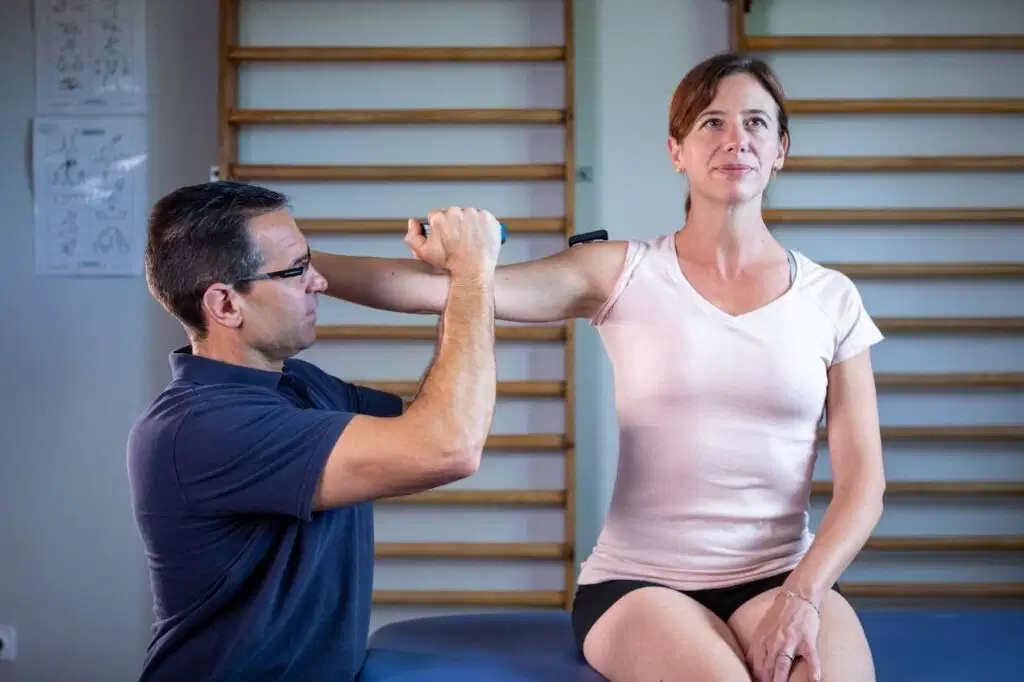
💡 This is where connected assessment tools can provide significant value. Devices such as dynamometers, digital goniometers, and force plates allow clinicians to objectively measure strength, mobility, stability, and asymmetries from the earliest stages of rehabilitation.
In addition, visual and auditory biofeedback can enhance patient engagement by providing immediate feedback during exercises. By making performance measurable and visible, clinicians can improve exercise quality, optimize loading strategies, and help patients become active participants in their recovery.
Phase 3: Long-Term Return to Activity and Recurrence Prevention
The absence of pain does not necessarily mean that the problem has been fully resolved. Once symptoms have improved and function has been restored, the focus shifts toward maintaining progress and reducing the risk of recurrence.
This phase aims to reinforce the gains achieved during rehabilitation through:
- Ongoing strength and conditioning exercises
- Mobility and stability maintenance programs
- Task-specific preparation strategies
- Warm-up and activation routines before demanding activities
For example, workers who frequently perform overhead tasks may benefit from shoulder activation exercises before starting their shift. Similarly, individuals regularly exposed to lifting and manual handling can maintain trunk strength and movement capacity through targeted exercise programs.
Regular reassessment is also important. Monitoring strength, mobility, balance, or movement quality over time helps identify new deficits before they become symptomatic and allows clinicians to adjust interventions accordingly.
The goal is no longer simply to recover from an MSD, but to build the physical capacity required to tolerate occupational or sporting demands over the long term. This proactive approach helps reduce recurrence rates, improve resilience, and support long-term musculoskeletal health.
4- Prevention of Musculoskeletal Disorders: Adapt the Workplace and the Body
Musculoskeletal disorder prevention has traditionally focused on workplace ergonomics and environmental modifications. While these strategies are essential, they are not always sufficient to reduce injury risk over the long term.
Adjusting workstation height, repositioning computer screens, using ergonomic equipment, or modifying work organization can help reduce excessive mechanical stress. However, an equally important question remains: what are we doing to improve the physical capacity of the individual?
Two people exposed to the same occupational demands may respond very differently depending on their strength, mobility, stability, and ability to tolerate load.
This is why modern MSD prevention should focus not only on adapting the environment, but also on developing the physical qualities required to meet workplace demands.
Physical therapists and strength and conditioning professionals play a key role in this process. Through objective assessment, they can identify mobility restrictions, strength deficits, balance impairments, and asymmetries that may increase injury risk. These findings can then be used to design individualized exercise programs targeting the specific needs of each individual.
👉 Connected technologies further enhance this approach. By using tools such as dynamometers, force plates, and digital goniometers, clinicians can objectively assess physical capacity while providing immediate visual feedback to patients. This helps improve exercise execution, increase engagement, and make progress easier to understand.
The prevention process can be summarized in four key steps:
- Identify deficits before symptoms appear
- Correct mobility, strength, or stability limitations
- Develop physical capacity through targeted exercise
- Maintain long-term progress through regular monitoring
Functional screening tools such as the Global Movement Competency (GMC) can also play an important role in the early identification of movement limitations and potential musculoskeletal risk factors. Simple screening protocols can help clinicians detect mobility restrictions, stability deficits, or movement compensations before symptoms become problematic.
The complementary use of connected assessment tools adds an additional layer of objective information. By quantifying strength, mobility, balance, and asymmetries, clinicians can move beyond observation alone and better individualize their interventions. Visual and auditory biofeedback further enhances patient engagement, helping individuals better understand their deficits and actively participate in the corrective process.
With solutions such as MyKinvent, this approach can also extend beyond the clinic. Professionals can create personalized exercise programs, monitor adherence, and provide regular follow-up to encourage long-term participation.
By combining functional screening, objective assessment, active rehabilitation, and long-term monitoring, prevention becomes a continuous process rather than a one-time intervention. The goal is not only to reduce pain, but to build a more resilient body capable of tolerating the demands of work, sport, and daily life.
5- FAQ: Prevention of Musculoskeletal Disorders
What are the most common musculoskeletal disorders?
Common musculoskeletal disorders include low back pain, neck pain, rotator cuff tendinopathy, carpal tunnel syndrome, lateral epicondylalgia (tennis elbow), and osteoarthritis.
What are the main risk factors for musculoskeletal disorders?
The most common risk factors include repetitive movements, manual handling, prolonged static postures, insufficient recovery, vibration exposure, and psychosocial factors such as stress and workload.
How can musculoskeletal disorders be prevented?
Effective prevention combines ergonomic interventions, physical conditioning, objective assessment, and targeted exercise programs designed to improve strength, mobility, stability, and movement quality.
Can musculoskeletal disorders become chronic?
Yes. When risk factors persist or rehabilitation is delayed, some musculoskeletal disorders can progress into chronic conditions associated with long-term pain and functional limitations.
Why is objective assessment important in MSD prevention?
Objective assessment helps identify deficits before symptoms appear, monitor progress throughout rehabilitation, and support data-driven decisions that improve prevention and recovery outcomes.
6- References
- Cieza, A., Causey, K., Kamenov, K., Hanson, S. W., Chatterji, S., & Vos, T. (2021). Global estimates of the need for rehabilitation based on the Global Burden of Disease Study 2019: A systematic analysis for the Global Burden of Disease Study 2019. The Lancet, 396(10267), 2006–2017.
- Descatha, A., et al. (2025). Facteurs de risque des troubles musculosquelettiques (TMS) : une mise au point. Archives des Maladies Professionnelles et de l’Environnement.
- Desmeules, F., Roy, J. S., Lafrance, S., et al. (2025). Rotator cuff tendinopathy diagnosis, nonsurgical medical care and rehabilitation: A clinical practice guideline. Journal of Orthopaedic & Sports Physical Therapy, 55(4), 235–274.
- Hartvigsen, J., Hancock, M. J., Kongsted, A., et al. (2018). What low back pain is and why we need to pay attention. The Lancet, 391(10137), 2356–2367.
- Schwitzguébel, A. J. P., et al. (2026). Rotator cuff disorders: Practical recommendations for diagnosis and management.
- Williams, A., Kamper, S. J., Wiggers, J. H., et al. (2018). Musculoskeletal conditions may increase the risk of chronic disease: A systematic review and meta-analysis of cohort studies. BMC Medicine, 16, 167.
- World Health Organization. (2022). Musculoskeletal conditions.


